


Across North America, travelers planning summer nature trips are noticing a striking contrast. While some of the most famous U.S. national parks now charge international visitors more than 100 dollars per person to enter, Canada has confirmed that admission to all Parks Canada national parks will be free from June 19 to September 7, 2026. It is a clear signal that affordability and accessibility are moving to the center of the conversation about where people choose to spend their precious summer weeks outdoors.
How Canada’s Free Park Summer Works
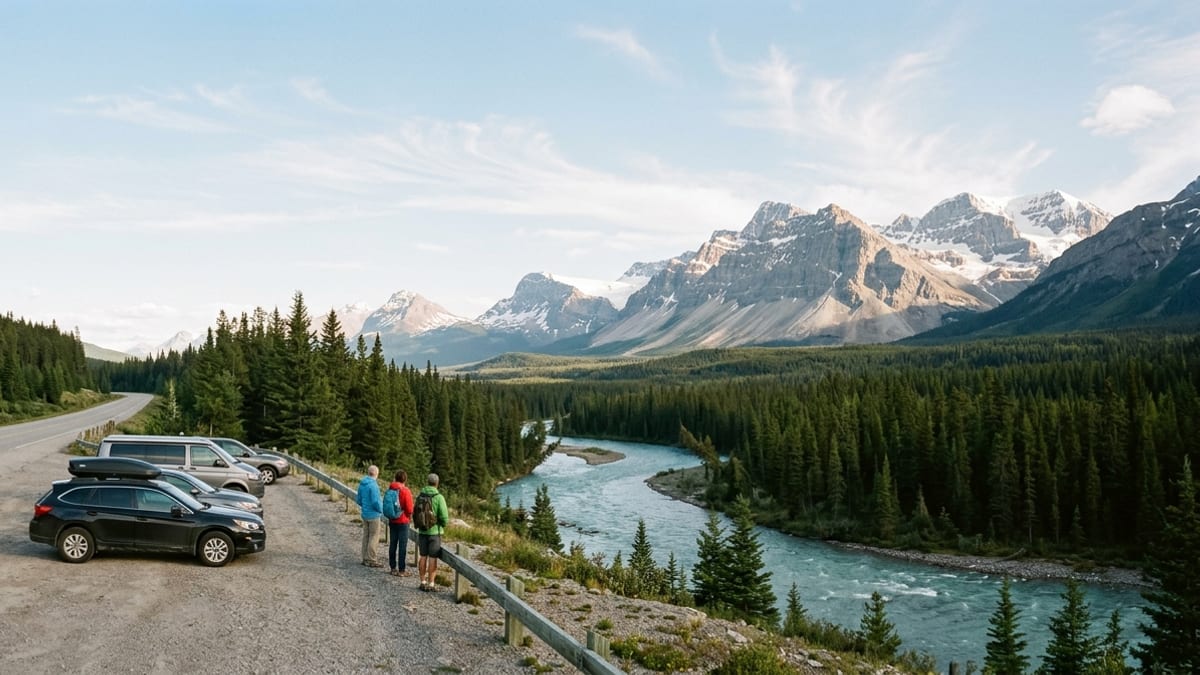
Parks Canada has confirmed that from June 19 to September 7, 2026, admission fees will be waived at all national parks, national historic sites and national marine conservation areas that it manages. For visitors, that means entrance that would typically cost an adult roughly 11 to 15 Canadian dollars per day at popular sites such as Banff or Jasper will drop to zero at the gate. For families used to paying a daily family or group fee, the savings across a week-long road trip can quickly reach into the hundreds of dollars.
This free-entry period is tied to the Canada Strong Pass, a federal initiative that bundles free access to Parks Canada sites with discounts at national museums, some provincial and territorial attractions and even deals on VIA Rail train travel. The pass is not a physical card that needs to be purchased in advance. Instead, it functions more as an umbrella program that sets the rules for who benefits from free or discounted entry at participating sites across the country on those summer dates.
Within Parks Canada, the Canada Strong Pass period is being presented as a way to encourage people who might feel priced out of big trips to still experience the country’s protected landscapes. It also dovetails with longstanding goals to connect more urban residents, young people and new Canadians with national parks. By removing entry fees for the core summer holiday window, authorities are betting that visitors who might hesitate at paying for multiple day passes will be more inclined to stretch trips and explore lesser-known corners of the system.
The free summer also arrives as Canada continues to position nature and cultural travel as part of a wider strategy to support regional economies. In places like the Alberta Rockies, coastal Atlantic Canada and the mountain parks of British Columbia, tourism-dependent towns rely heavily on short summer seasons. Free admission does not erase the costs of fuel, lodging or food, but it does give budget-focused travelers a concrete, easy-to-understand saving at a time when most other travel bills seem to rise each year.
Why Free National Park Access Is Suddenly a Major Travel Story
The timing of Canada’s free-entry initiative is a large part of why it has resonated so widely. In 2026, many households across North America are still watching exchange rates, hotel prices and airfares closely when deciding where to go. A policy that simply removes the entry fee barrier to dozens of headline-worthy landscapes sends a powerful message that nature can still be within reach, even in a pricey travel year.
At the same time, outdoor travel demand shows little sign of fading. Since the pandemic era pushed more people toward hiking, camping and scenic road trips, national parks in both Canada and the United States have seen surges in visitation. Free entry amplifies that appeal by turning what used to be a line item in a trip budget into an unexpected bonus. For a couple who might have allocated several hundred dollars for entrance fees across a two-week drive from Banff to the Atlantic coast, that money can now be reallocated to an extra night in a locally owned inn or a guided wildlife tour.
Affordability is also about perception. When travelers read headlines that some U.S. parks now charge nonresidents a 100 dollar surcharge per person in addition to the regular car or per-person fee, it changes how a whole destination category is perceived. Canada’s move in the opposite direction makes its national parks look not only beautiful but also comparatively welcoming in terms of cost. For international visitors weighing where to invest a once-in-a-decade nature trip, that contrast is hard to ignore.
The story is not just financial. There is an accessibility dimension, particularly for families based in Canada or nearby U.S. states who can drive rather than fly. Knowing that park gates will be open without fees during the core school-holiday season allows people to be more spontaneous with weekend getaways, last-minute camping trips or add-on visits to historic canals and coastal parks that might otherwise have fallen off the itinerary.
The Canadian Parks Travelers Are Prioritizing Most
In new 2026 rankings compiled by Canadian tour operator Journeyscape, Jasper National Park takes the top spot as the most worthwhile national park to visit in Canada this summer. Covering more than 11,000 square kilometers of rugged peaks, glaciers, river valleys and dense forest, Jasper combines sheer size with remarkable wildlife diversity. Researchers counted more than 2,000 species present in the park, and its landscapes show up in an estimated 3.5 million Instagram posts, a reminder of how often its lakes and ridgelines inspire travelers to share what they see.
Banff National Park, just to the south along the Icefields Parkway, ranks second in these 2026 rankings. It is the oldest national park in Canada and one of the most visited, with recent annual attendance figures exceeding 4.2 million people. The names are familiar to armchair travelers worldwide: Lake Louise, Moraine Lake, the Bow Valley. Yet even beyond the postcard spots, Banff stretches across 6,641 square kilometers of mountains, glaciers and subalpine meadows that reward anyone willing to get a little distance from the parking lots.
Waterton Lakes National Park, which straddles the Alberta side of the border with Montana, comes in third overall. At just over 500 square kilometers, it is significantly smaller than Jasper and Banff, but that scale can work in its favor. Visitor numbers hover in the hundreds of thousands rather than the millions, and travelers often describe Waterton as feeling intimate and easy to navigate, with the lakefront village, trailheads and scenic viewpoints all clustered around a deep chain of mountain-framed lakes.
Other Canadian parks also rank highly in the same research, from Gros Morne’s fjord-carved coastlines in Newfoundland and Labrador to the wave-battered headlands of Cape Breton Highlands in Nova Scotia. Yet for 2026, it is Jasper, Banff and Waterton that visitors talk about most often when plotting how to use the free-entry window. Together they offer a snapshot of what makes the Canadian Rockies and adjacent landscapes so compelling as a multi-park itinerary.
Why Jasper Continues Leading the Conversation
Jasper’s overall score of 8.7 out of 10 in the recent Journeyscape analysis is rooted in more than just social media love. Its sheer size means that even in the height of summer, it is possible to find quieter corners, especially once you venture beyond the townsite and the most famous viewpoints along the Icefields Parkway. Long valleys such as the Athabasca and Maligne give way to glacial lakes, hanging glaciers and rolling forest that absorb crowds in a way smaller parks cannot.
Wildlife is another reason Jasper stands out. With over 2,000 documented species, visitors have a reasonable chance of spotting elk, bighorn sheep or black bears along roads at dawn or dusk, especially on routes such as the Pyramid Lake Road or near Medicine Lake. More elusive species, including woodland caribou and wolves, are reminders that this is still a functioning mountain ecosystem where animals have priority. Sensible practices such as keeping distance, obeying speed limits and never feeding wildlife are essential parts of the experience.
The park’s visitor infrastructure also contributes to its popularity. The town of Jasper offers a compact base with locally owned restaurants, simple motels and higher-end lodges all within a short drive of trailheads. There are classic day hikes, from the mellow loop around Annette and Edith Lakes to more strenuous climbs like Sulphur Skyline, where hot springs soak waits nearby. Because entry fees are waived this summer, the cost calculation for longer stays shifts slightly, making it more realistic for budget travelers to use Jasper as a hub for a full week of exploring instead of a rushed two-night stop.
Finally, Jasper benefits from its role as the northern anchor of the Icefields Parkway. Visitors can pair it with Banff and Yoho in a single road trip, passing glaciers, pass-top viewpoints and turquoise lakes almost continuously along the way. Knowing that each of these park gates will be free to pass through during the Canada Strong Pass period adds a psychological ease to the journey. Rather than juggling daily pass receipts, visitors can focus on choosing whether to linger at Sunwapta Falls a little longer or detour to a less photographed picnic spot beside the Athabasca River.
Why Travelers Are Comparing Canada and U.S. Park Costs
The contrast with the United States has become a regular topic in travel forums and news coverage. Starting on January 1, 2026, the U.S. National Park Service introduced a 100 dollar surcharge for nonresidents aged 16 and older at some of its most visited parks, including Yellowstone, Yosemite, Zion, Rocky Mountain, Grand Canyon and several others. That fee is charged on top of the standard entrance fee, which for many of these destinations is already around 35 dollars per vehicle for a multi-day pass.
In practice, a family of four from Europe or Canada arriving at Yellowstone without an annual pass now faces entrance charges that can easily surpass 200 dollars at the gate for just one vehicle, even before any campground, shuttle or tour costs. While an America the Beautiful annual pass can soften the blow for longer U.S. itineraries, the headline figure of 100 dollars per person has understandably dominated discussion. It has also raised questions about how accessible the most famous U.S. parks will remain for students, backpackers and long-haul visitors who contribute significantly to local economies.
Canada’s free-entry policy, by comparison, is temporary and tied to a specific summer window, but it lands at a moment of heightened sensitivity around travel pricing. A traveler planning a Rockies-focused trip in August can look at the cost of two weeks in Alberta and British Columbia, with free park gates and discounted camping at Parks Canada sites, versus two weeks across the border with significant fees at U.S. flagships. For some, particularly those converting into Canadian dollars from weaker currencies, the calculation makes the case for heading north very compelling.
It is worth stressing that not all U.S. national parks charge entrance fees, and many smaller or lesser-known sites remain free or relatively affordable. Likewise, Canada’s savings end at the gate, and expenses such as lodging in Banff townsite or a private wildlife tour in Jasper can still be significant. Yet as far as trip-planning narratives go, the idea of “free Canadian parks versus rising U.S. park fees” is simple to grasp, and it is shaping how many travelers talk about North American nature travel in 2026.
What Travelers Should Realistically Expect This Summer
Anyone considering a Canada parks trip this summer should pair their excitement about free entry with realistic expectations. A policy that removes admission fees during peak vacation months will almost certainly contribute to higher crowds at top sites, especially on weekends and around statutory holidays. Around Banff and Jasper, that could translate into longer lines at popular parking lots, busy downtown streets and fully booked campgrounds many weeks in advance.
Reservations remain a fact of life. Free entry does not guarantee a campsite, backcountry permit or shuttle seat. At heavily visited spots like Lake Louise, restrictions on private vehicle access and shuttle booking systems are likely to continue, both to manage congestion and to protect sensitive environments from overuse. Travelers should expect to spend time on Parks Canada’s reservation system well before departure, especially if they hope to secure in-demand campgrounds or guided experiences in July and August.
Weather is another practical factor. Summer in the Canadian Rockies and other northern parks can be surprisingly variable, with cool nights, afternoon thunderstorms and occasional wildfire smoke affecting visibility. Visitors planning to hike should come prepared with layers, rain protection and flexible itineraries in case a trail is temporarily closed due to wildlife activity or changing conditions. Free entry may encourage more spontaneous day visits, but those heading into the backcountry still need to plan with the same level of care as in any other year.
Finally, travelers should budget realistically for non-park costs. Accommodation in Banff and Jasper often sells at a premium in July and August, and dining in mountain towns can feel expensive compared with bigger cities. One approach, especially for cost-conscious visitors, is to base themselves in nearby communities just outside park boundaries, such as Canmore near Banff or Hinton near Jasper, where hotel and vacation rental rates can be lower. The absence of entrance fees this year can help offset fuel costs for those willing to drive a bit farther between their base and the trailheads.
Why National Park Travel Keeps Growing in Popularity
Beyond this summer’s policy details, the ongoing rise in national park travel speaks to deeper shifts in how people want to spend their holidays. Surveys across North American and European markets consistently show travelers seeking more time outdoors, more active experiences and more opportunities to disconnect from digital life. National parks, with their established trail systems, scenic roads and designated viewpoints, offer accessible ways to achieve that without venturing into true expedition territory.
Wellness trends play a role too. The idea that time in forests, mountains and by lakes can help lower stress levels and improve mental health has gained mainstream traction. For many travelers, a week in Jasper or Waterton feels like a reset button after months of urban routines and screen-heavy workdays. Not everyone arrives to tackle challenging backcountry treks. Plenty are content with short lakeside walks, ranger-led talks and evenings around a campfire in a front-country campground.
Road-trip culture also feeds the appeal of national park itineraries. In both Canada and the U.S., classic drives such as the Icefields Parkway, the Cabot Trail around Cape Breton Highlands or the route linking Waterton with Glacier National Park in Montana combine the freedom of the open road with the comforts of established tourism infrastructure. Pullouts, viewpoints, picnic areas and small towns allow visitors to stitch together a flexible journey that can be adjusted day by day without sacrificing access to dramatic landscapes.
In this context, Canada’s 2026 free-entry initiative functions as a catalyst rather than a standalone reason to travel. Many people were already dreaming about turquoise lakes, coastal headlands and boreal forests. Removing the entry fees simply nudges some of those dreams closer to reality and gives undecided travelers a strong practical reason to choose this year instead of someday.
The Takeaway
Canada’s decision to waive admission fees at national parks and related sites between June 19 and September 7, 2026 arrives at a pivotal moment for nature travel. With some U.S. national parks introducing triple-digit surcharges for international visitors, the optics of free access north of the border are powerful. For many readers weighing where to spend their next big outdoor trip, it feels like an invitation.
At the same time, it is important to see the free-entry initiative for what it is: a summer-long window that lowers one barrier while leaving others, such as transportation and lodging costs, in place. Jasper, Banff and Waterton remain wildly popular for good reason, and that popularity will be very visible on their roads and trails throughout July and August. Travelers who plan early, build in flexibility and remain open to visiting at shoulder-season times or exploring smaller parks will have the best experience.
Ultimately, the combination of affordability, world-class scenery and well-established infrastructure explains why Canada’s national parks are drawing renewed attention in 2026. For families, first-time visitors to the Rockies and seasoned hikers alike, this summer’s free-entry period offers a rare opportunity to experience some of North America’s most iconic landscapes while the conversation about park value and access is still unfolding.
FAQ
Q1. Are all Canadian national parks really free to enter in summer 2026?
Yes, all national parks, national historic sites and national marine conservation areas managed by Parks Canada are waiving entry fees from June 19 to September 7, 2026. That means the usual per-person or family admission charges at places like Jasper, Banff, Waterton Lakes and many coastal and historic sites will not be collected during that period, although separate fees for services such as camping, parking in some areas or special tours may still apply.
Q2. How long does the free-entry period last, and do I need a special pass?
The free-entry window runs for just under twelve weeks, from June 19 to September 7, 2026. You do not need to purchase a special card to benefit from it. The Canada Strong Pass is the federal initiative that underpins the policy and coordinates free or discounted offers across multiple institutions, but at Parks Canada sites themselves you will simply find that standard admission fees are not charged during those dates.
Q3. Do I still need reservations for campgrounds and popular hikes if entry is free?
Yes, reservations remain essential at many busy sites even though gate admission is free. Front-country campgrounds in Jasper and Banff, backcountry permits for multi-day hikes and shuttle systems serving high-demand areas like Lake Louise and Moraine Lake often book out weeks or months ahead. Travelers should treat the free-entry policy as a financial benefit, not as a guarantee of space, and should use official booking systems well in advance for peak-season visits.
Q4. Which Canadian national parks are best for first-time visitors?
For first-time visitors, Jasper and Banff in Alberta are popular starting points because they combine spectacular mountain scenery with well-developed services, marked trails of varying difficulty and plenty of guided options. Waterton Lakes offers a smaller, more compact alternative with dramatic peaks and deep lakes clustered around a friendly village. On the east coast, Gros Morne in Newfoundland and Cape Breton Highlands in Nova Scotia appeal to those who prefer coastal cliffs, fjord-like inlets and scenic driving loops over towering inland peaks.
Q5. How do costs in Canadian parks compare with visiting major U.S. national parks in 2026?
During the free-entry period in Canada, you will not pay daily admission fees at Parks Canada sites, which normally range from roughly 11 to 15 Canadian dollars per adult at many major parks. In contrast, several flagship U.S. national parks now charge non-U.S. residents a 100 dollar surcharge per person on top of the usual vehicle entrance fee, which can be about 35 dollars for a multi-day pass. While travel to and within Canada still involves costs for accommodation, fuel and food, the absence of entrance fees this summer can make a noticeable difference to the overall budget, especially for families and international visitors.
Q6. Will Canadian parks be extremely crowded because entry is free?
Travelers should absolutely expect crowding at the most famous viewpoints, towns and day hikes, particularly in July and early August. Parking around Banff townsite, Lake Louise and popular lakes in Jasper can fill early in the day, and scenic parkways can feel busy at midday. That said, Canada’s largest parks cover enormous areas, and visitors willing to start early, explore secondary trailheads or travel slightly outside peak weeks can still find quieter experiences, especially in the early morning and evening.
Q7. Does the Canada Strong Pass help with transportation costs as well as park entry?
The Canada Strong Pass framework extends beyond Parks Canada and includes offers from partners such as national museums and VIA Rail. During the same June to September period, VIA Rail is promoting various free or discounted travel options linked to the initiative, which can help reduce the cost of reaching park-adjacent cities and regions. However, these rail promotions do not replace the need to arrange local transportation within the parks themselves, where visitors still rely on cars, shuttles, bikes or guided tours.
Q8. Are there still fees for camping and other services during the free period?
Yes, while admission fees are waived, most service-related charges remain in place. That includes nightly campground fees, backcountry permit fees, fire permits and, in some cases, parking charges in heavily visited day-use areas. For 2026, Parks Canada has also promoted a 25 percent discount on selected camping and overnight stays at its facilities, which can provide additional savings, but visitors should check current rates when booking and be aware that private campgrounds and hotels set their own prices independently of the free-entry initiative.
Q9. Is it still worth buying a Parks Canada Discovery Pass in 2026?
A Parks Canada Discovery Pass typically offers unlimited admission to participating sites for a full year, which is useful for frequent visitors or those planning multiple trips outside the free period. In 2026, its value will depend on your exact travel dates. Travelers visiting only between June 19 and September 7 may not need it, but those adding spring or autumn trips, or planning to return in 2027, might still find the pass worthwhile. It is often most cost-effective for residents or long-term visitors who expect to enter parks many times across different seasons.
Q10. What should international travelers know before choosing between Canada and the U.S. for a park-focused trip?
International travelers weighing Canada versus the United States should consider both policy and logistics. Canada’s free park entry and related discounts in summer 2026 make it attractive for those who want predictable savings on gate fees, especially when visiting multiple parks like Jasper, Banff, Waterton and coastal sites in a single itinerary. The U.S. still offers an extraordinary variety of landscapes, but nonresidents now face higher entrance costs at many of the most famous parks, so it can be wise to focus either on lesser-known, lower-fee U.S. parks or to allocate a larger budget for entrance charges there. In both countries, early planning, flexible dates and a willingness to explore beyond the absolute top ten hotspots will lead to better value and a more relaxed trip.