


More news on this day
JetBlue’s rapid transition to an all-Airbus fleet, coupled with a sweeping route realignment, is beginning to redefine how U.S. travelers reach the Caribbean and could reshape future flight connectivity across the region.
Get the latest news straight to your inbox!
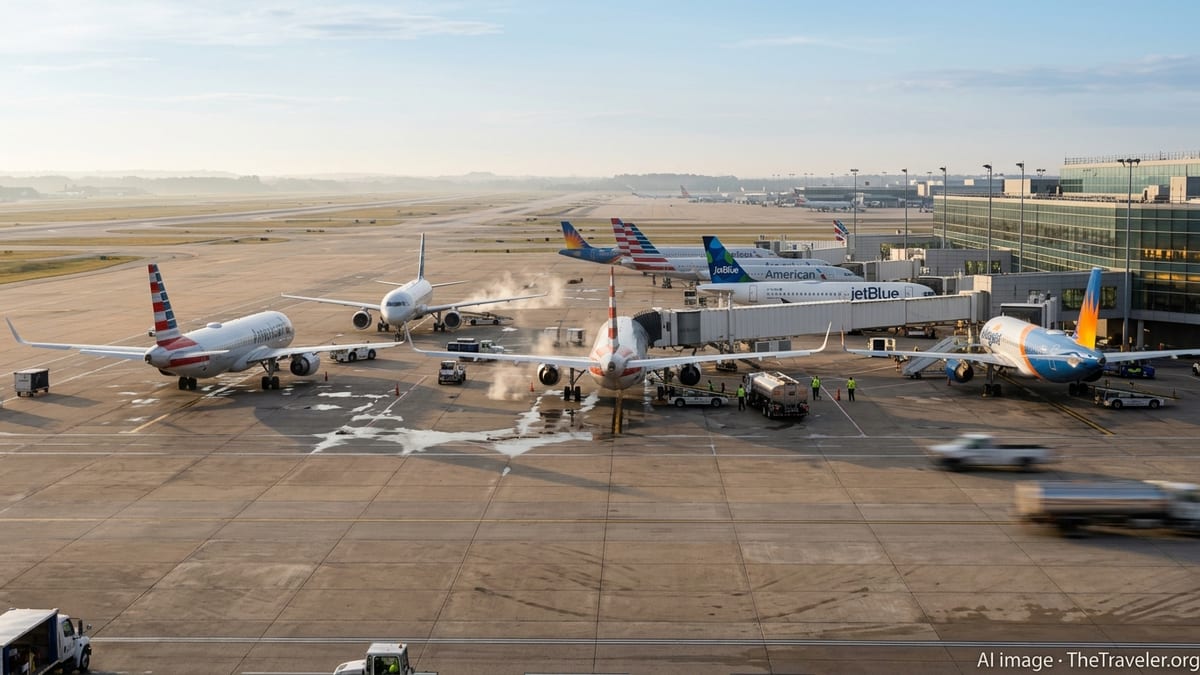
From Embraer Retirement to an All-Airbus Future
JetBlue has spent the past several years methodically phasing out its Embraer E190 jets, a workhorse that once underpinned many thinner U.S. and Caribbean routes. Investor materials and company filings show that by late 2025 the carrier had completed the transition, officially retiring the E190 after nearly two decades of service and concentrating its fleet around the Airbus A220-300, A320 and A321 families.
Publicly available fleet data indicates that by the end of 2025 JetBlue operated close to 300 aircraft, dominated by Airbus narrowbodies, with dozens of A220s already in service and more on order in 2026 and beyond. The shift is designed to simplify maintenance, reduce fuel burn and standardize the onboard experience, but it also changes which markets the airline can serve profitably.
The A220 is a particular focus for future connectivity. With around 140 seats, it replaces the 100-seat E190 while offering longer range and lower operating costs, a combination analysts say is well-suited to mid-sized Caribbean and Latin American destinations. Reports from industry briefings indicate JetBlue is using the type to re-evaluate smaller markets and support more seasonal, higher-density flying.
At the same time, JetBlue has deferred delivery of dozens of larger Airbus aircraft, including some long-range A321 variants, until at least the next decade. According to carrier disclosures, this adjustment is part of a broader profitability push and suggests near-term emphasis will remain on core leisure and visiting-friends-and-relatives routes rather than rapid long-haul expansion.
Network Shake-Up: Cuts, Adds and a Pivot Toward the Caribbean
The fleet overhaul is arriving alongside a visible reshaping of JetBlue’s route map. Since 2024 the airline has announced multiple rounds of cuts to underperforming routes, including exits from several U.S. cities and reductions on select transcontinental and Latin American services. Aviation news outlets and route trackers highlight that dozens of routes have been removed or trimmed while a smaller set of new links has been added.
Many of the cuts have come from the western United States and secondary domestic markets, freeing aircraft for what analysts describe as JetBlue’s “bread and butter” segments: East Coast corridors, Florida, and high-demand Caribbean and Latin American destinations. Coverage of the carrier’s network strategy in 2024 and 2025 points to a deliberate retreat from sprawling experimentation in favor of concentrating capacity where demand and yields are strongest.
At the same time, JetBlue has continued to introduce new Caribbean services and strengthen existing ones. In recent years the airline has launched or announced flights to destinations such as Belize and St. Kitts and expanded service out of major Caribbean gateways including San Juan, Puerto Rico. Reports on the 2024 Puerto Rico expansion, for example, highlighted multiple new routes from San Juan to U.S. East Coast and regional points, underscoring the role of the island as a strategic hub.
This twin track of pruning weaker routes while bolstering Caribbean flying suggests the fleet simplification is being harnessed to support a more focused leisure and diaspora network, particularly during peak winter and holiday periods when demand to sun destinations spikes.
How the A220 Could Rewire Island Connectivity
The A220’s arrival is central to how JetBlue’s fleet shake-up could reshape Caribbean travel. With greater range than the retired E190 and more economical performance than older A320s on shorter sectors, the aircraft gives planners more flexibility to connect mid-sized U.S. cities with Caribbean islands that may not sustain daily service on larger jets.
Analyst presentations and airport planning documents referencing JetBlue’s A220 deployment describe it as a tool for “right-sizing” capacity in niche markets. In practice, that could translate into more seasonal or several-times-per-week flights from secondary East Coast airports to islands with strong but concentrated demand, instead of year-round daily service from only a few large hubs.
For Caribbean governments and tourism boards, this creates both opportunity and uncertainty. On one hand, the economics of the A220 make it easier to justify testing new city pairs or restoring routes that previously proved marginal with 150-seat aircraft. On the other, the same flexibility can lead to quicker pullbacks if performance lags, as JetBlue has shown with recent decisions to exit certain Caribbean and Central American stations after relatively short periods of service.
Travelers are likely to feel the effects through shifting schedules and options. Some communities that once relied on the E190 for direct connectivity may see service upgauged to A220s or A320s on fewer frequencies but with more seats, while others could gain nonstops that bypass traditional U.S. hubs. Over time, this dynamic may alter which islands are most accessible from specific American cities and at what times of year.
Post-Spirit Strategy and Competitive Pressure
The fleet and network changes also need to be viewed against JetBlue’s broader strategic reset. In early 2024, JetBlue and Spirit Airlines terminated their planned merger following a series of regulatory and legal challenges. Regulatory filings describing the termination point to a shift in emphasis toward disciplined capacity, cost control and targeted growth rather than transformational consolidation.
Without Spirit’s aircraft and routes, JetBlue is leaning more heavily on optimizing its own fleet plan. Industry commentary suggests that accelerating E190 retirements, deferring some Airbus deliveries and tightening the route portfolio are all elements of a post-merger strategy intended to improve margins in a competitive U.S. market.
For the Caribbean, this means JetBlue is likely to prioritize destinations where it can sustain a meaningful presence and pricing power rather than thinly spread service across many islands. That could reinforce the prominence of major leisure and diaspora markets such as Puerto Rico, the Dominican Republic and Jamaica, where JetBlue already operates multiple routes and frequencies, while smaller islands compete to secure and keep capacity.
Competitors are watching closely. Other U.S. carriers and regional airlines have been growing their own Caribbean portfolios, and JetBlue’s retrenchment from some cities may open the door for rivals to step in. Conversely, where JetBlue consolidates capacity and leverages its brand strength, competing carriers may find it harder to match schedules and fares.
What Travelers Should Expect Next
In the near term, the practical impact for travelers is likely to include more aircraft swaps, timetable adjustments and route announcements as JetBlue takes additional A220s and retires remaining older jets. Schedules filed for the 2026 winter season already reflect increased emphasis on core East Coast to Caribbean flows, while some experimental links have quietly disappeared.
Industry observers expect JetBlue to keep tweaking its Caribbean network as fuel prices, engine availability and economic conditions evolve. Grounding requirements tied to Pratt & Whitney geared turbofan engines have constrained parts of the fleet in recent years, and additional A220 deliveries may gradually ease that pressure, giving the airline more freedom to redeploy capacity to high-yield leisure markets.
For U.S.-Caribbean connectivity, the broader trend is toward fewer but stronger corridors, with larger aircraft and a more concentrated set of hubs. JetBlue’s fleet shake-up is a key driver of that shift. Even as some secondary routes disappear, the airline’s renewed focus on its most successful Caribbean markets could mean more seat availability and, at times, lower fares on trunk routes linking major U.S. cities with popular island destinations.
Over the long run, the combination of an all-Airbus fleet, a nimble A220 subfleet, and a sharpened network strategy suggests JetBlue will remain a significant force in Caribbean travel, albeit one that is more selective about where it flies and how often.
Sources: JetBlue Airways news and fleet updates; JetBlue investor presentations and SEC filings; The Points Guy coverage of JetBlue network changes; AFAR report on JetBlue route cuts and adds