


More news on this day
Passengers flying to and from the UAE are contending with rolling delays and selective cancellations, as major carriers Emirates, Etihad, Air Arabia and flydubai continue to adjust schedules in response to regional tensions, operational constraints and wider disruptions across the Middle East and parts of Asia.
Get the latest news straight to your inbox!
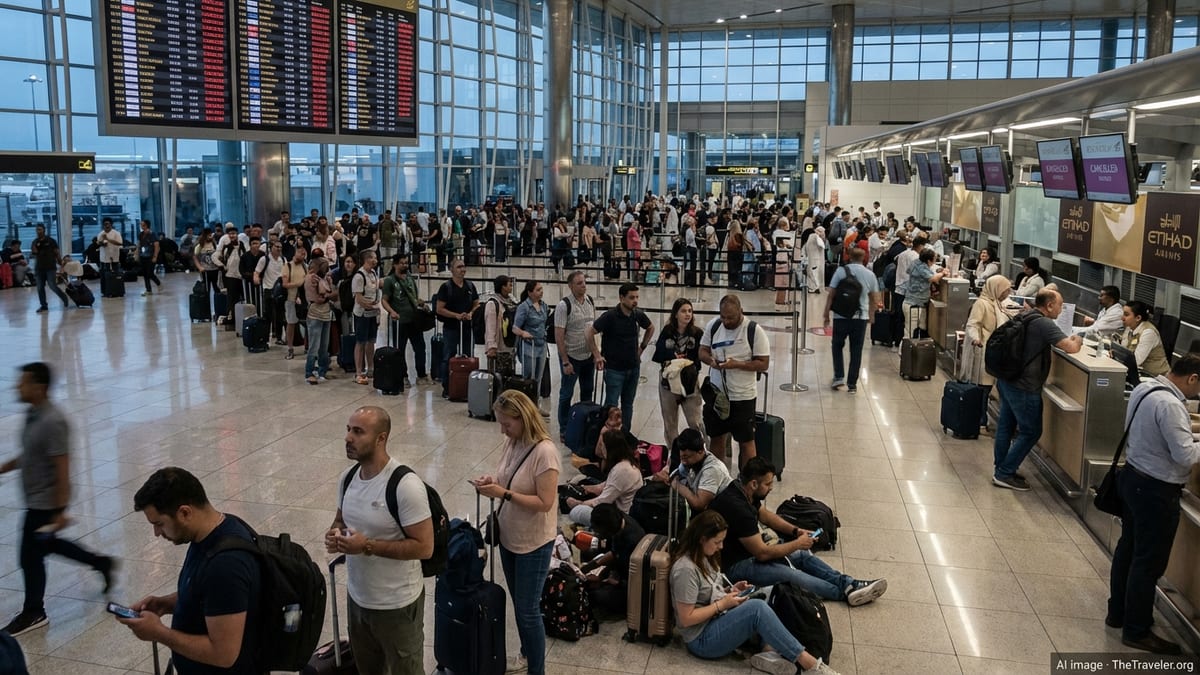
Regional tensions and weather drive fresh disruption
Flight operations at Dubai International and Abu Dhabi’s Zayed International Airport remain under pressure, with recent advisories pointing to a combination of security concerns and weather-related issues affecting traffic flows across the region. Published coverage from UAE-based outlets in early September describes a pattern of delayed arrivals and departures at both hubs, particularly on services linking the Gulf with Europe, South Asia and the broader Middle East.
Reports indicate that fighting involving the US and Iran, as well as airspace restrictions linked to these tensions, has led to wider knock-on effects for schedules, even on routes not directly overflying affected areas. Separate volcanic activity in Indonesia has also contributed to cancellations and diversions on some Asia-bound services, further complicating airline planning and connection times for UAE travellers.
While the scale of disruption varies from day to day, most airlines continue to operate the majority of their scheduled flights. However, carriers are repeatedly stressing that departure and arrival times remain subject to change at short notice, and that passengers should rely on real-time tools rather than printed or previously issued itineraries when heading to the airport.
Emirates and Etihad: operating but with schedule volatility
Emirates, the largest carrier at Dubai International, continues to operate a broad global network, with its latest published guidance listing services to more than 130 destinations across 70-plus countries. According to its flight status and disrupted travel pages, the airline is maintaining near-normal operations overall, but has acknowledged that some flights are delayed or cancelled and that its schedule may be adjusted as conditions evolve.
Public information on Emirates’ website highlights the importance of checking flight status online before travelling to the airport, and advises that customers whose flights are disrupted are typically rebooked on the next available service. The carrier also notes that passengers will receive email and SMS updates if contact details are correctly stored in their booking, reinforcing the need to keep profiles current when regional disruption is a risk.
Abu Dhabi-based Etihad Airways is also flying a significant portion of its network, yet has recently extended targeted cancellations and reported delays on multiple routes. Coverage from regional media outlines interruptions on flights connecting Abu Dhabi with destinations in Europe, the Middle East and Asia, along with advisories that schedules remain fluid. Some services, particularly to nearby Gulf states such as Kuwait, have been periodically cancelled or retimed, reflecting operational and airspace limitations.
For both Emirates and Etihad, the pattern emerging from public updates is one of broadly stable core networks layered with tactical changes, where specific flights may be removed, consolidated or retimed with relatively short notice as airlines respond to evolving security assessments, airspace availability and airport congestion.
Air Arabia and flydubai: selective cancellations on regional routes
Low-cost carriers Air Arabia and flydubai, which underpin much of the UAE’s regional connectivity, are also adjusting their schedules as conditions shift. Recent reporting highlights that Air Arabia has cancelled several services on Gulf routes, including flights to Kuwait and Bahrain on selected days, even as other frequencies on the same sectors continue to operate later in the day. This has created a patchwork of active and suspended flights, requiring passengers to monitor their specific departure rather than rely on general route assumptions.
Flight-status tools on Air Arabia’s website allow travellers to search by route or flight number, with results flagging whether a service is on time, delayed or cancelled. Publicly visible outputs from this system in recent days have shown a mix of outcomes on short-haul routes, including some departures labelled as cancelled alongside others that proceed with revised timings.
Flydubai, which focuses heavily on regional and secondary-city routes from Dubai, has also acknowledged that it is operating with a reduced or modified schedule compared with earlier in the year. The airline’s operational updates page notes that some flights have been cancelled or rerouted and that flight durations and transit times may be longer than usual because of temporary changes in flight paths and airport operations.
Official guidance from flydubai stresses that passengers should regularly check the carrier’s flight-status and operational-update pages before leaving for the airport, and that any important changes to existing bookings are communicated through email, app notifications or other registered contact channels. The airline has also flagged that schedules for certain routes, including services to parts of Saudi Arabia and other regional destinations, may change at short notice.
Indonesia volcanic ash and broader network knock-on effects
The latest flight disruption picture for UAE carriers is not limited to regional tensions. Published coverage also points to volcanic activity in Indonesia as an additional factor, particularly for services to and from Jakarta and other Southeast Asian gateways. In some cases, Etihad and other airlines have had to cancel or significantly delay flights on affected days, reflecting safety-driven airspace closures and necessary route adjustments.
These Indonesia-related disruptions add another layer of complexity for networks that already need to navigate shifting flight corridors in the Middle East. When aircraft and crews are delayed or stranded away from their planned rotations, the effects can ripple into seemingly unrelated routes, including some that start or end in the UAE. As a result, a passenger flying from Dubai or Abu Dhabi to Europe or South Asia may experience a delay indirectly linked to earlier events on an entirely different continent.
Regional media have also noted that select international airlines continue to suspend or scale back UAE services temporarily, particularly where carriers have heightened exposure to affected airspace or face fleet-availability constraints. This can reduce alternative options for travellers when a preferred flight is cancelled, even if local UAE-based airlines are broadly maintaining their networks.
What passengers flying from the UAE should do now
Across Emirates, Etihad, Air Arabia and flydubai, a common message is emerging through publicly available advisories and FAQs: travellers should treat their itinerary as provisional until verified close to departure. All four airlines offer online flight-status tools, mobile apps and notification systems that can provide near real-time updates on delays and cancellations.
Emirates encourages passengers to use its Manage Booking and flight-status sections to confirm whether a flight is operating as planned and to ensure that email and mobile details are correct, as disruption alerts are generally sent by SMS and email. Its disrupted travel guidance further explains rebooking and refund options in cases where flights are cancelled or significantly delayed.
Flydubai’s operational updates recommend that customers check both the flight-status tool and the latest advisories on its website before heading to the airport, particularly during periods of heightened travel demand or geopolitical tension. Air Arabia offers a similar online status checker and indicates that passengers should verify each leg of any connecting journey individually.
For all carriers, observers suggest arriving at the airport with additional time where possible, particularly for international departures and during busy travel periods. With schedules subject to change and security procedures under review on some routes, extra buffer time can help mitigate the impact of longer queues, gate changes or last-minute retimings while the broader regional situation remains fluid.
Gulf News: UAE flights status roundup
The National: UAE travel advisory on delays and cancellations