


More news on this day
Air travelers across the Gulf are facing renewed uncertainty as Emirates, Etihad Airways and Flydubai report fresh delays and schedule changes, while Air France prolongs its suspension of several Middle East routes amid ongoing regional tensions and evolving airspace restrictions.
Get the latest news straight to your inbox!
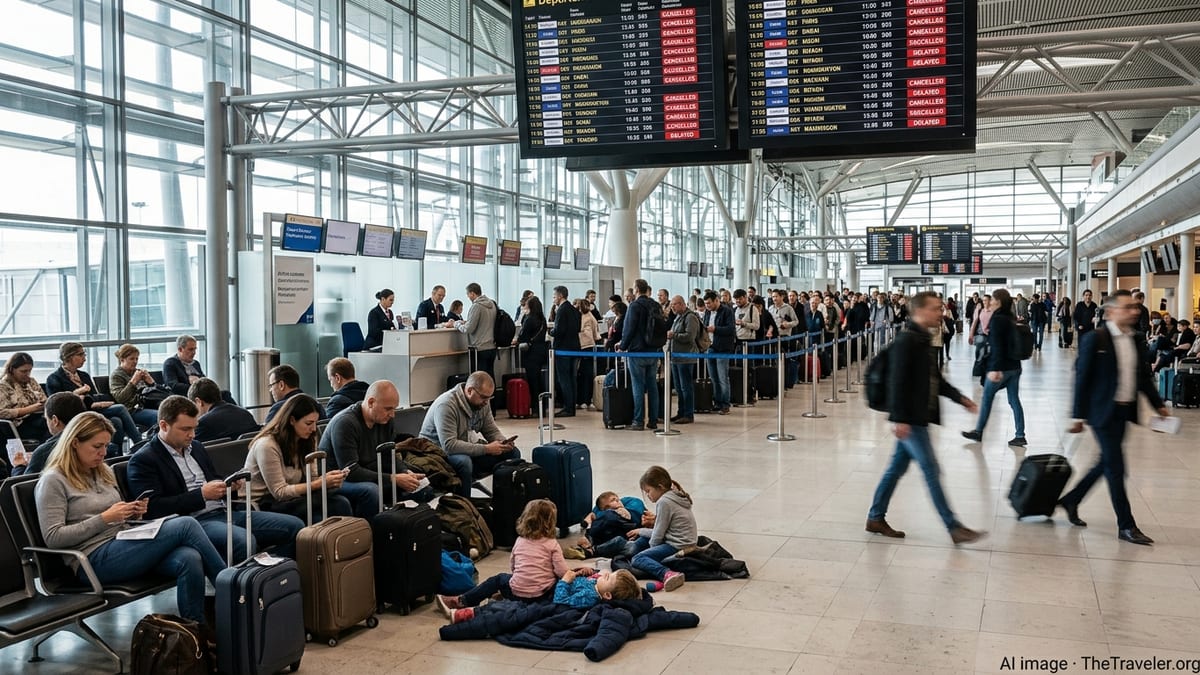
Mixed operations at UAE hubs as delays persist
Recent updates from Dubai International and Abu Dhabi’s Zayed International airports show a patchwork of operations, with many flights running on schedule but a noticeable number subject to delays and occasional cancellations. Coverage from UAE-based outlets indicates that Emirates, Etihad, Flydubai and Air Arabia continue to operate the bulk of their networks, but with adjustments on selected Middle East city pairs and tighter day-of-travel controls on departure times.
Reports on current flight boards and aviation tracking data point to longer ground times and revised departure slots for services to destinations such as Kuwait, Bahrain and parts of the Levant, reflecting congestion in already busy air corridors and intermittent airspace constraints. Travelers are being urged by airlines and airports to arrive earlier than usual, complete online check in where possible and verify departure times shortly before leaving for the airport.
Industry analysis notes that the current disruption follows several months of heightened volatility in regional operations. Earlier episodes of mass cancellations, including temporary suspensions out of Dubai and Abu Dhabi during major airspace closures, have left airlines operating with conservative buffers in their schedules. This more cautious planning helps maintain safety margins but can amplify knock on effects when new restrictions emerge.
For now, UAE carriers appear focused on preserving connectivity on core routes while trimming frequencies or consolidating services where demand and operational constraints intersect. That strategy means most passengers are still able to travel, but not always at their originally booked times.
Emirates, Etihad and Flydubai adjust regional schedules
Several recent updates from regional media and airline advisories highlight targeted changes at the three main UAE based network carriers. Emirates has been periodically reducing or reshuffling flights on some Gulf routes, particularly to Kuwait and Bahrain, after earlier waves of cancellations linked to regional tensions and temporary airspace closures. Published schedules show that while many frequencies have returned, select services continue to be consolidated or retimed.
Abu Dhabi based Etihad Airways is also navigating a patchy operational environment. Publicly available information shows that Etihad has faced knock on delays when major overseas hubs experience disruption, such as recent air traffic control issues in the United Kingdom that forced diversions and lengthier routings for London Abu Dhabi services. These irregular operations can create temporary bottlenecks in aircraft and crew availability for Middle East connections.
Flydubai, which serves a dense web of short haul destinations from Dubai, has issued general operational guidance urging passengers to arrive at least four hours before departure and to rely on its app and website for live notifications. Earlier weather related disruptions and ongoing security considerations on certain routes have led the low cost carrier to adjust flight times and, in some cases, to suspend or merge particular services. Advisories emphasize that schedules remain subject to change at short notice in response to airspace or airport constraints.
Across all three carriers, route maps still show extensive coverage of the Middle East, but with less redundancy than in calmer periods. Travelers may find fewer daily options on specific city pairs, making rebooking more complex when flights are delayed or cancelled.
Air France extends Middle East suspensions
While Gulf airlines continue to operate through the turbulence, Air France has taken a more conservative stance on several regional routes. According to recent statements and media reports, the carrier has extended the suspension of services to Dubai and Riyadh while also prolonging an existing halt on flights to Beirut. The airline cites the security situation in the Near and Middle East and related airspace restrictions as key factors in these decisions.
Earlier guidance from Air France had set short term dates for the suspension of flights to Dubai and the Saudi capital, with operations expected to resume after late July. Subsequent updates reported in European and regional outlets show these dates being pushed further out as tensions and operational risks persist. In parallel, suspensions on Beirut services have also been lengthened, leaving Paris based travelers with fewer nonstop options to Lebanon and parts of the Gulf.
Recent Gulf coverage additionally indicates that Air France’s pause on Dubai flights has been extended beyond initial deadlines on multiple occasions this year, underlining how quickly conditions can change. The airline continues to state that it is monitoring the situation in real time and will only reinstate services once it is satisfied that overflight and destination conditions meet its internal safety and risk thresholds.
The extended suspensions put more pressure on connecting itineraries that rely on Dubai or Riyadh as gateways. Passengers who would typically use Air France to reach these hubs are being routed through alternative European or regional carriers where seats are available, adding travel time and potential complexity.
Security tensions and airspace closures underpin disruption
The latest wave of disruptions in and around Dubai sits against a backdrop of broader regional instability and episodic airspace closures. Aviation reporting across the Gulf points to US Iran tensions and associated military activity as ongoing drivers of caution for both airlines and regulators. During peak moments of confrontation earlier this year, multiple Gulf hubs experienced temporary shutdowns and widespread flight diversions reminiscent of the most intensive phases of the pandemic era.
Specialist analysis of commercial traffic over the Middle East notes that airlines have been forced to reroute around parts of Iranian, Iraqi, Syrian and Israeli airspace at various times, extending flight times and raising fuel costs. When several key corridors are constrained at once, the knock on effect can be steep, with congestion in neighboring air routes, limited spare capacity on popular city pairs and tighter slot availability at hub airports such as Dubai and Abu Dhabi.
Carriers such as Emirates, Etihad and Flydubai generally have greater flexibility to adjust routings and schedules on short notice because of their large local fleets and deep experience in the region. By contrast, European airlines operating a handful of daily flights to Gulf destinations often opt for outright suspension when risk levels rise, which helps explain the more cautious approach recently seen from Air France.
Travelers are also navigating a changed risk landscape in terms of official advisories. The United States has issued higher level guidance on several countries in the region, citing the possibility of armed conflict, missile interceptions and significant disruption to commercial aviation. While such notices do not automatically ground flights, they feed into airline risk assessments and can accelerate decisions to trim or suspend services.
What passengers flying via Dubai and the Gulf should do now
For travelers booked on Emirates, Etihad or Flydubai in the coming weeks, the most consistent advice from airlines and regulators is to stay closely informed. Passengers are encouraged to monitor airline apps and websites on the day of travel, keep contact details updated in their booking profiles and allow extra time at the airport in case check in, security or boarding procedures are adjusted in response to changing conditions.
Air France customers with tickets to or from Dubai, Riyadh or Beirut are being directed through published channels to consult the airline’s disruption and travel information pages. These resources outline options that commonly include free date changes within specified windows, rerouting via alternative destinations where possible and, in certain cases, refunds. Availability varies depending on booking class and the exact conditions of the suspension period.
Independent travel experts recommend that passengers connecting through the Gulf build additional buffer time into onward journeys and avoid tight self connections when separate tickets are involved. Given the fluid situation, itineraries that once allowed for brisk transfers at Dubai or Abu Dhabi may now be riskier if a first leg is delayed or re timed, particularly during peak traffic hours.
Looking ahead, the consensus in regional aviation coverage is that disruption may ebb and flow rather than resolve quickly. Airlines continue to stress that safety and regulatory compliance remain the overriding priorities, which means schedules will likely stay flexible as long as geopolitical tensions and airspace uncertainties persist.
Gulf News: UAE flights delays and Air France Dubai suspension
Gulf News: Latest Etihad, Flydubai and Air France cancellations
Euronews: Air France suspends Middle East routes
Anadolu Agency: Air France extends Beirut suspension and halts Dubai, Riyadh flights