


More news on this day
More than 1,000 flights to and from the United Kingdom were cancelled after a major air traffic control glitch this week, and aviation analysts warn that disruption could continue for days as airlines struggle to clear backlogs and reposition aircraft.
Get the latest news straight to your inbox!
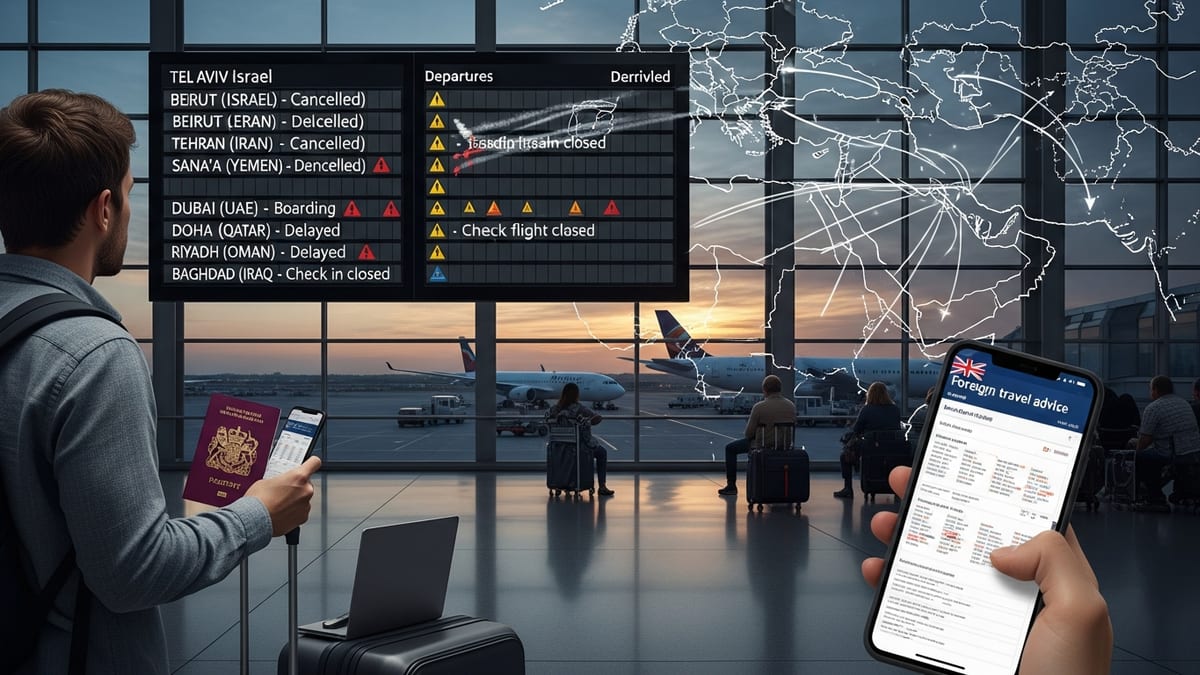
Technical Failure Triggers Mass Cancellations
Publicly available information indicates that a failure in the UK’s national air traffic control flight data processing system on Tuesday forced restrictions on traffic across much of British airspace, disrupting schedules at major hubs including London Heathrow, Gatwick, Manchester and Birmingham.
Flight-tracking platform Flightradar24 reported that more than 1,000 flights were cancelled on the day of the outage alone, affecting tens of thousands of passengers and leaving departure halls and gate areas severely overcrowded as aircraft and crews were left out of position across the network.
The UK air traffic control provider, National Air Traffic Services (NATS), later stated in public updates that a fix had been implemented and that systems were operating normally again. However, reports from airports and airlines showed that the operational damage was already done, with cancellations and long delays extending into subsequent days as disrupted rotations rippled through schedules.
Coverage from multiple outlets described a system that is highly efficient in normal times but vulnerable when even a relatively short outage halts the complex choreography of arrivals and departures at some of Europe’s busiest airports.
Airports Struggle With Knock-On Disruption
Data cited in recent reporting shows that the disruption did not end when the immediate technical fault was resolved. FlightRadar24 figures indicated that around 1,300 flights were cancelled to and from UK airports on Tuesday, with at least 170 to 250 more cancellations already registered for Wednesday, largely concentrated at Heathrow and Gatwick.
Airlines including British Airways and low-cost carriers reported significant operational challenges as aircraft and crews were left in the wrong locations. Public statements indicated that some airlines cancelled or diverted more than 100 flights, while others reported tens of thousands of passengers facing delays of several hours.
Passengers travelling through Heathrow, Gatwick, Manchester and other major airports encountered crowded terminals, long queues at check-in and rebooking desks, and extended waits for information as airlines attempted to rebuild their flying programmes. Broadcast and online footage showed travellers camped out near charging points and seating areas while monitoring airline apps for updates.
Industry coverage emphasised that, while the technical issue itself was resolved within hours, the recovery is slower because aircraft and crews work to tight rotations. When one leg is cancelled, the impact spreads across multiple subsequent flights, particularly at hub airports that rely on carefully timed connections.
Fears of Further Chaos as Backlog Builds
With aircraft and staff scattered, analysts quoted in recent aviation reports warn that passengers could see rolling disruption for several days, particularly on heavily used routes into and out of London. Seats on remaining flights are limited, making it harder for airlines to rebook affected travellers quickly.
Tracking data and airline updates suggest that carriers are prioritising long-haul and high-demand services, sometimes cancelling shorter regional sectors to free aircraft and crews. This approach helps restore key international links but can extend the pain for travellers on domestic and near-Europe routes.
Travel-industry commentary highlights concerns that any further technical issues, bad weather or industrial action in the short term could compound the disruption. With little spare capacity in peak seasons, even minor schedule shocks can cascade, and a system-wide outage of this scale exposes how quickly resilience can be tested.
Passengers yet to travel are being urged in public guidance to treat timetables as fluid, checking airline apps and official websites before heading to the airport and preparing for possible last-minute changes to routings or departure times.
Spotlight on System Resilience and Past Failures
The latest breakdown has renewed scrutiny of the robustness of the UK’s air traffic management technology. Commentators have drawn parallels with a serious air systems failure in 2023, when another air traffic control problem in Britain led to widespread delays and cancellations and prompted detailed reviews of contingency planning.
International coverage also places the UK incident in a broader pattern of aviation technology shocks. In recent years, major airlines and air navigation providers globally have suffered from software outages and corrupted updates, with some events resulting in thousands of cancelled flights over several days and affecting hundreds of thousands of passengers worldwide.
Analysts note that modern aviation depends on highly interconnected digital systems that control everything from flight planning and flight data processing to crew rostering and passenger check-in. When one of these critical systems fails, back-up procedures exist, but capacity is often sharply reduced, forcing traffic restrictions and rapid schedule cuts.
Industry voices cited in trade and mainstream media are calling for renewed investment in redundancy, testing and manual fallbacks, warning that as traffic grows, the economic and reputational costs of even short-lived outages will only increase.
What Travellers Can Expect in the Coming Days
Travel experts quoted across news and industry outlets advise that anyone booked to fly to or from the UK in the immediate aftermath of the glitch should expect possible changes, even if their flight currently appears to be operating. Airlines are updating schedules frequently as they rebuild rotations and move aircraft back into position.
Guidance shared by airports and carriers stresses that travellers should rely on official airline channels for the latest information, including apps, websites and direct notifications, rather than assuming that an older booking confirmation remains accurate. For those whose flights are cancelled, rebooking options may involve alternative routings, overnight stays or travel several days later, depending on seat availability.
Consumer organisations are also reminding passengers to review their rights under airline contracts and relevant regulations covering cancellations, rerouting and care such as meals and accommodation. While the precise rules vary by jurisdiction and ticket type, publicly available information highlights that travellers may be entitled to assistance even when disruptions arise from air traffic control issues rather than the airline’s own internal systems.
For now, the clearest message from published guidance is that passengers should build in extra time, monitor their flights closely and be prepared for ongoing adjustments as the UK’s aviation network works through one of its most serious technology-related disruptions in recent years.
Euronews: Technical glitch leads to over 1,000 flight cancellations across UK
Al Jazeera: UK travellers face fresh chaos as more flights cancelled after glitch
ITV News: Major disruption at UK airports continues after air traffic control issue
TheTraveler.org: Video shows UK passengers stranded in fresh air traffic chaos