


More news on this day
Jetstar will make aviation history later this year by operating the first commercial passenger flight from Western Sydney International Airport, as the long-awaited second Sydney gateway prepares to welcome travellers in October.
Get the latest news straight to your inbox!
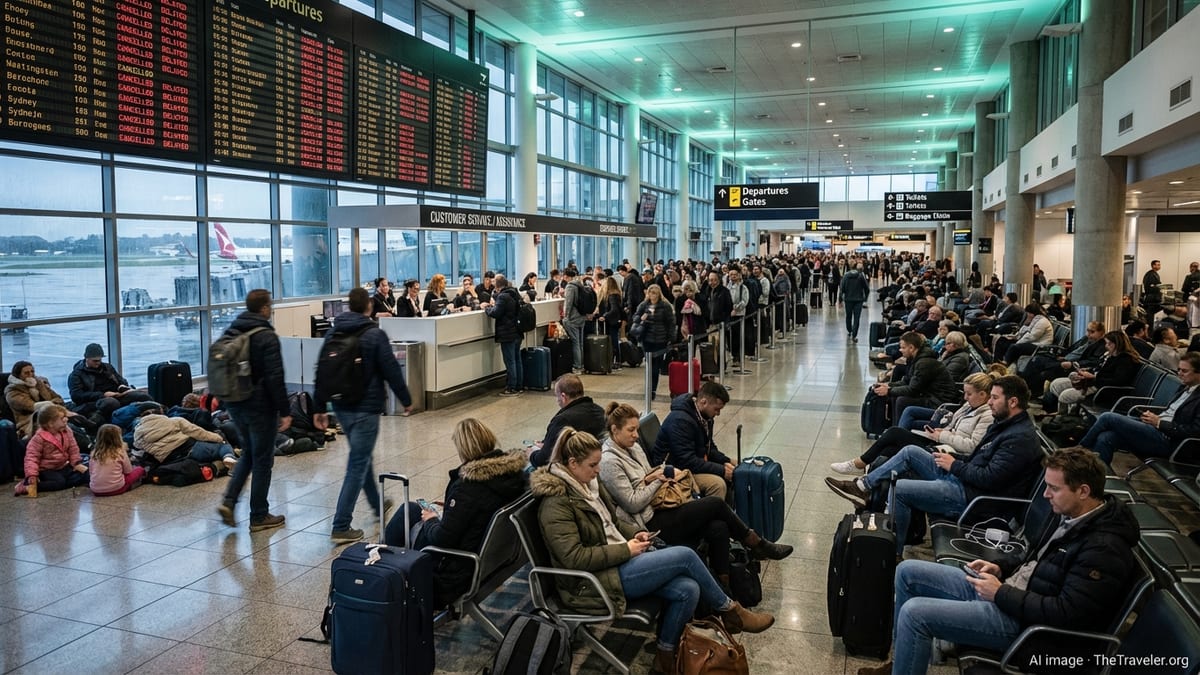
New airport prepares for first passengers
Western Sydney International Airport, officially named Western Sydney International (Nancy-Bird Walton) Airport, is entering its final testing phase after more than a decade of planning and years of construction. Publicly available information shows the greenfield hub at Badgerys Creek is scheduled to open to passenger traffic on 25 October 2026, following an earlier start to cargo operations in July.
The airport has been designed as a curfew-free, 24-hour facility with a single 3.7-kilometre runway and an integrated terminal capable of handling up to 10 million passengers a year in its initial stage. Reports indicate that the project has been delivered close to or ahead of key construction milestones, positioning the facility to commence services before the end of 2026.
Government and industry material highlights the airport’s role in serving fast-growing communities across Sydney’s west, where population growth and demand for air travel have outpaced capacity at the existing Kingsford Smith Airport near Mascot. With preliminary flight paths now authorised and operational readiness trials underway, the focus is shifting from construction to airline schedules and route announcements.
The confirmed October opening date gives airlines a firm target as they finalise aircraft deployment, staffing and ground operations at the new terminal. It also sets a clear timeline for travellers planning trips in late 2026, particularly holidaymakers eyeing services to Australia’s east coast leisure destinations.
Jetstar to operate inaugural passenger service
According to recently published coverage, Jetstar will operate the first commercial passenger flight carrying travellers from Western Sydney International when the terminal opens to passengers on 25 October. Reports indicate the low-cost carrier’s inaugural service, numbered JQ362, is scheduled to depart late morning on opening day bound for the Gold Coast, one of Australia’s busiest leisure routes.
Information made public this week suggests Jetstar will initially base multiple Airbus A320 aircraft at the new airport, offering frequent services on domestic trunk routes. Early schedules reported by travel industry outlets point to multiple weekly flights to Melbourne, Brisbane and the Gold Coast from Western Sydney, with capacity expected to ramp up as demand grows.
The decision to lead with a Gold Coast service reflects Jetstar’s focus on price-sensitive leisure travellers and short-break holiday markets. Aviation analysts quoted in recent coverage note that launching from a brand-new, unconstrained airport offers the low-cost carrier operational flexibility and the potential to grow quickly if routes perform strongly.
Jetstar’s role in operating the inaugural flight also cements the Qantas Group’s early presence at the new airport, reinforcing its long-term commitment to the Western Sydney catchment. Publicly available planning documents outline expectations that Jetstar will be a key user of domestic gates from day one.
Qantas Group and global partners anchor the launch
Western Sydney International’s first wave of airline partners is led by the Qantas Group alongside major international carriers. The airport’s own information and recent media reports show that Qantas, Jetstar, Singapore Airlines and Air New Zealand have all signed on to operate from the new terminal in its opening phase.
Qantas is expected to follow Jetstar’s first flight with its own domestic services from Western Sydney in early 2027, including routes to Melbourne and Brisbane. Industry reporting suggests these services will complement, rather than replace, the airline’s extensive network from the existing Sydney Airport, giving travellers more choice across the metropolitan area.
On the international front, Singapore Airlines has previously announced daily nonstop flights between Singapore and Western Sydney from late November 2026, positioning the airport as a new one-stop hub into Europe and Asia for western Sydney residents. Air New Zealand is slated to begin three-times-weekly services between Auckland and Western Sydney from 26 October, just one day after the passenger opening.
This initial line-up of full-service and low-cost carriers gives the airport a mix of domestic connectivity and international reach from the outset. Observers note that additional airlines are likely to follow once operations bed down and demand patterns become clearer, particularly among carriers targeting outbound Australian leisure travellers.
Western Sydney’s growing role in Australia’s aviation network
Industry analyses describe Western Sydney International as a structural shift in how air travel is distributed across the Sydney region. The airport’s location at Badgerys Creek places it considerably closer to many of western Sydney’s largest population centres than the existing airport at Mascot, reducing travel time to the terminal for hundreds of thousands of residents.
The curfew-free operating model is expected to be a key differentiator within Australia’s tightly regulated airport system. By allowing late-night and early-morning departures and arrivals, Western Sydney International can accommodate freight operations and long-haul passenger services that would not fit within the constraints of a curfewed airport.
Public planning documents forecast that, in its first years, the new airport will focus on short- and medium-haul routes, with domestic and trans-Tasman services forming the backbone of operations. Over time, as passenger numbers grow and additional infrastructure is developed, the airport is expected to attract more long-haul and international services.
For travellers, the opening of a second major airport in the Sydney basin is likely to mean more schedule options and, potentially, sharper competition on key routes. Analysts point out that the presence of a large low-cost carrier such as Jetstar at Western Sydney could encourage rival airlines to consider their own services into the new market.
Access, infrastructure and what passengers can expect
Alongside the aviation infrastructure, a network of new roads and public transport projects is being built to support access to Western Sydney International. While a dedicated metro rail link is still under construction and expected to open after the airport’s first years of operation, upgraded motorways and local road connections are planned to give motorists direct access to the terminal precinct from key corridors across western Sydney.
Terminal design material released by the airport highlights a focus on natural light, intuitive wayfinding and streamlined security and boarding processes. The integrated domestic and international layout is intended to simplify transfers, while retail and hospitality offerings are being positioned around high-traffic areas to capture demand from both departing and arriving passengers.
From an operational perspective, the October 2026 opening will be preceded by extensive testing of check-in, baggage handling, security screening and airfield procedures. Publicly available updates describe a phased program of trials involving staff, volunteers and test flights to ensure systems are calibrated before the first paying passengers arrive.
For those booked on Jetstar’s inaugural service or on early flights in the opening weeks, the experience will combine the novelty of a brand-new terminal with the realities of a complex, large-scale start-up. Travel industry commentators are advising passengers to allow extra time, monitor airline communications closely and expect heightened interest in the first departures from Australia’s newest major airport.