


More news on this day
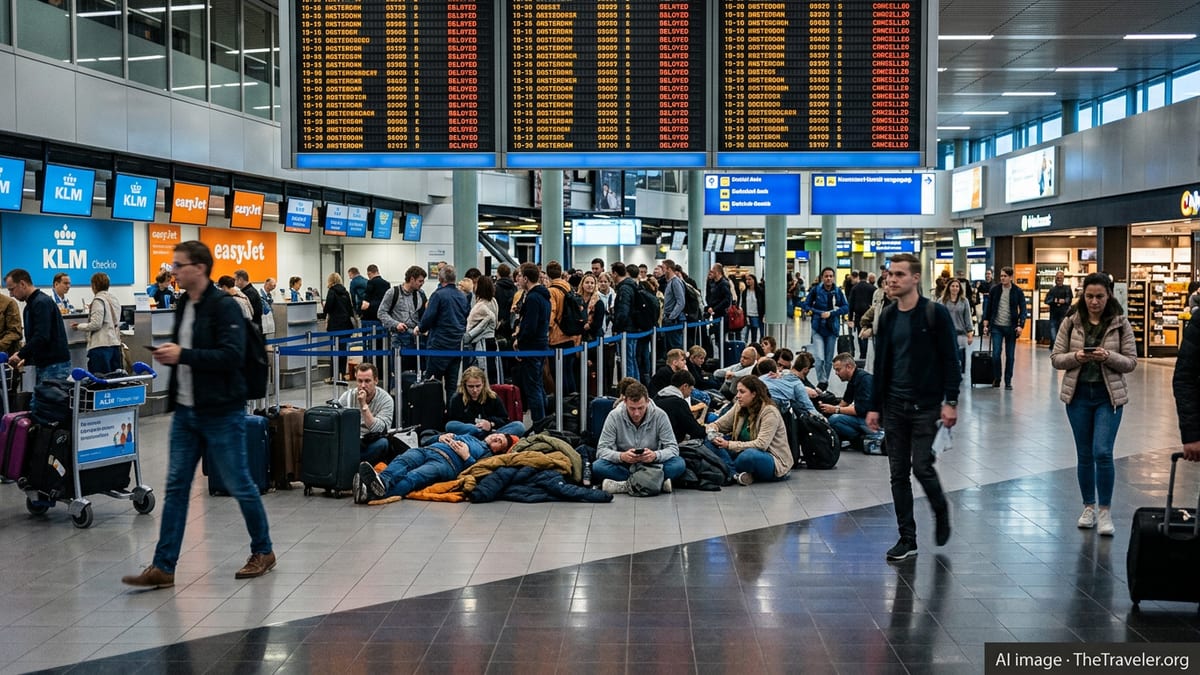
Early June operations at Vienna International Airport were hit by fresh disruption as four cancellations by Austrian Airlines and airBaltic triggered a chain reaction of delays across more than 50 European and intercontinental routes at the height of the early summer travel build-up.
Get the latest news straight to your inbox!
Targeted Cancellations Ripple Through a Busy Hub
According to publicly available flight-status data for the second week of June 2026, Austrian Airlines and Latvian carrier airBaltic each scrubbed selected departures at Vienna International Airport, removing a total of four flights from the day’s schedule. The cancellations, involving Austrian’s short-haul European services and airBaltic’s Vienna link to its Riga hub, came as flight volumes and load factors were already elevated by the early summer travel peak.
Operational data show that Austrian Airlines, the dominant carrier at Vienna and a key provider of connecting traffic, canceled a pair of European rotations from its hub, including at least one service to a nearby Star Alliance gateway. Separately, airBaltic removed its Vienna to Riga sector from the timetable on the same operational day, along with an associated return service, temporarily breaking a transfer link relied upon by travelers heading to and from the Baltics and Scandinavia.
Vienna International Airport serves as Austria’s largest aviation gateway and a major transfer point between Western Europe, Central and Eastern Europe, and select long-haul destinations. This combination of high connectivity and tight slot utilization means that the loss of even a small number of flights can quickly push the wider schedule off-balance, especially when cancellations occur in banked waves of departures and arrivals designed around short connection times.
Reports from flight-tracking platforms and traveler accounts indicate that the four cancellations did not occur in isolation but coincided with a day of already stretched operations, including aircraft rotations running behind schedule and congestion building during key morning and late-afternoon departure banks.
Cascading Delays Across 50-Plus Routes
Publicly available disruption logs for Vienna during the same June 2026 operational window show that more than 50 routes experienced departure or arrival delays linked to the initial cancellations and a knock-on squeeze on aircraft, crews, and airport resources. The impact extended across European cities such as Munich, Frankfurt, Zurich, Warsaw, Riga, and various Balkan and Eastern Mediterranean destinations, as well as several long-haul services connecting via Vienna to North America, the Middle East, and Asia.
In many cases, delay patterns followed familiar network effects. Aircraft that were scheduled to operate the canceled flights had to be repositioned, or were substituted onto other sectors to preserve capacity on higher-priority routes. This, in turn, left gaps elsewhere in the schedule, forcing further tactical adjustments. As rotations slipped behind by 30 to 90 minutes, connecting passengers missed onward flights, prompting rebookings onto later departures and further loading already busy services.
Some of the most affected routes were those with tight, banked connections where Austrian Airlines and its partners typically rely on 30 to 60 minute minimum transfer times. When an inbound aircraft arrived late from a regional European city or from Riga, the onward flight to destinations such as Brussels, Copenhagen, or Tel Aviv often had to wait for a critical mass of transfer passengers, or depart without them and trigger a cascade of missed connections and rebookings.
The disruption also spilled over into the evening, with turnaround times compressed and ground handling operations under pressure as delayed arrivals bunched up in narrow time windows. Flight-status portals showed a cluster of late-night departures leaving Vienna significantly behind schedule, particularly on routes to Southern and Eastern Europe where aircraft then faced curfew constraints and slot limitations at destination airports.
Strain on Connecting Passengers and Airport Operations
For travelers, the most visible consequences were missed connections, extended queues at transfer and customer service desks, and rebookings onto later flights or alternative routings through other hubs. Passenger reports highlighted instances where an inbound delay of less than an hour at Vienna resulted in a missed onward sector, especially when additional time was required for passport control between Schengen and non-Schengen flights.
The airport’s role as a transfer hub amplified the disruption. Vienna’s layout and processes are optimized for relatively fast connections, but that same design can become a vulnerability when multiple banks of flights are misaligned. As delays accumulated, arriving passengers encountered crowded security checkpoints and transfer corridors, and baggage systems had to cope with rapidly changing load plans as rebookings altered which bags needed to follow which flights.
Publicly available information from airline operations and airport briefings for the current summer season has already underlined that Vienna, like many European hubs, is operating close to capacity during peak hours. Labor availability, aircraft utilization rates, and high passenger volumes leave limited buffer to absorb irregular operations. The four cancellations by Austrian Airlines and airBaltic added an extra layer of strain onto this already tight environment, accelerating the spread of delays throughout the day.
Long-haul travelers were among those most affected when missed connections in Vienna disrupted carefully timed itineraries between North America or Asia and secondary European cities. While many were rebooked onto partner-carrier services via other hubs, this often extended total journey times by many hours and increased the risk of further knock-on delays amid wider congestion across the continent.
Airline Responses and Passenger Rights Context
According to publicly available guidance from Austrian Airlines and information from passenger rights organizations, affected travelers on canceled or heavily delayed flights departing the European Union may, in some circumstances, be entitled to assistance and compensation under EU261 regulations. Eligibility depends on factors such as flight distance, total delay on arrival, and the underlying cause of the disruption.
In practice, responses on the day focused on immediate operational measures. These included rebooking passengers onto later Austrian Airlines departures, rerouting some travelers via partner hubs in Frankfurt, Zurich, or other European cities, and, where needed, providing overnight accommodation or meal vouchers to those facing extended waits. For airBaltic customers whose Vienna link to Riga was canceled, alternative routings through other European airports or onto later services from Austria or neighboring countries formed part of the recovery effort.
Travel experts note that, during complex disruption events of this kind, passengers often experience inconsistent outcomes depending on the timing of their flights, the availability of spare seats, and the specific airline handling their case. Some travelers are rebooked quickly onto near-equivalent itineraries, while others face longer delays or partial solutions, such as being flown only as far as an intermediate hub and then waiting for onward availability.
Passenger-rights advocates frequently encourage travelers caught in such events to document boarding passes, delay durations, and any written communication from airlines in order to pursue potential claims later, once the immediate travel disruption has passed and operational systems are less pressured.
What the Disruption Signals for the Summer Peak
The June 2026 episode at Vienna highlights how even a relatively small number of targeted cancellations can have outsize effects at a highly interconnected hub. As airlines seek to maximize aircraft utilization and recover capacity lost in previous years, their schedules often leave less slack to absorb unexpected events such as technical issues, crew shortages, or minor weather disruptions.
Industry analysts have pointed out that Austrian Airlines is expanding and adjusting its summer schedule from Vienna at a time when several low-cost carriers are resizing or reshaping their presence in the Austrian market. This shift increases the importance of robust operations at Vienna, because fewer alternative direct options are available to some destinations, making disruptions at the hub more consequential for travelers.
The joint cancellations by Austrian Airlines and airBaltic, and the subsequent spread of delays across more than 50 routes, serve as an early-season stress test for airline and airport readiness ahead of the main July and August holiday surge. If similar patterns of disruption recur during peak school holiday weeks, the cumulative effect on passengers and operations could be significantly more severe.
For now, publicly available performance data suggest that most flights at Vienna continue to operate broadly as scheduled, but the events of early June underline the degree to which Europe’s summer travel season in 2026 remains vulnerable to chain reactions when even a handful of key flights at a major hub fall out of place.