


More news on this day
Hundreds of passengers were left sleeping on floors, queuing at counters and pleading for updates at Nairobi’s Jomo Kenyatta International Airport on Monday as an aviation workers’ strike dragged into a second day, disrupting flights and leaving many travelers unsure when they would be able to depart.
Get the latest news straight to your inbox!
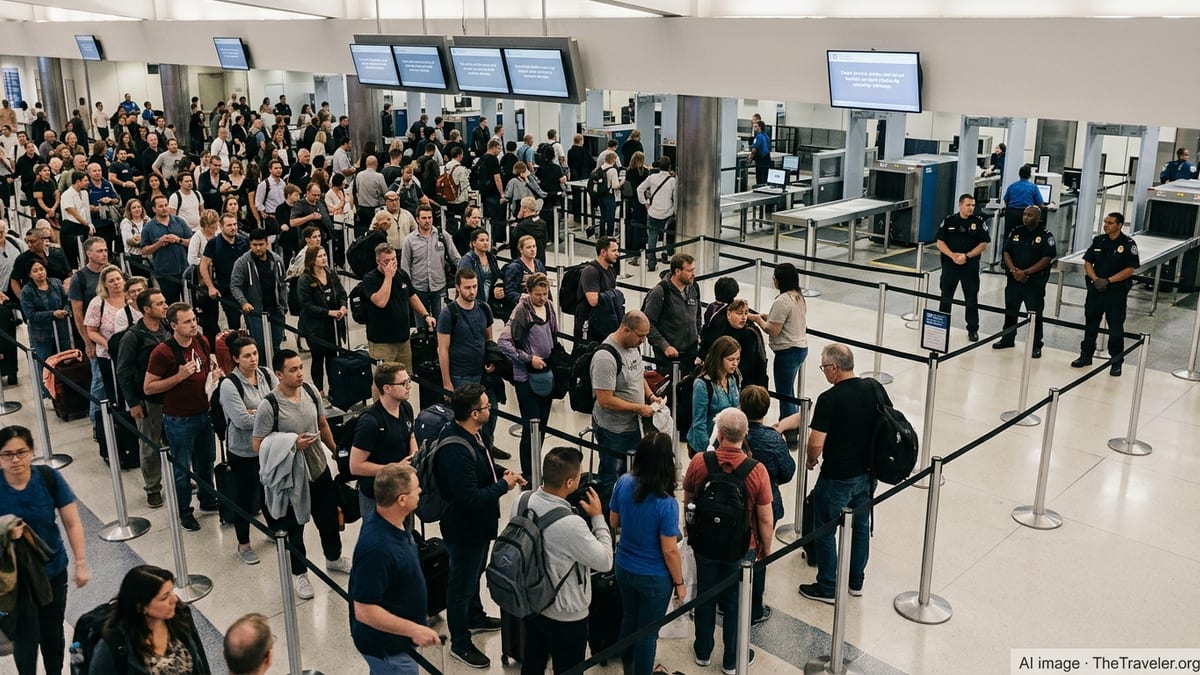
Passenger frustration grows as information gaps widen
The disruption at Jomo Kenyatta International Airport (JKIA) began on Sunday, when employees linked to the Kenya Airports Authority (KAA) and aviation sector unions staged a walkout over staffing, pay and working condition grievances. Publicly available reports describe mounting confusion inside the country’s busiest airport as information screens lagged behind reality, check-in counters went dark and many travelers said they were left relying on word of mouth for updates.
Coverage from local broadcasters and news outlets shows scenes of families camped out in departure halls, some using luggage as makeshift pillows. With flights delayed or cancelled, passengers reported missing onward connections and hotel bookings, while others said they were unsure whether to leave the airport for nearby accommodation in case their flights were suddenly reinstated.
Some accounts describe travelers who had already boarded aircraft being asked to disembark after the strike escalated, further adding to the sense of uncertainty. As of Monday afternoon, flight-tracking data and local media tallies indicated that dozens of departures and arrivals had been delayed or cancelled, affecting both regional and long-haul services.
Amid the confusion, many passengers voiced frustration at what they viewed as limited or inconsistent communication. Publicly available reporting from Nairobi highlights a common refrain from stranded travelers that they were seeing little clear guidance on revised departure times or alternative arrangements as the industrial action continued.
Strike rooted in staffing, pay and safety concerns
The industrial action has been linked in Kenyan media coverage to grievances raised by aviation workers over staffing levels, pay progression and working conditions at JKIA and other airports. Reports indicate that unions representing KAA staff and aviation service workers have for months flagged concerns about understaffing in key operational units, overtime burdens and what they describe as slow responses to earlier petitions.
According to recent reporting, the dispute also touches on issues of job security and the implementation of restructuring plans within the airports authority. Workers have expressed concern that changes to contracts and organizational structures could affect benefits and long-term career prospects, and have used the strike to press for written assurances and formal engagement on the proposed reforms.
Safety and service quality have also featured in public commentary by union representatives, who argue that chronic understaffing in technical and support roles risks placing additional pressure on remaining personnel. Industry observers quoted in Kenyan coverage note that sustained operational stress can contribute to lower morale and higher turnover in a sector that depends on consistent, around-the-clock staffing to maintain smooth airport operations.
Government statements and KAA updates published before and during the walkout have acknowledged the existence of negotiations with worker representatives. While calls for dialogue have been reiterated, publicly accessible reports on Monday suggested that key sticking points around pay adjustments, staffing numbers and the pace of implementing previously agreed changes remained unresolved as the strike entered its second day.
Airlines scramble to reroute, rebook and reassure
Airlines serving JKIA have spent the past 24 hours adjusting schedules and issuing public travel advisories as the strike unfolded. Major regional and international carriers published notices urging passengers to check their flight status before heading to the airport, and several confirmed that some services had been consolidated, delayed or cancelled in response to operational constraints on the ground.
Reports indicate that airlines have been working to rebook affected travelers on later flights where seats are available, or to reroute them through alternative hubs in the region. However, heavy demand on key routes and limited spare capacity have made it difficult to accommodate everyone quickly, particularly for long-haul services to Europe, the Middle East and Asia.
Travel industry analysts quoted in Kenyan media note that the timing of the disruption compounds its impact. JKIA functions as a major regional transit hub, so delays ripple across connecting flights and can strand travelers far from their final destinations. Some passengers have reported losing nonrefundable hotel nights or tour bookings, while corporate travelers have faced missed meetings and events.
Airlines have advised customers to keep contact details updated in their booking profiles so they can receive SMS or email alerts on changes. Nonetheless, on-the-ground reports from JKIA describe long queues at airline desks as passengers seek printed confirmations, meal vouchers and hotel arrangements, underscoring the challenge of managing a sudden operational shock in a busy terminal.
Emergency measures and calls for faster resolution
As the strike persisted into Monday, publicly available information from Nairobi highlighted efforts to deploy contingency measures at JKIA. Reports describe the mobilization of non-striking staff and auxiliary personnel to support basic passenger handling functions, including security screening and check-in for a limited number of flights, in a bid to prevent a complete shutdown of operations.
Kenyan coverage also points to coordination between airport management, government agencies and airlines to prioritize certain services, including medical evacuations and time-sensitive cargo. Even so, observers note that the inherently specialized nature of many airport roles limits how far temporary redeployments can restore normal activity during an industrial dispute of this scale.
Business groups and tourism stakeholders have publicly urged a swift resolution, warning that prolonged disruption at JKIA could dent confidence in Nairobi as a reliable regional hub. Kenya’s flag carrier and other airlines that use the airport as a base of operations face mounting costs from extended delays, diversions and passenger care obligations, which can escalate quickly once mass disruptions extend beyond a single day.
Commentary in Kenyan business and travel media has emphasized the importance of restoring predictable operations ahead of upcoming travel peaks and major conferences scheduled in Nairobi. Analysts argue that a clear roadmap for addressing worker grievances, combined with transparent communication to passengers and industry partners, will be central to rebuilding trust after the strike.
Travel advice for those heading to or through Nairobi
With the strike still in effect on Monday, publicly available travel advisories recommend that anyone due to fly from, into or through JKIA monitor developments closely. Airlines are directing passengers to use official websites and mobile apps to verify the status of their flights and to avoid arriving at the airport too early unless their departure is confirmed as operating.
For travelers already in Nairobi whose flights have been cancelled, consumer organizations cited in regional coverage advise maintaining documentation of all expenses incurred, including hotel stays, meals and alternative transport. These records may be needed when seeking refunds, travel insurance claims or, where applicable, assistance under airline policies.
Those planning future trips involving connections through Nairobi are being encouraged to allow longer connection windows and to consider flexible tickets where possible while the situation stabilizes. Travel agents have also suggested that passengers register with their airline’s messaging services so they can receive real-time updates if schedules shift at short notice.
While normal operations at JKIA may resume once negotiations yield a settlement, observers note that residual delays and congestion can persist even after a strike formally ends. Travelers passing through the airport in the coming days are therefore being advised to factor in additional time for check-in, security and transfers, and to keep a close eye on official updates as talks continue.
The Star Kenya coverage of stranded passengers at JKIA