


More news on this day
Overseas visitors planning ambitious journeys across Tokyo, Tohoku and southern Hokkaido now have a clearer path to cost-effective long-distance rail travel, as the JR East-South Hokkaido Rail Pass continues to anchor multi-city itineraries between the Japanese capital and Sapporo.
Get the latest news straight to your inbox!
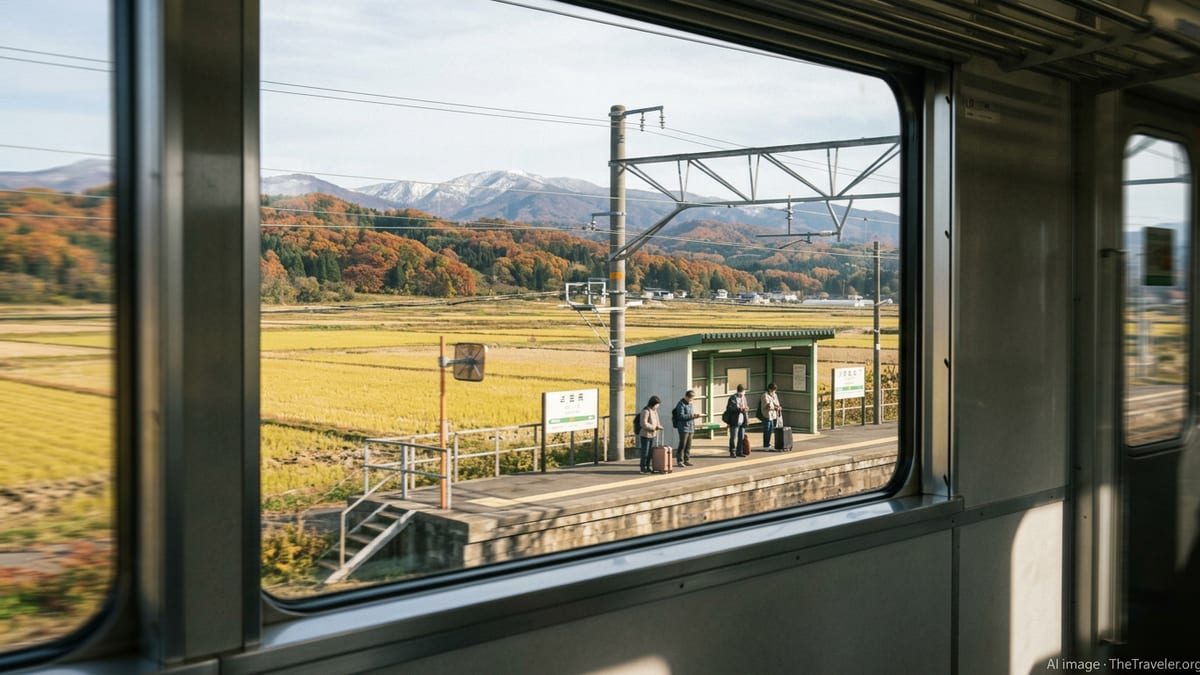
Six Consecutive Days to Cross Half of Japan by Rail
The JR East-South Hokkaido Rail Pass offers six consecutive days of unlimited travel on ordinary car seats of shinkansen, limited express, express and local JR trains across a wide swath of eastern and northern Japan. Publicly available information from JR East and JR Hokkaido shows that the pass covers JR East lines in the Kanto and Tohoku regions, JR Hokkaido lines in southern Hokkaido, plus associated operators such as Tokyo Monorail, Aoimori Railway, Iwate Galaxy Railway and Sendai Airport Transit within the designated area.
The product is designed for non-Japanese passport holders visiting Japan, and it is restricted to one pass in use at a time. Holders can ride the Tohoku, Hokkaido, Akita and Yamagata shinkansen on ordinary cars within the map area, which effectively links Tokyo with major northern cities including Sendai, Morioka, Aomori and Hakodate, then onward into Hokkaido’s rail network. Reports indicate that reserved and non-reserved seats in ordinary cars are included, allowing flexibility for both pre-booked and spontaneous journeys.
Because the six travel days must be used consecutively, the pass particularly suits travelers with fast-paced itineraries who intend to move almost every day. Sample routes shared in online trip reports show visitors combining urban time in Tokyo with stops in onsen resorts in Tohoku, side trips to cultural sites such as Nikko or Hiraizumi, and long-distance transfers to Hakodate or Sapporo, all under a single ticket.
Where the Pass Reaches from Tokyo to Southern Hokkaido
The free-travel area stretches from the greater Tokyo region through much of Tohoku and into southern Hokkaido. According to route maps published on JR East’s multilingual site, travelers can use shinkansen services north from Tokyo Station via Ueno and Omiya, then onward through key hubs including Sendai, Morioka and Shin-Aomori before crossing the undersea Seikan Tunnel on the Hokkaido Shinkansen to Shin-Hakodate-Hokuto.
From Shin-Hakodate-Hokuto, travelers typically transfer onto JR Hokkaido limited express services to reach Hakodate city, and then onward lines toward Sapporo and the wider Hokkaido network that falls within the pass’s defined area. The inclusion of the Tokyo Monorail between Haneda Airport and central Tokyo is another practical advantage, simplifying airport transfers for long-haul arrivals before they board shinkansen trains north.
Outside the high-speed trunk routes, the pass also covers conventional JR East and JR Hokkaido lines in the region, opening up smaller destinations across Tohoku and southern Hokkaido. Travel media and tourism information portals highlight use cases such as accessing historic castle towns, coastal onsen resorts, and mountain temple complexes that sit away from the bullet train mainlines but are still linked by JR rapid or local services.
Pricing Revisions and Validity Windows to Watch
The JR East-South Hokkaido Rail Pass has undergone several pricing revisions in recent years, following broader fare adjustments in the JR group. Press materials from JR East and JR Hokkaido in early 2025 and 2026 outline step-by-step increases to regional passes, including this product, to reflect changing operational costs. Travel advisories and rail specialist sites currently list the adult price for the pass in the mid-30,000 yen range, with child pricing roughly half that level, though exact figures depend on where and how the pass is purchased.
One recent notice from JR Hokkaido describes transitional arrangements under which the existing price applies to travel that begins on or before March 8, 2026, before later revisions take effect. Prospective visitors are encouraged by tourism bodies and booking agencies to check the latest validity rules and pricing bands close to their intended travel dates, as PDFs and bilingual web pages are periodically updated ahead of each change.
Beyond headline prices, the terms and conditions also set out important usage rules. Travelers must carry and present their original non-Japanese passport to purchase and use the pass, and the same individual named on the pass must be the user. Multiple passes with overlapping validity periods cannot be held concurrently, and refunds are only available under specific conditions, typically before the pass period begins and via the company or channel from which it was purchased.
How Overseas Travelers Obtain and Use the Pass
Distribution channels for the JR East-South Hokkaido Rail Pass now span both overseas and in-country options. According to Japan-focused travel advisories and the national tourism organization, visitors can buy an exchange order through selected travel agencies abroad and online sellers, then swap it for the actual pass at major JR East and JR Hokkaido stations and airports once they arrive in Japan. In parallel, purchase inside Japan is possible at designated ticket offices and, in some cases, automated machines that scan passports.
Once issued, the traveler selects a starting date and can then ride freely within the covered area for six consecutive calendar days. Seat reservations for shinkansen and limited express trains can be made at ticket counters or reserved-seat machines. Travel blogs and user reports emphasize that, especially in busy seasons such as autumn foliage or winter ski periods, reserving popular shinkansen or airport connections in advance maximizes the value of the pass.
Online coverage also points out that the pass is valid only in standard-class (ordinary) cars, and does not extend to premium Green Car or Gran Class seats. Some non-JR services, including subways, streetcars and certain private railways in Hokkaido and the Kanto region, fall outside the pass, so travelers still need separate tickets or IC cards for those segments. Checking route planners that can filter by JR lines helps avoid surprises when planning day trips off the main corridor.
Strategic Alternative to the Nationwide Japan Rail Pass
With the nationwide Japan Rail Pass significantly more expensive since late 2023, regional products such as the JR East-South Hokkaido Rail Pass have drawn more attention from cost-conscious visitors. Comparison charts on independent travel sites suggest that travelers intent on exploring only eastern Honshu and Hokkaido often achieve better value by combining this pass with occasional separate tickets elsewhere, rather than investing in a full-country pass.
Analyses published on rail-focused forums describe scenarios in which the JR East-South Hokkaido Rail Pass pays off quickly: for example, a one-way or round-trip shinkansen journey between Tokyo and Shin-Hakodate-Hokuto or Sapporo, plus several intermediate stops in Tohoku, can easily exceed the face value of the pass if bought as individual fares. When airport transfers and side excursions to nearby regions are added, the savings can expand further.
However, commentators also underline that the pass is most effective for travelers who are on the move almost every day within the six-day window. For itineraries centered mainly on Tokyo with only one or two long-distance trips north, route planners frequently show that single or return tickets, possibly combined with local discount passes, can be cheaper. The growing diversity of regional passes across Japan has made it more important for visitors to map out their exact rail usage before deciding which product best fits their plans.
For those committed to an epic overland adventure between Tokyo and Hokkaido, the JR East-South Hokkaido Rail Pass remains positioned as a flexible, high-speed backbone that stitches together cities, hot-spring towns and mountain landscapes across Japan’s northeast, making ambitious multi-stop journeys both logistically easier and comparatively affordable.
JR East-South Hokkaido Rail Pass | JR East official page
JR East-South Hokkaido Rail Pass terms and conditions