


More news on this day
India’s famed Kalka–Shimla toy train has resumed partial operations between Dharampur and Shimla, following days of disruption after heavy monsoon rains triggered landslides and track damage near Parwanoo in Himachal Pradesh.
Get the latest news straight to your inbox!
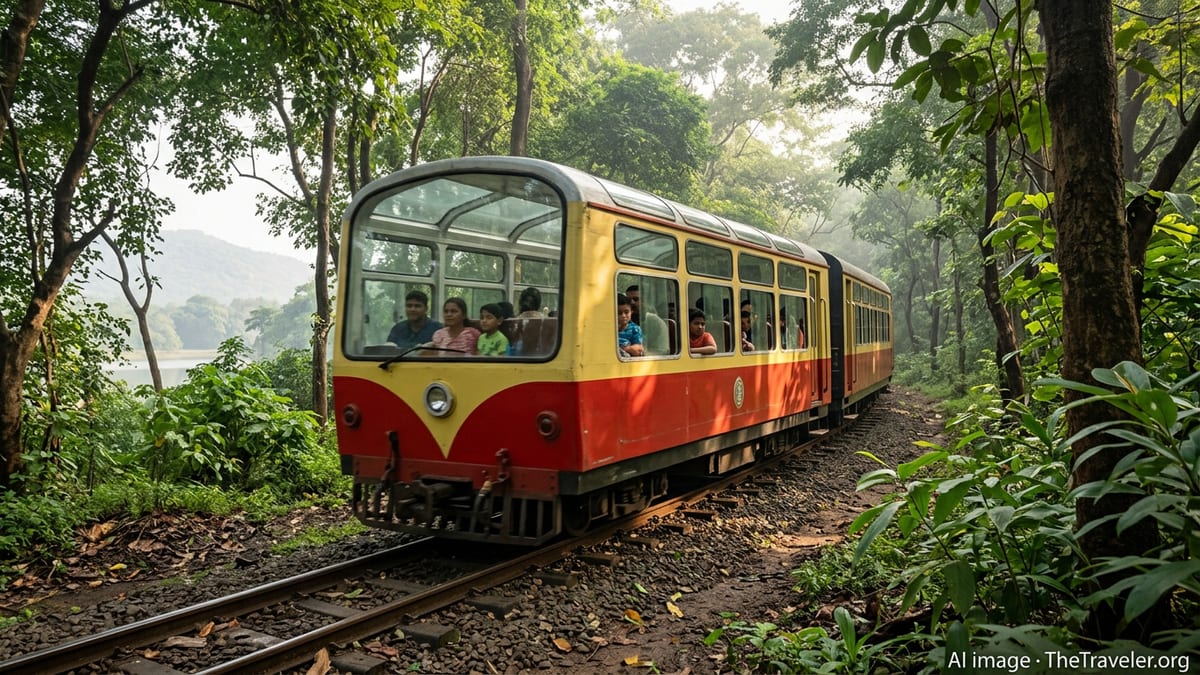
Limited Services Resume on UNESCO Mountain Railway
Published coverage indicates that narrow-gauge services on the Kalka–Shimla mountain railway restarted in a curtailed form from early September 2026, with trains now running on the upper stretch between Dharampur and Shimla. The lower section from Kalka up to Dharampur remains out of service as engineers address damage to embankments and drainage systems near Parwanoo, where intense rain caused slope failures along the heritage route.
Reports from regional outlets describe a cautious reopening after a landslide near Bridge No. 57 between Koti and Ghumman stations, which forced authorities to halt several trains at the end of August and cancel or short-terminate services until at least September 1. Subsequent inspections and emergency repairs allowed rail managers to clear a portion of the line, enabling the resumption of truncated toy train runs serving key hill stations further up the route.
The Kalka–Shimla line, inscribed as a UNESCO World Heritage Site, is one of India’s most recognizable mountain railways and a major draw for domestic and international visitors. Publicly available information shows that the partial restoration focuses on sections deemed structurally sound after repeated checks, while work crews continue stabilisation efforts in the more vulnerable lower reaches.
According to recent travel and news reports, the restart has been framed as a balancing act between reviving tourism and ensuring safety during an active monsoon period, with further decisions on full restoration expected once rains ease and geotechnical assessments are complete.
Monsoon Damage Forces Cancellations and Short-Term Suspensions
The latest disruption on the Kalka–Shimla line followed a series of weather-related incidents across Himachal Pradesh this monsoon season. In late July 2026, national and regional media reported that four toy train services were suspended for around 10 days due to persistent landslide risk along the 94-kilometre corridor. Those precautionary suspensions were extended when heavy rainfall continued, softening slopes and increasing the likelihood of debris falls.
By August 30, coverage from multiple Indian news outlets detailed a significant landslide and a culvert washout near Bridge No. 57, leading to the suspension of prominent services including the Kalka–Shimla Express, Shivalik Deluxe Express, and Himalayan Queen. Some trains were terminated short of their destination, and hundreds of passengers were moved onward by road while teams examined damage to the track bed and supporting structures.
Reports indicate that the combination of saturated ground, steep gradients and numerous bridges and tunnels continues to challenge operations on this historic line. Previous monsoon seasons have also seen washouts and embankment failures on sections of the route, prompting extended closures and extensive repair programmes. This year’s events again underscored how vulnerable the narrow-gauge corridor can be when intense rainfall coincides with already fragile slopes.
Information from heritage and railway-focused publications notes that slips and landslides are relatively common across the Kalka–Shimla section, with maintenance teams routinely mobilised during the wet season. However, the scale of the latest damage, particularly the culvert failure and track deformation near Parwanoo, required more than routine clearance and called for structural rehabilitation before through trains from the plains could resume.
What the Partial Restoration Means for Travelers
The current arrangement, where trains operate from Dharampur up to Shimla, allows a large portion of the scenic journey to continue while the low-lying section near Kalka remains closed. Recent travel updates suggest that passengers originating from Chandigarh, Kalka or other nearby gateways are now relying on road transfers to reach Dharampur, where they can board the toy train for the remaining climb to the hill capital.
Travel advisories emphasize that direct toy train services from Kalka are still suspended as of early September, and that timetables may change at short notice depending on rainfall and the progress of repairs. Prospective passengers are being encouraged, via public information and media coverage, to verify operating status and departure stations close to their travel dates and to allow additional time for connections between road and rail.
Despite the restrictions, reports from local-language and English-language outlets describe a swift return of interest in the heritage service. Many visitors who had long planned a ride on the mountain railway are opting for the shortened route rather than cancelling their trips outright, contributing to a gradual revival of bookings for the available segments.
Travel writers note that even the partial route between Dharampur and Shimla retains many of the line’s signature features, including sharp curves, stone viaducts and views over forested valleys. For visitors focused primarily on the high-altitude stretch of the journey, the modified service still delivers much of the classic toy train experience while bypassing the currently affected lower section.
Impact on Local Tourism and Hill Economy
The Kalka–Shimla toy train is widely regarded as a key pillar of the tourism economy in Himachal Pradesh, feeding visitors into hotels, homestays, restaurants and tour operations along the route. Coverage in regional business and general news media highlights the concern among local traders when cancellations began in late August, with many reporting reduced footfall as passengers shifted to road-only travel or postponed trips amid uncertainty.
The resumption of partial train services is being framed as a welcome signal for the hill economy, particularly in and around Shimla where occupancy levels are closely tied to weekend and holiday arrivals from the plains. Early reports after reopening speak of a visible uptick in tourist movement around stations on the functioning stretch, along with renewed demand for local transport, food outlets and guided excursions.
However, analysts and commentators also caution that recovery is likely to be uneven until the full Kalka–Shimla corridor is restored. The distinctive appeal of boarding the toy train at Kalka and experiencing the complete ascent in one continuous journey remains an important marketing hook for tour operators and rail enthusiasts. Until that experience is fully available again, some long-haul visitors may defer travel or opt for alternative mountain destinations.
Travel industry observers are therefore watching closely for updates on engineering works near Parwanoo and the timeline for reopening the lower section. Once trains are able to run the full 94-kilometre distance, stakeholders expect a more robust rebound in arrivals, particularly as the region moves from the peak monsoon period toward the cooler autumn travel season.
Ongoing Repairs and Safety Measures on the Heritage Route
Published information from railway and infrastructure reports describes a multi-pronged repair effort on the damaged section of the Kalka–Shimla line. Teams are reportedly focusing on rebuilding the washed-out culvert, reinforcing embankments, clearing accumulated debris, and improving drainage to reduce the likelihood of similar incidents in future monsoons. Geotechnical assessments of hillside stability and bridge foundations are also understood to be central to the restoration plan.
Heritage documentation for the corridor notes that the line comprises more than 800 bridges and over 100 tunnels, many of them more than a century old. Each extreme-weather event adds pressure to ongoing conservation work, both to maintain the structural integrity of these historic assets and to preserve the distinctive character that earned the railway its World Heritage inscription.
In the short term, operational changes such as speed restrictions on certain sections, close monitoring of rainfall thresholds, and the continued use of truncated services are being highlighted in media coverage as key elements of the safety protocol. Train operations are being progressively expanded only on stretches where inspection teams deem the infrastructure sound enough to support regular passenger movements.
Looking ahead, commentators suggest that the latest landslide damage may accelerate broader discussions about climate resilience across India’s mountain railways. The experience on the Kalka–Shimla route this monsoon season is likely to feed into plans for more robust slope protection, enhanced early warning systems, and potentially revised operating windows during periods of intense rainfall, in order to protect both travelers and this historic line.
https://www.thetraveler.org/kalka-shimla-toy-train-partially-restored-after-rain-damage/