


More news on this day
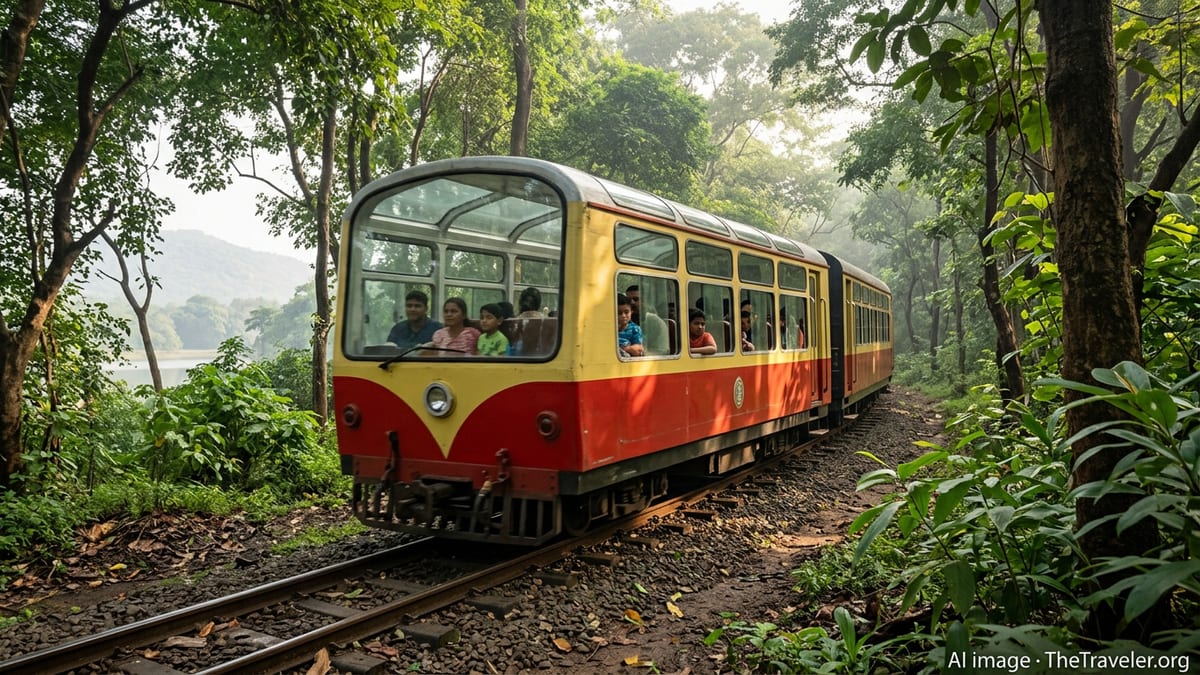
India’s famed Kalka–Shimla toy train is back on the rails between Dharampur and Shimla, as authorities restore partial services on the UNESCO-listed mountain railway following damage from intense monsoon rains and landslides near Parwanoo in Himachal Pradesh.
Get the latest news straight to your inbox!
Heritage Mountain Line Reopens in Stages
Published coverage indicates that trains have resumed running on the Kalka–Shimla narrow-gauge line between Dharampur and Shimla, restoring a significant stretch of one of India’s most recognisable mountain rail journeys. The restart comes after more than a week of disruption, when torrential rain triggered a landslide that washed away soil beneath a section of track near Parwanoo in Solan district.
Reports describe the current operation as a partial restoration, with the lower Kalka–Dharampur section still affected while repair and safety work continues. Passengers beginning their trips from the plains are currently using road connections between Kalka and Dharampur before boarding the toy train for the scenic ascent toward Shimla.
The Kalka–Shimla Railway forms part of the Mountain Railways of India UNESCO World Heritage property, recognised for its engineering significance and historic role in opening up high Himalayan terrain to rail travel. The 96-kilometre route climbs from around 656 metres at Kalka to more than 2,000 metres at Shimla, threading through tunnels, stone bridges and tight curves along the Shivalik hills.
Railway documents and UNESCO material note that the line, opened to traffic in 1903 and granted World Heritage status in 2008, has retained much of its original character, with single-track operations and heritage structures that continue to function as part of daily train services.
Monsoon Damage Highlights Fragility of the Route
The latest suspension followed intense monsoon rainfall across Himachal Pradesh, a region where heavy seasonal downpours often trigger landslides and track subsidence on hill railways. According to regional media coverage, soil erosion beneath the narrow-gauge line near Parwanoo left a section of track exposed and unsafe, making a temporary halt to services unavoidable.
Technical notes issued about the Kalka–Shimla section indicate that slips and landslides are a recurring operational challenge along the steep gradients and cuttings of the route. Maintenance teams regularly undertake slope stabilisation, clearing of rockfall, and reinforcement of retaining walls to keep the line open through the monsoon period.
The recent closure was one in a series of weather-related interruptions that have affected India’s mountain railways in recent years, underlining how climate and terrain continue to shape travel in the Himalayas. Publicly available information on the Kalka–Shimla line points to ongoing investment in bridge strengthening, track renewal, and drainage improvements aimed at reducing future disruption.
Despite the vulnerability, the rapid move to restore at least part of the service between Dharampur and Shimla reflects the importance of the route not only as a heritage asset but also as a local transport link for communities along the corridor.
Tourism Boost as Dharampur–Shimla Section Reopens
Local and regional reports describe visible excitement among visitors as the toy train again began its journey from Dharampur toward Shimla. The reinstated stretch passes hill stations and villages that depend heavily on tourism, with the characteristic blue-and-cream rakes once more drawing crowds to small platforms for photographs and day trips.
Coverage from Hindi-language outlets indicates that passenger loads on the reopened section rose quickly once services restarted, suggesting pent-up demand from travellers who had either postponed or rerouted their journeys during the closure. Many are now combining road travel from Kalka with the rail leg from Dharampur to retain at least part of the classic mountain train experience.
Travel forums and social posts highlight that visitors are adapting to the hybrid routing, often using buses or taxis to reach Dharampur before continuing by rail. This pattern mirrors earlier partial resumptions on the line, when services were restored in segments while work crews stabilised damaged slopes elsewhere on the route.
Tourism operators along the corridor are closely watching how quickly full through services will be restored from Kalka to Shimla, but the Dharampur–Shimla segment is already being promoted as a key draw for late-monsoon and autumn travellers.
UNESCO Heritage Status Adds Global Attention
The Kalka–Shimla Railway’s designation as part of the Mountain Railways of India UNESCO World Heritage site means any extended disruption draws interest beyond the region. UNESCO documentation describes the line as an outstanding example of high-altitude rail engineering, crediting its tunnels, multi-arched bridges and tight-radius curves as integral to its heritage value.
The railway climbs more than 1,400 metres over its full length, passing 20-plus stations including Dharampur, Solan and Barog before reaching Shimla, once the summer capital during the British era. The combination of historic infrastructure and active daily operation has made the toy train a flagship experience for both domestic and international visitors.
World Heritage material notes that the integrity of the route depends on its continued use as a working railway, with regular passenger services and freight operations on certain trains. Each successful reopening after weather-related closures is therefore seen as a positive sign for the long-term conservation of the line.
Recent attention on the Dharampur–Shimla restart also sits within a broader discussion about how to protect India’s mountain rail heritage from increasingly volatile Himalayan weather patterns while still allowing modern tourism to flourish.
What Travellers Need to Know Right Now
For travellers planning journeys in the coming days, publicly available information indicates that services are currently operating between Dharampur and Shimla, with the lower section from Kalka still awaiting full restoration. Prospective passengers are being encouraged, through travel advisories and media coverage, to check the latest train status and weather forecasts before finalising bookings.
The partial reopening means itineraries may involve a mix of rail and road travel. Many visitors are booking trains originating at Dharampur or transferring there after arriving by bus or taxi from Chandigarh or Kalka, then completing the final, most scenic sector by toy train.
Given the ongoing monsoon season and the hilly terrain, journey times can vary, and last-minute adjustments remain possible. Travellers are advised in published guides and reports to build in extra time for connections and to monitor local news and Indian Railways updates for any fresh advisories related to rainfall or landslides.
Despite these caveats, the latest restart of the Dharampur–Shimla services signals that India’s iconic toy train journey is once again within reach, providing a timely boost for mountain tourism and reinforcing the enduring appeal of heritage rail travel in the Himalayas.
Amar Ujala: Dharampur–Shimla toy train to run again
Dainik Tribune: Kalka–Shimla toy train runs again from Dharampur to Shimla
UNESCO World Heritage Centre: Mountain Railways of India
Dailyhunt: Kalka–Shimla toy train resumes partial service after landslide damage