


More news on this day
Travel across Nunavik faced fresh disruption this week as a cluster of Air Inuit delays and cancellations at Kangirsuk Airport triggered a wave of missed connections and extended layovers for passengers trying to reach Montreal, Quebec City and other communities in northern Quebec.
Get the latest news straight to your inbox!
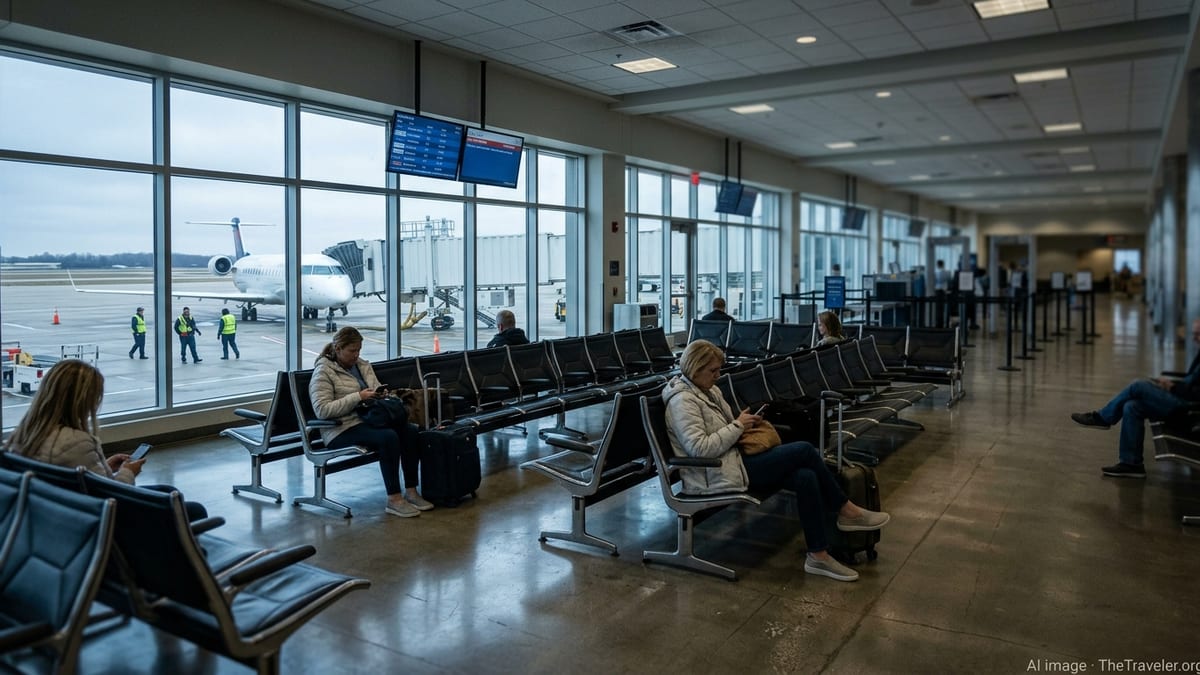
Three Cancellations and Three Delays Snarl a Critical Arctic Corridor
Publicly available flight status information and schedule data indicate that six Air Inuit services linked with Kangirsuk were affected over a short period, with three flights canceled outright and three others experiencing significant delays. The disruptions occurred on routes connecting Kangirsuk with nearby Nunavik communities such as Quaqtaq and Kuujjuaq, as well as on southbound services that feed into longer journeys toward Montreal and Quebec City.
The affected flights represent a substantial share of capacity on a corridor where only a limited number of movements operate on typical days. In a region without road connections to southern Quebec, the loss or late departure of even a single rotation can cause passengers to miss once daily or less frequent onward services. With three cancellations and three delays clustered around Kangirsuk, the impact quickly spread beyond the immediate airport.
Reports indicate that some travelers attempting to connect through Kangirsuk toward larger hubs were forced to rebook itineraries, remain overnight in remote communities or reroute via other Nunavik airports. The pattern echoes recent irregular operations elsewhere in the region, including previous incidents at Quaqtaq and Puvirnituq that also involved multiple Air Inuit cancellations and delays.
Operational data and regional coverage suggest that a mix of factors typically contributes to such disruptions in Nunavik, including fast changing weather, limited airport infrastructure and the tight scheduling required to cover widely dispersed communities with a relatively small fleet.
Connectivity to Montreal and Quebec City Under Strain
Kangirsuk’s role within the Nunavik network means that local disruptions can have outsize effects on access to Montreal and Quebec City. Route maps and timetable information show that many northern passengers reach southern Quebec through a series of short hops, often connecting from smaller airstrips such as Quaqtaq and Kangirsuk into hubs like Kuujjuaq or Puvirnituq before continuing on to Montreal or Quebec City.
When a flight in that chain is canceled or heavily delayed, travelers headed south may miss infrequent jet departures that link Nunavik with Montreal Trudeau or Quebec City Jean Lesage airports. In those cases, passengers can find themselves waiting a full day or more for the next available seat, particularly during periods when demand from medical travel, school terms or seasonal work rotations is high.
Recent advisories and bulletins from Air Inuit highlight schedule adjustments and operational changes on Montreal and Quebec bound services, underlining how tightly the Nunavik network is wound around a limited number of daily departures. With the carrier also introducing larger aircraft on some trunk routes between Montreal and Nunavik, any misalignment between regional feeder flights and southern connections risks leaving seats empty on long sectors while passengers remain stranded further north.
For communities like Kangirsuk, Quaqtaq and Kuujjuaq, dependable access to Montreal and Quebec City is more than a matter of convenience. Public information from regional organizations describes how specialized health care, higher education, legal proceedings and many government services are concentrated in those southern cities. Travel disruptions at a small Arctic airport can therefore translate into missed medical appointments, postponed training programs and delays in administrative processes hundreds of kilometers away.
Ripple Effects Across Nunavik’s Remote Communities
The six flight disruptions tied to Kangirsuk are part of a broader pattern of irregular operations that has affected multiple Nunavik airports in recent months. Coverage of earlier events at Puvirnituq, Kuujjuaq, Ivujivik and Quaqtaq describes how clusters of cancellations and delays at a single airport can reverberate throughout the region’s interconnected route map.
Because many services operate as multi leg journeys linking several communities on a single aircraft rotation, a problem on one segment quickly cascades to others. A delayed departure from Kangirsuk, for example, can push back the aircraft’s arrival at its next stop, potentially shortening connection windows or forcing crews up against duty time limits that require further schedule adjustments.
Publicly available information on Nunavik’s aviation infrastructure points to structural constraints that make recovery from irregular operations more complicated than at larger southern airports. Runways are often shorter and unpaved, ground handling resources are limited, and there may be few or no spare aircraft or crews available to step in when schedules unravel. As a result, clearing the backlog from three cancellations and three extended delays can take multiple days.
Residents and visitors caught in these disruptions may also face challenges with accommodation and basic services. Reports from previous incidents in Nunavik have noted that local lodging capacity is extremely limited, leading some passengers to rely on informal arrangements or community facilities when forced to remain overnight unexpectedly.
Operational Pressures and Weather Challenges in the Far North
Public documentation and safety reviews relating to air travel in northern Quebec emphasize the particular operating environment faced by airlines serving Nunavik. Even in periods of relatively stable weather, crews must contend with rapidly changing visibility, strong winds, low cloud ceilings and winter conditions that can vary dramatically between communities only a short flight apart.
These factors, combined with minimal navigational and weather monitoring infrastructure at some remote airstrips, can force last minute changes to flight plans, diversions or returns to origin. Official flight status pages for regional carriers, including Air Inuit, frequently attribute cancellations and delays to adverse weather, low visibility or airport conditions. In some cases, mechanical inspections or maintenance requirements add further complexity when aircraft are pushed hard to maintain connectivity across wide geographic areas.
Air Inuit’s publicly available advisories in 2026 outline scheduled changes on routes along the Ungava Coast and Hudson Bay, reflecting efforts to adapt operations in light of demand, seasonal conditions and long term fleet planning. The introduction of larger jet aircraft on certain Montreal Nunavik services aims to increase capacity and resilience, but regional observers note that this strategy still depends heavily on smaller turboprop flights feeding passengers from communities like Kangirsuk into the main hubs.
Aviation analysts who track northern operations point out that, while the frequency of disruptions may appear high compared with southern networks, the industry in Nunavik operates in a far more constrained environment. Nonetheless, recent clusters of delays and cancellations, including the three delays and three cancellations linked to Kangirsuk, continue to draw attention to the vulnerability of the system and the limited alternatives available when problems arise.
Passengers Confront Limited Options and Growing Scrutiny
For travelers affected by the latest disruptions at Kangirsuk, options for mitigation remain narrow. Unlike in larger markets where multiple airlines and surface transport alternatives exist, Nunavik residents and visitors largely depend on a single regional carrier and a sparse flight schedule. If seats on the next available service are already spoken for, travelers may be required to wait several days before they can continue their journeys.
Public guidance from travel advisors familiar with northern Canada recommends that passengers build additional buffer time into itineraries involving Nunavik, particularly when connecting to long haul flights out of Montreal or Quebec City. Allowing at least one or more extra days between scheduled arrival from Nunavik and critical appointments or international departures is frequently cited as a prudent step, given the possibility of operational or weather related delays.
At the same time, recent reporting across Arctic regions shows heightened attention on the reliability and transparency of northern air services. Community organizations, local media and travelers have increasingly documented disruptions, using publicly accessible flight data to illustrate patterns of late operations and cancellations. The three delays and three cancellations at Kangirsuk add another datapoint to that emerging picture of strain in Nunavik’s air transport network.
As peak summer travel approaches for scientific projects, tourism and family visits, observers note that the resilience of Nunavik’s air links will remain under close watch. For now, the recent disruptions at Kangirsuk serve as a reminder that every delayed or canceled flight in the region can have consequences far beyond a single airport, affecting connectivity to Montreal, Quebec City and the broader world.