

More news on this day
Karnataka’s 2026-27 state budget, presented on March 6 by Chief Minister Siddaramaiah, has placed an unprecedented focus on the sea, outlining a slate of seaplane corridors, coastal skywalks and marine tourism projects designed to recast the state as a leading Indian gateway for experiential maritime travel.
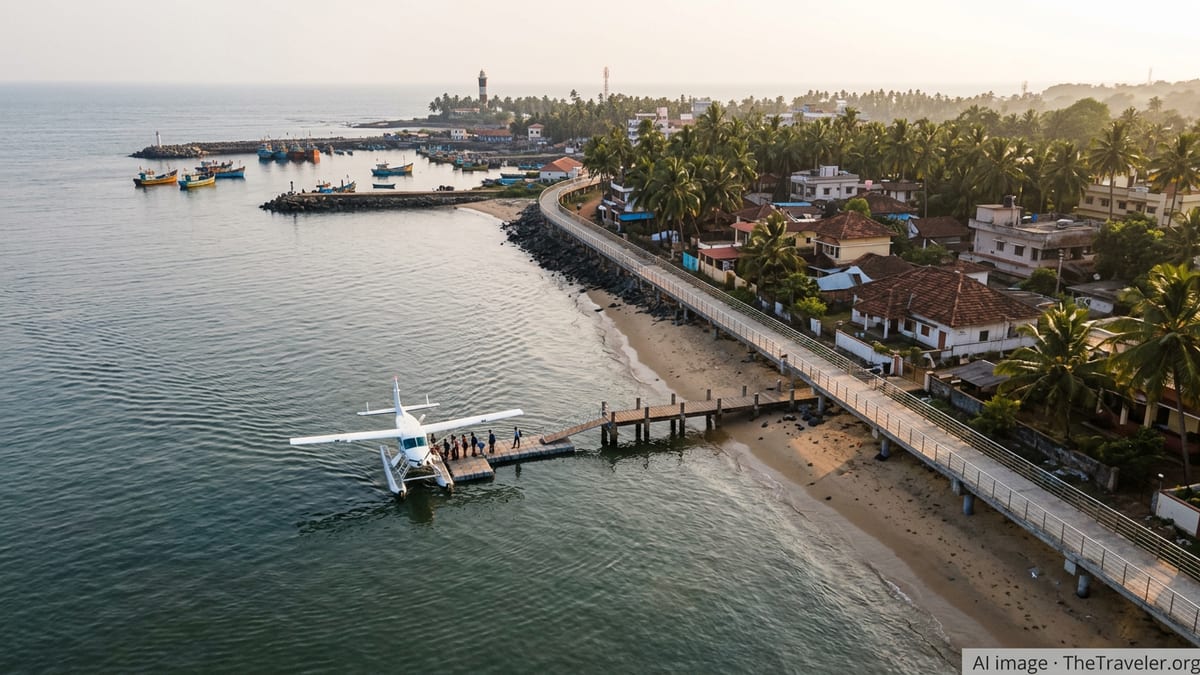
Seaplanes and Heli-Taxis to Anchor a New Coastal Network
The Budget 2026-27 speech detailed plans to introduce seaplane services linking key coastal and inland water destinations, building on earlier feasibility studies for operations at reservoirs and heritage sites. The move is intended to sync with recent Union-level incentives for seaplane manufacturing and regional connectivity, positioning Karnataka to tap into emerging amphibious aviation routes along India’s western seaboard.
Legislators from the coastal belt have framed the announcement as a breakthrough for regions such as Dakshina Kannada and Uttara Kannada, where access has long depended on congested road corridors. Seaplane services are being pitched as a faster alternative for high-value tourists and business travelers connecting Bengaluru, Mangaluru and smaller beach and island clusters along the Arabian Sea.
Complementing the seaplane plan, the budget also highlights heli-taxi services as part of a broader “modern transport” package for tourism. Policy watchers note that taken together, amphibious aircraft and short-hop helicopter links could create a tiered coastal aviation network, with waterdromes and helipads serving as new gateways for resorts, pilgrimage centers and dive or surf spots.
Officials have stressed that route selection will be guided by environmental and safety clearances, with an emphasis on using existing port and naval infrastructure wherever possible. This is expected to reduce upfront capital costs while accelerating the rollout of initial pilot corridors over the next two financial years.
Skywalks, Ropeways and Coastal Walkways to Reframe the Shoreline
Beyond air connectivity, the budget sets out an ambitious agenda for new skywalks, ropeways and elevated coastal walkways, aimed at turning waterfronts into year-round public attractions. Tourism planners say the focus is on light-footprint structures that offer panoramic views of harbours, estuaries and beaches without heavy reclamation or intrusive construction on the sand.
Among the headline projects are skywalk-style promenades proposed around select fishing harbours and old port precincts, enabling visitors to observe maritime activity from raised decks. These installations are being presented as a way to blend tourism with education, showcasing traditional boat-building, fish auctions and lighthouse heritage within a controlled visitor circuit.
The budget also references ropeway projects in hill districts that are expected to plug directly into coastal itineraries, allowing travelers to pair beach stays with quick access to viewpoints in the Western Ghats. Officials argue that seamless “sea-to-summit” experiences will differentiate Karnataka from rival destinations along the Konkan and Malabar coasts.
Urban planners, however, have urged the government to publish detailed design guidelines for skywalks and ropeways, warning that poorly planned structures could cut off local communities from the waterfront or disrupt existing fishing operations. The tourism department has indicated that public consultations with coastal village panchayats and harbour boards will be built into the project pipeline.
Comprehensive Coastal Tourism Plan Backed by New Investments
Central to the maritime push is a Comprehensive Coastal Tourism Development Plan announced in the budget as the main framework for aligning spending across ports, beaches, backwaters and islands. The plan is expected to bring together initiatives under the Karnataka Maritime Board, the coastal development authority and the tourism department into a single investment and branding strategy for the state’s shoreline districts.
Recent months have already seen the maritime board identify clusters of islands and backwater stretches in Udupi and Uttara Kannada for eco-resort and cruise jetty development. The 2026-27 budget builds on these moves, signaling that allocations for coastal tourism will not be limited to beach beautification but will extend to jetties, anchorages, safety infrastructure and training centers for marine guides and water-sports operators.
Industry groups such as the Kanara Chamber of Commerce and Industry have broadly welcomed the focus, describing the coastal plan as overdue recognition of the region’s potential for high-spend tourism and allied services. They have nevertheless pressed for clarity on timelines, regulatory approvals and the extent of private participation to ensure that projects do not stall at the memorandum stage.
State officials have indicated that the coastal plan will be implemented largely through public–private partnerships, with the government providing common infrastructure and clearances while operators invest in hotels, houseboats, dive centers and experience-based products. The model is expected to mirror approaches used in port privatization and industrial corridor development, adapted to the sensitivities of tourism and marine ecology.
Ports, Harbours and Island Hubs Recast as Tourism Gateways
The budget’s maritime tourism agenda is closely tied to an ongoing effort to modernize Karnataka’s minor ports and fishing harbours. Recent policy steps to invite private partners into berths at ports such as Karwar, Mangaluru and Malpe have been framed not only as a logistics upgrade, but also as a way to free up sections of the waterfront for cruise terminals, leisure marinas and seafront public spaces.
Under the new budget, port-linked tourism is set to receive additional momentum, with priority expected for passenger-friendly facilities like floating jetties, terminal buildings and integrated ticketing systems that can handle both local ferries and tourist cruises. Officials say the long-term goal is to make it possible for visitors to arrive at one coastal city and travel north or south by water, stopping at smaller harbours and islands along the way.
The Karnataka Maritime Board’s island development initiatives are being positioned as pilot hubs in this emerging network. Plans include controlled visitor numbers, basic stay options, guided nature trails and strict rules for waste management and groundwater use. Authorities argue that this model can showcase low-impact island tourism in contrast to overcrowded beach strips elsewhere in the country.
Maritime analysts point out that successful integration of ports and tourism will require close coordination between shipping, fisheries, defence and local bodies. In sensitive zones, naval and coast guard clearances will be critical, particularly where seaplane landing areas or new cruise approaches overlap with strategic channels and training areas.
Sustainability, Local Livelihoods and the Road Ahead
Even as the Budget 2026-27 speaks of “unlocking” Karnataka’s maritime tourism potential, environmental groups have underlined the risks of overdevelopment in fragile coastal ecosystems. Concerns range from beach erosion and mangrove loss to noise pollution from aircraft and boats, as well as pressure on small fishing communities already squeezed by urban expansion and industrial activity.
Officials have responded by stressing that environmental impact assessments, coastal regulation norms and disaster risk guidelines will be central to project approvals. The government has also highlighted plans for training and capacity building so that local youth can secure employment as lifeguards, dive instructors, naturalists and boat crew, rather than being displaced by outside operators.
Stakeholders in the hospitality and travel trade say the budget’s maritime vision, if backed by timely execution, could dramatically alter Karnataka’s tourism map over the next five years. They argue that a curated mix of seaplanes, skywalks, ropeways and island stays could extend visitor stays, increase average spending and distribute tourist footfall beyond a handful of well-known beaches and heritage circuits.
For now, much will depend on how quickly detailed project reports are finalized, clearances obtained and pilot services launched along the coast. With the 2026-27 budget establishing maritime tourism as a political and fiscal priority, the coming seasons along Karnataka’s shoreline are likely to be closely watched as an early test of the state’s capacity to translate its sea-facing ambitions into sustainable, on-the-water experiences.