


More news on this day
Thousands of passengers faced long queues, overnight waits and missed connections on August 31, 2026, as a strike by aviation workers at Nairobi’s Jomo Kenyatta International Airport (JKIA) triggered widespread delays across Kenya’s busiest air hub.
Get the latest news straight to your inbox!
Go-slow at JKIA ripples across regional air traffic
Published coverage indicates that a go-slow by airport and aviation staff, now in its second day, has slowed operations at JKIA to a crawl, affecting both international and domestic flights. The disruption began on Sunday, August 30, and intensified into Monday as more shifts joined the industrial action, leaving thousands of travelers queueing for check-in, security and boarding.
Reports from Nairobi describe departure boards filled with delayed flights, with some services pushed back by more than six hours. Kenya Airways and low-cost subsidiary Jambojet, which rely heavily on JKIA as a hub for regional connections, have warned of extended delays and advised passengers to arrive early and monitor flight status closely.
Publicly available information shows that the go-slow has also affected traffic management, ground handling and support services, creating knock-on delays for aircraft arriving from Europe, the Middle East and other African capitals. Some travelers have been rebooked or rerouted through alternative hubs, while others remain stranded in terminal waiting areas.
Regional carriers using JKIA as a transfer point for safaris and Indian Ocean beach holidays have been forced to adjust schedules, raising concerns among tour operators at the height of the August travel period.
Union grievances over pay, contracts and airport management
According to Reuters and other outlets, the Kenya Aviation Workers’ Union (KAWU) has linked the action to a series of unresolved grievances, including stalled negotiations over a collective bargaining agreement with the Kenya Civil Aviation Authority. The union has also cited what it describes as limited cooperation from the Kenya Airports Authority and a Kenya Airways subsidiary over staff terms.
Coverage from international and Kenyan media highlights long-standing frustrations among airport workers about pay, working conditions and job security. Union representatives have raised concerns about proposed changes to airport management structures at JKIA and the use of temporary or volunteer labor in critical operational roles.
Public information on previous disputes between KAWU and airport authorities suggests that disagreements over staffing levels, overtime and the implementation of past wage awards have periodically resurfaced. Analysts following the sector note that JKIA’s status as a regional hub means even partial stoppages can create substantial pressure on the wider aviation network.
Negotiations between union officials and government representatives were reported to be ongoing on Monday, but there was no clear indication by late afternoon of a firm timeline for a full resumption of normal operations.
Passengers face missed connections and disrupted itineraries
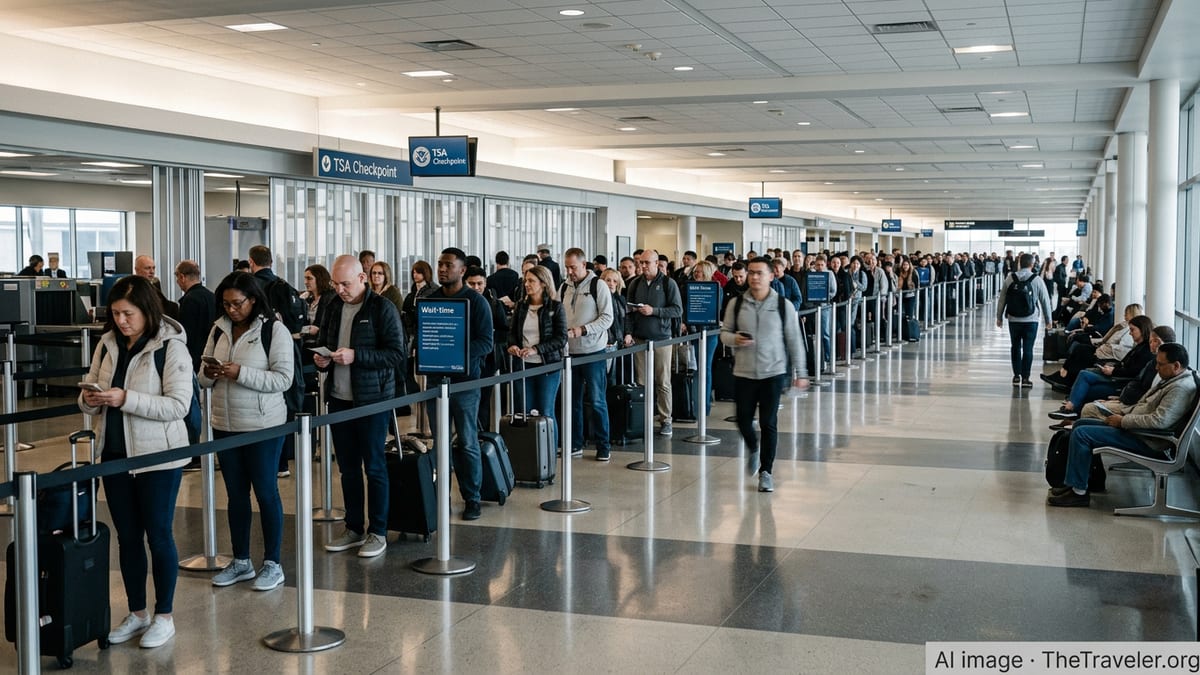
Images and reports from JKIA show long lines at check-in counters and airline desks as travelers seek new routing options and compensation. Some passengers have described waits stretching through the night as they search for hotel rooms, meal vouchers or alternative flights on already crowded routes.
For international travelers transiting through Nairobi to destinations such as the Maasai Mara, the Kenyan coast, Tanzania and Uganda, the delays have added a layer of uncertainty at the tail end of the peak safari season. Travel forums and social media posts referenced in news coverage reflect frustration from visitors who planned tightly timed itineraries involving early-morning connecting flights and prebooked tours.
Local travelers have also been caught up in the disruption, particularly those flying between Nairobi and regional cities for business, medical appointments or family events. With some departures repeatedly pushed back, same-day return trips have become difficult, and rebooking options remain limited while the go-slow continues.
Travel industry observers caution that the financial impact will not fall solely on airlines and airport agencies. Missed hotel nights, rescheduled safaris, lost business meetings and additional ground transport all add to the cost for passengers and tourism providers.
Advice for travelers with upcoming flights through Nairobi
Airline statements and airport updates surveyed on Monday urge passengers booked to travel through JKIA in the coming days to treat schedules as subject to change while talks continue. Carriers are encouraging travelers to check flight status on official websites or mobile apps before departing for the airport and to allow extra time for formalities.
Given reports of delays stretching beyond six hours on some services, travel specialists recommend that passengers with tight onward connections reconsider same-day links from Nairobi, especially for complex routings involving multiple airlines. Where possible, rebooking to itineraries with longer layovers or flexible tickets may reduce the risk of missed connections.
Travelers already in Kenya or planning imminent trips are being advised, in publicly available guidance, to stay in contact with tour operators and accommodation providers to adjust transfers, game drives and other time-sensitive activities. Some safari companies are reportedly building additional buffer time into transfer schedules to account for potential residual disruption even after a formal settlement is reached.
Insurance policies that cover missed connections and travel delays may offer some relief, but coverage terms vary, and policyholders are being urged to retain documentation of delays, boarding passes and any written notifications provided by airlines.
Industrial tension at a key African aviation gateway
The latest strike highlights the delicate balance between labor relations and operational resilience at JKIA, one of East Africa’s most important aviation gateways. Kenya Airports Authority, which manages JKIA and other key airports, has in recent years promoted expansion and modernization to support rising passenger numbers.
However, legal records, earlier strike notices and previous media coverage point to periodic disputes between KAWU and aviation authorities over staffing levels, pay structures and the pace of infrastructure upgrades. These tensions have occasionally spilled over into industrial action that tests emergency staffing plans and contingency procedures.
For Kenya’s tourism sector, which relies heavily on smooth air links to markets in Europe, North America and Asia, extended disruption at JKIA carries reputational risks. Travel analysts note that rival hubs in Addis Ababa, Kigali and Dar es Salaam are competing aggressively for connecting traffic, and repeated operational shocks in Nairobi could encourage airlines and travelers to favor alternative routings.
As negotiations continue in Nairobi, regional travel planners and passengers alike will be watching closely for signs that normal operations can resume quickly and that a longer-term agreement can reduce the likelihood of further strike-related disruption at Kenya’s main international gateway.
Reuters: Kenya airport staff strike delays thousands of passengers
DW: Passengers stranded amid airport staff strike in Kenya
KELO / Thomson Reuters: JKIA strike coverage
Washington Post: Workers’ strike slows traffic at Nairobi airport