


More news on this day
Kenya Airways has restored normal operations and cleared passenger backlogs across its network after a three-day aviation disruption that led to widespread flight cancellations, delays and multimillion-shilling losses.
Get the latest news straight to your inbox!
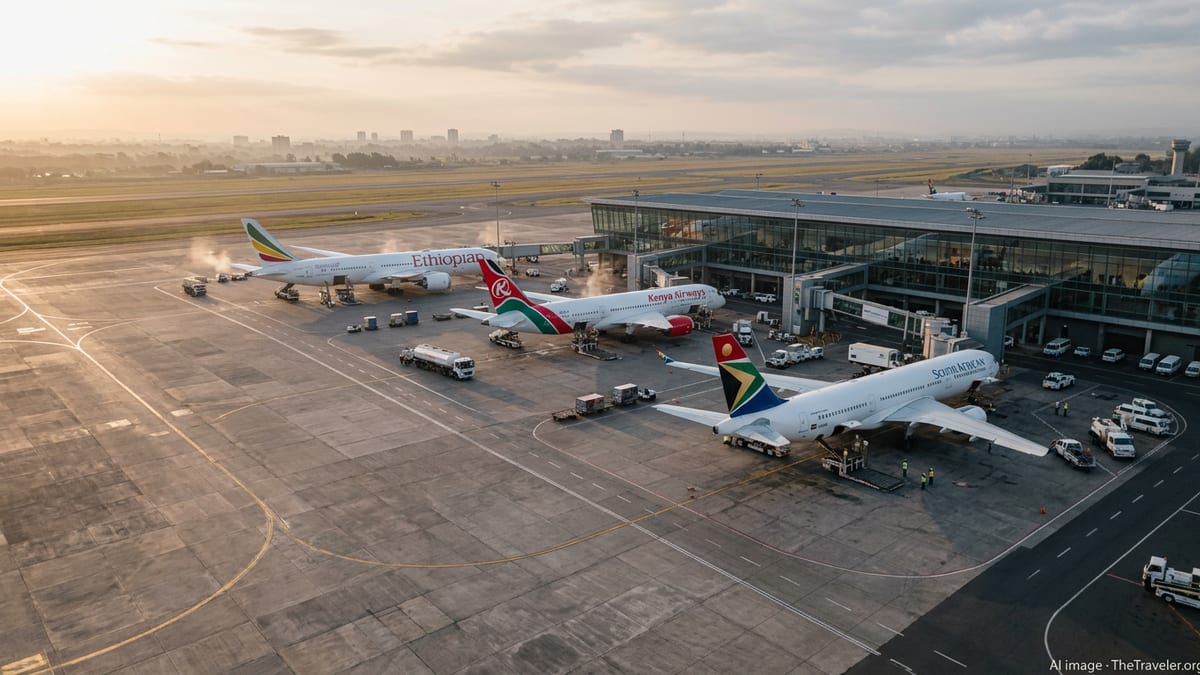
Normal schedule restored across Kenya Airways network
Publicly available travel alerts and local coverage indicate that Kenya Airways returned to its full flight schedule on Wednesday, September 2, 2026, following three days of disruption linked to industrial action in Kenya’s aviation sector. The carrier reports that flights are now operating across its network, with recovery measures implemented to accommodate remaining affected passengers.
Reports from multiple Kenyan news outlets note that the airline has cleared most of the backlog built up between August 30 and September 1, when operations at Nairobi’s Jomo Kenyatta International Airport (JKIA) and other airports were heavily constrained. The normalisation of the timetable is seen as a key step in stabilising both domestic and regional connectivity out of Nairobi, a major hub for East and Central Africa.
Travel updates published by Kenya Airways show that, although the disruption was triggered by an industry-wide dispute, the national carrier moved quickly to rebook travellers, adjust schedules and reopen seats once air traffic services resumed. Passengers were encouraged to monitor flight status closely as operations ramped back up, with some residual delays expected during the first phase of recovery.
Three days of cancellations, delays and stranded passengers
According to published coverage, the disruption began on Sunday, August 30, 2026, when industrial action by aviation workers affected air traffic control and ground operations at JKIA and other Kenyan airports. Kenya Airways, the largest operator at JKIA, was forced to cancel 63 flights and delay more than 160 others over the three-day period, affecting both passenger and cargo movements.
Domestic routes within Kenya, as well as key regional services across East, Central and Southern Africa, experienced knock-on effects as aircraft and crew were left out of position. International services linking Nairobi with long-haul markets in Europe, the Middle East and Asia also faced schedule changes, with some departures retimed or consolidated to manage the disruption.
Kenya Airways’ public travel alerts during the crisis advised customers to proceed to the airport only if their flight showed as operating and to verify details through the airline’s website or mobile app. Industry reports indicate that hotel accommodation, meals and ground transport had to be arranged at short notice for many passengers whose journeys were interrupted.
Financial impact tops Sh900 million
Business and financial media in Kenya report that Kenya Airways has put the direct revenue loss and disruption-related costs from the three-day event at more than Sh900 million, or just over 7 million US dollars. The figure includes foregone ticket income from cancelled services as well as expenses tied to assisting stranded passengers, rebooking itineraries and repositioning aircraft and crews.
Data shared in local business coverage indicates that the airline’s losses stem from a combination of compensation obligations, additional airport and handling charges, and the cost of running an irregular operation over several days. As the country’s flagship carrier, Kenya Airways was among the aviation businesses most exposed to the shutdown, given its heavy reliance on JKIA as a central hub.
Analysts quoted in Kenyan media note that the financial hit comes at a sensitive time for the airline, which in recent years has focused on restoring its balance sheet and rebuilding its network. The latest disruption is expected to add pressure to ongoing cost-control and recovery efforts, even as regular services resume.
Return-to-work deal ends aviation industrial action
According to publicly available reports, the industrial action affecting Kenya’s aviation sector was formally resolved on Tuesday, September 1, 2026, following the signing of a Return-to-Work Agreement. The accord involved the Central Organisation of Trade Unions, the Kenya Aviation Workers Union, the Kenya Civil Aviation Authority and government representatives, providing a framework for staff to resume duties and for operations to stabilise.
Coverage of the agreement indicates that Kenya Airways employees were not part of the strike, with the airline’s own staff remaining on duty throughout the disruption. However, as the primary user of JKIA and a key customer of national aviation infrastructure providers, the carrier was heavily affected by the reduced availability of air traffic and ground services.
Once the agreement was in place and restrictions on operations were lifted, Kenya Airways published updated travel alerts outlining its plan to clear the flight backlog and gradually return to normal. These notices signalled that some delays would continue into September 2 as aircraft rotations were reset and displaced passengers were accommodated.
What the recovery means for travelers
With the immediate crisis over and Kenya Airways reporting that normal operations have resumed, travelers using Nairobi and other Kenyan airports are once again able to plan with more confidence. Industry commentary highlights that the swift restoration of the national carrier’s timetable is crucial for tourism, business travel and regional trade flows that depend on reliable air links.
At the same time, the episode has underscored how quickly labour disputes in critical aviation roles can ripple through airline networks, particularly in markets where a single hub and flagship carrier dominate connectivity. Travel industry observers suggest that passengers flying through Nairobi in the coming weeks may still wish to leave additional connection time, especially on complex multi-sector itineraries.
Kenya Airways’ own guidance in recent updates encourages customers to keep contact details current in their bookings and to use digital tools to receive real-time notifications in the event of any future schedule changes. For now, publicly available information shows that services are operating normally, with the airline seeking to rebuild trust after three highly disruptive days for Kenya’s aviation system.