


More news on this day
Passengers flying from the UAE are being urged to closely monitor their flight status today, as Emirates, Etihad Airways, Air Arabia and flydubai maintain adjusted schedules with a mix of on-time departures, delays and targeted cancellations on selected regional routes.
Get the latest news straight to your inbox!
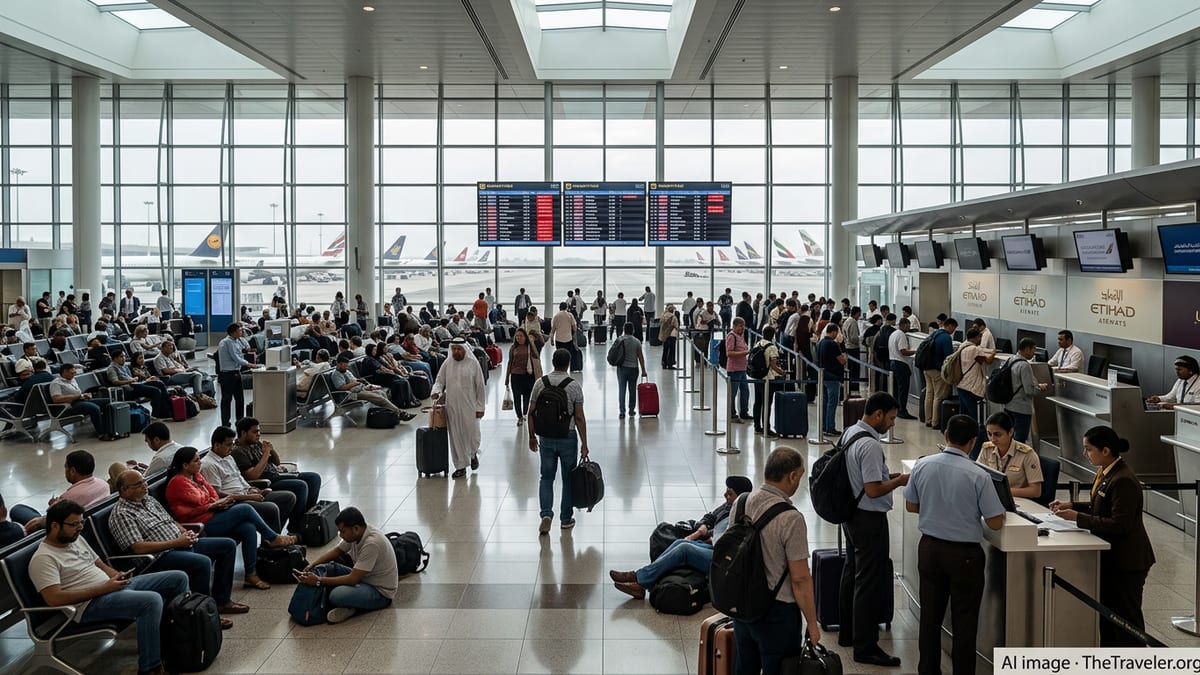
Regional situation keeps pressure on Kuwait and Bahrain routes
Published coverage indicates that flights between the UAE and parts of the Gulf region, particularly Kuwait and Bahrain, remain the most affected as airlines continue to respond to the security backdrop linked to heightened US-Iran tensions. Reports from late July and August describe repeated disruptions to airspace and temporary airport suspensions that have fed through into airline schedules.
According to recent Gulf News and Khaleej Times reports, Etihad Airways has repeatedly extended cancellations of specific Kuwait services, including flights EY653 and EY654 between Abu Dhabi’s Zayed International Airport and Kuwait International Airport, citing operational reasons. Other UAE carriers, including Emirates and Air Arabia, have also removed or retimed select Kuwait and Bahrain flights on certain days, even as the majority of their networks operate normally.
The National and other regional outlets highlight that Kuwait International Airport temporarily halted take-offs and landings at several points in July in response to missile and drone threats. This triggered rolling schedule changes across multiple airlines flying to and from the country. While regular operations have since resumed, airlines continue to fine-tune their Gulf timetables, and some Kuwait and Bahrain rotations remain vulnerable to short-notice changes.
For travellers departing the UAE today, this means that itineraries involving Kuwait City, Bahrain and a small number of Saudi destinations remain the most likely to face last-minute disruption, even as core trunk routes to Europe, Asia and the Americas run closer to normal.
Emirates maintains broad network with targeted cancellations
Emirates continues to operate one of the most extensive global schedules from Dubai, with publicly available information on its website noting services to 130-plus destinations across more than 70 countries. However, flight status and disruption FAQs on emirates.com emphasise that operations “have not fully resumed” across every route and advise customers to treat cancellation notifications as authoritative, even if the website timetable still shows a planned departure.
In mid-July, The National reported that Emirates cancelled eight Dubai–Kuwait flights over a single Sunday, alongside additional Kuwait services into Monday, as part of a rolling operational response to the regional situation. Later reporting from Gulf News indicates that by late August Emirates was operating a mix of scheduled flights and cancellations from Dubai, with certain Middle East services adjusted, delayed or diverted while long-haul sectors generally continued as planned.
The airline’s online flight-status portal shows that passengers can search by route or flight number and sign up for alerts. Guidance on the site and in recent media coverage stresses that travellers who receive an email advising of cancellation should not proceed to the airport and should instead arrange rebooking or refunds through official channels or their travel agent.
For those flying from Dubai today, the practical implication is that most Emirates departures will still operate, but travellers booked on Kuwait, Bahrain or other select regional services should be prepared for last-minute timetable shifts and should confirm details shortly before leaving home.
Etihad, Air Arabia and flydubai adjust regional operations
Etihad Airways, based at Abu Dhabi’s Zayed International Airport, has been among the carriers most directly affected on Kuwait services. The National and Khaleej Times both report that Etihad has extended cancellations of certain Abu Dhabi–Kuwait rotations on multiple occasions, at one stage pushing the suspension of EY653 and EY654 through at least July 24. Gulf News coverage notes that these targeted cancellations have continued at various points alongside generally stable operations on other Middle East and long-haul routes.
Air Arabia, operating from Sharjah and Abu Dhabi, has also made selective cuts and delays on Kuwait flights. The National reported that one Abu Dhabi–Kuwait service, flight 3L020, was cancelled on a busy Sunday, while another rotation operated later that same day after initially appearing as cancelled. Other Air Arabia services on the Kuwait route have experienced delays, and passengers have been repeatedly advised in published reports to check flight trackers and airline channels for the latest information.
Flydubai, Dubai’s government-owned low-cost carrier, has adjusted parts of its schedule in response to both the regional security environment and operational factors such as rerouted flight paths. An operational update on the flydubai website explains that the airline is currently running a reduced schedule across its network and warns that flight durations and transit times through Dubai may be longer than usual due to temporary rerouting. The carrier advises customers to review flight status and operational updates before travelling to the airport.
Despite these changes, Gulf News reporting from mid and late August indicates that flydubai and Air Arabia are operating the majority of their networks, including many services to Saudi Arabia and elsewhere in the Middle East, with only a subset of flights cancelled or rescheduled on any given day.
What passengers flying from the UAE today should expect
Across multiple recent updates, Gulf News and other outlets describe a broadly normal picture at UAE airports with pockets of disruption rather than system-wide chaos. Dubai International, Abu Dhabi’s Zayed International and Sharjah International continue to see high summer volumes, but terminal operations remain largely stable, with most flights arriving and departing close to schedule.
At the same time, several articles warn that the regional security backdrop means airlines are reviewing schedules more frequently than usual, especially for short-haul Gulf sectors. Individual flights can still be cancelled, delayed or rerouted on short notice, particularly to Kuwait, Bahrain and some Saudi destinations such as Abha. International carriers serving Dubai have also extended suspensions or capacity reductions on certain Middle East routes, which can affect onward connections for passengers originating in the UAE.
Passengers departing today are therefore advised in published travel advisories to allow extra time for road traffic, check-in, security and immigration, and to ensure that contact details in their bookings are correct so airlines can send timely notifications about changes. Online check-in, where available, is highlighted as a way to reduce airport queuing times and receive digital boarding passes even if gate assignments or timings subsequently change.
Travellers connecting through the UAE should pay particular attention to minimum connection times and monitor both legs of their journey. With some Gulf feeder flights experiencing late departures, a missed connection is a more realistic risk than in calmer periods, and rebooking options may be constrained on peak travel days.
How to monitor today’s flight status and minimise disruption
All four major UAE carriers provide real-time status tools on their websites and apps. Emirates and Etihad offer search by route or flight number, with options to receive email or app notifications about delays, cancellations or gate changes. Flydubai’s flight-status page and operational-updates section invite passengers to verify their departure time and terminal before heading to the airport, while Air Arabia publishes schedule changes and encourages travellers to check directly with the airline or their agent.
Independent tracking platforms, such as FlightAware and other global data providers, also display live statistics on delays and cancellations at key UAE hubs including Dubai International. These sites can give a quick snapshot of how disrupted a particular airport is on any given day, although travellers are still advised to rely on airline channels for definitive confirmation of whether their specific flight will operate.
For those still planning travel, the current environment makes flexible arrangements more valuable. Published guidance from airlines suggests considering fares that permit date changes at reasonable cost and ensuring that travel insurance covers disruption and missed connections related to schedule changes. Keeping digital copies of tickets, confirmations and any airline messages about changes can also speed up discussions at check-in desks and call centres.
While the recent pattern of selective cancellations and longer routings is likely to persist as long as regional tensions remain elevated, public information from airlines and local media indicates that the UAE’s main gateways are functioning and that most passengers are reaching their destinations. The key advice for anyone flying from the UAE today is to stay informed, build in extra time and remain prepared for last-minute adjustments on a small but significant proportion of flights.
Gulf News: Flying from UAE today? Emirates, Etihad, flydubai and Air Arabia flights affected
The National: UAE and Kuwait flight disruptions, Emirates, Etihad and Air Arabia cancellations
Khaleej Times: UAE flight updates, Emirates and Etihad extend Kuwait and Bahrain cancellations