


More news on this day
Newark Liberty International Airport remains one of the country’s most delay-prone hubs, and today’s live statistics again show hundreds of disrupted flights and mounting wait times for passengers.
Get the latest news straight to your inbox!
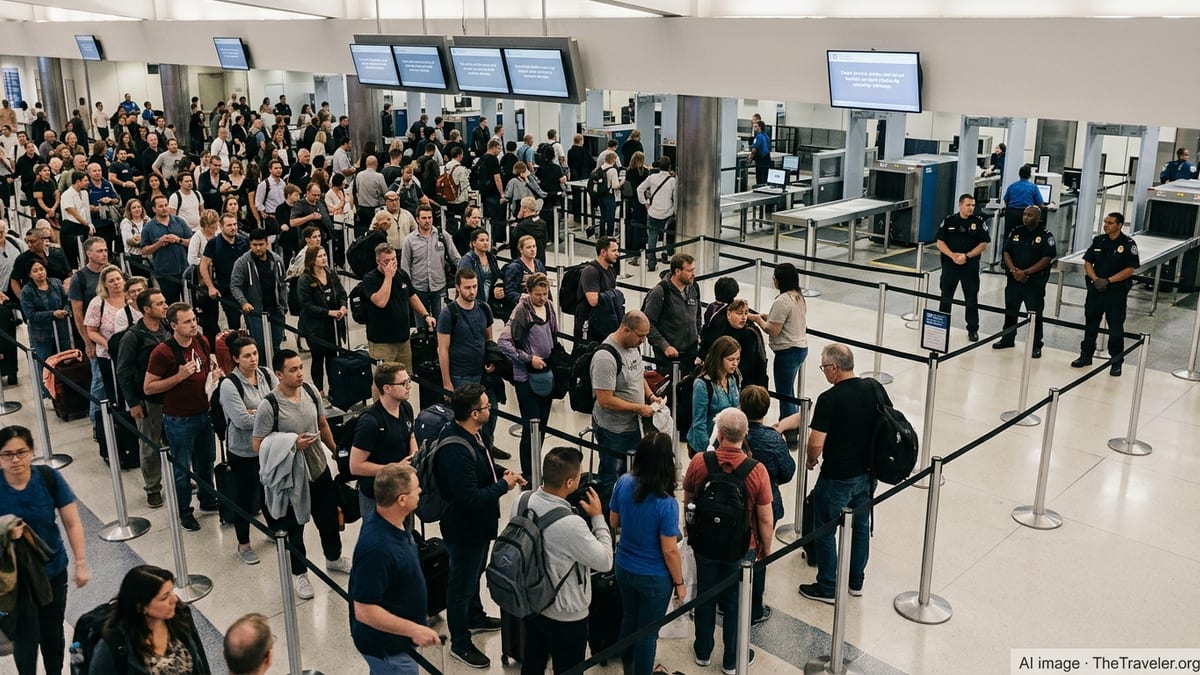
Today’s delay and cancellation picture at Newark Liberty
Real-time tracking shows Newark Liberty International Airport facing significant same-day disruption. Flight-tracking data indicates that today there are 456 delayed flights at Newark, with 18 cancellations affecting departures and arrivals within, into, or out of the United States. These figures capture both aircraft already running late and schedules that carriers have proactively cut as the day unfolds.
Federal Aviation Administration airport status information characterizes current delays at Newark as moderate but persistent. General departure operations are experiencing gate-hold and taxi delays around 15 minutes or less, while arriving flights are also seeing airborne holding of up to about 15 minutes. This snapshot, updated the morning of September 4, 2026, suggests that even on a day without major storms or large-scale system outages, travelers can still expect measurable slowdowns across the schedule.
These day-of figures sit against a broader backdrop of chronic congestion around the New York metropolitan airspace. Even when the airport is not under a formal ground delay program, routine traffic volumes and airspace complexity often translate into last-minute schedule changes, rolling departure pushes, and uneven recovery times during peak afternoon and evening banks.
For travelers moving through Newark today, the practical takeaway is that a flight listed as “on time” at booking may still be subject to gate or taxi delays, and that the airport is already logging a substantial number of disrupted flights before the end of the operating day.
How Newark ranks on delays and cancellations over the past year
Historical statistics from the U.S. Department of Transportation’s Bureau of Transportation Statistics show that Newark consistently performs below many other large U.S. airports on on-time reliability. For major domestic airports, Newark’s departure on-time rate for the twelve-month period ending mid-2026 is about three-quarters of flights, with average departure delays in the mid-60-minute range among delayed flights. Arrival performance over the same period reflects even higher average delay minutes for those flights that run late.
Monthly airport-level data illustrates how Newark’s delay profile shifts through the year. In the most recent summer seasons, the average delay for late departures at Newark frequently exceeded one hour, and in some high-demand months it climbed toward 90 minutes per delayed flight. During peak July traffic in a recent year, Newark’s delayed departures averaged nearly 88 minutes, noticeably higher than the national delayed-flight average for the same month, underscoring the airport’s sensitivity to congestion and weather during summer storms.
Cancellation patterns have also drawn attention. Analysis of recent federal filings and aggregated BTS data shows Newark ranking near the top among U.S. airports for cancellation rates in several recent years, with some industry reviews identifying the airport as having one of the highest percentages of flights cancelled among major hubs. A Senate economic analysis of passenger delays estimated that Newark accounted for millions of hours in ground-based passenger delay annually when both cancellations and late operations are factored in, highlighting its outsized impact on travelers throughout the region.
Regulators and analysts point to several overlapping causes for these statistics, including dense traffic in and out of the broader New York City airspace, weather patterns along the Northeast Corridor, and the fact that multiple large carriers schedule complex banks of connections at Newark that leave little slack when disruptions occur.
Construction, airspace constraints and their impact on wait times
Newark’s performance is also being shaped by airport construction and airspace capacity constraints. Federal notices describe Newark as one of the most delay-prone airports in the national system, and recent filings tied to runway projects explain how even necessary infrastructure work can ripple through daily operations. During periods when a primary runway is partially or fully closed for rehabilitation, analyses show that roughly one-fifth of daily arrivals and nearly half of all departures may experience measurable delays, with average late-running flights adding roughly 35 to 40 minutes to a trip.
To manage this, regulators have periodically imposed operating limitations and schedule adjustments at Newark, including targeted caps on hourly arrivals and departures and construction-related scheduling relief. These measures are designed to keep the airport from becoming overscheduled relative to reduced runway capacity, but filings acknowledge that some level of delay is expected to persist, especially in the late afternoon and evening peaks when traffic demand is highest.
Inside the terminal, wait times have become another concern. Third-party monitoring services that aggregate live security-checkpoint feeds report that Transportation Security Administration wait times at Newark can swing rapidly during the day. On recent mornings, estimated security waiting periods have ranged from around 10 to 20 minutes at off-peak hours to substantially longer lines as early-bank departure waves build. One real-time dashboard on the morning of September 4 listed Newark’s security wait at just over 10 minutes, but historical snapshots show that this can rise quickly if several large flights are processing passengers at once.
Travelers have also noted changes in how the airport itself reports queue information. Local coverage earlier this year highlighted that Newark paused some public display of TSA wait-time estimates, citing fast-changing passenger volumes and staffing constraints. That shift makes independent tools and airline app alerts more important for passengers trying to gauge when to arrive at the terminal, especially on days when construction or weather is already straining the system.
What the numbers mean for travelers using Newark Liberty
For travelers, the current mix of real-time disruption and longer-term statistics at Newark translates into a higher need for buffer time and contingency planning than at many other large U.S. airports. With hundreds of delays and nearly two dozen cancellations already recorded today, even flights that remain on schedule may face secondary impacts if aircraft and crews are out of position or if connecting passengers are late arriving from other congested hubs.
Security and check-in wait times add another variable. While some live trackers show that early-morning or late-evening lines can be relatively short, the combination of peak bank departures, seasonally strong demand, and runway or taxiway construction can quickly create bottlenecks both at checkpoints and at the gates. Given Newark’s tendency toward cascading delays on busy days, extra lead time at the airport can reduce the risk of missed departures if schedules compress unexpectedly.
Industry data suggests that Newark’s structural challenges are not likely to disappear in the near term. Federal air-traffic reports note that the airport has logged among the highest counts of formal ground delay programs in recent years, a sign of how frequently demand outpaces available capacity in the region’s constrained airspace. At the same time, major capital projects, including new taxiways and runway work, are intended to improve long-run efficiency and could help moderate some of the worst congestion once completed.
Until those gains are fully realized in the statistics, passengers using Newark Liberty face an environment where delays and cancellations remain more common than at many peer airports. Checking flight status repeatedly on the day of travel, monitoring live security wait-time dashboards, and planning additional time for connections all remain prudent strategies for anyone navigating this key New York-area hub.
How to monitor Newark delays, cancellations and waits in real time
Several public tools provide a useful view of Newark’s performance on any given day. The FAA’s Air Traffic Control System Command Center status page gives an overview of arrival and departure delays, along with information on whether formal traffic management programs or ground stops are in place for Newark or its destination airports. This snapshot helps travelers understand whether delays are localized to Newark or tied to wider regional or national weather patterns.
Flight-tracking platforms complement that picture with airport-specific counts of delays and cancellations, updated throughout the day. These services aggregate individual flight status changes into real-time summaries, such as today’s tally of more than 450 delayed flights and nearly 20 cancellations at Newark, and often provide visualization tools that show how disruptions are clustering by time of day.
For security and wait times inside the terminal, independent websites that pull live checkpoint data for Newark and other U.S. airports have become a key resource. These dashboards typically list estimated TSA wait times by time block, refreshed every few minutes, and can give a more granular sense of when to expect longer lines at specific terminals. Many airline and airport apps now link to or embed similar information, allowing travelers to track both airside delays and landside queues in one place.
Together, these resources offer a layered picture of Newark’s performance: strategic status from federal systems, tactical disruption counts from flight trackers, and on-the-ground timing at security checkpoints. For passengers, regularly checking each of these in the hours before departure can make the difference between a manageable delay and a missed connection when flying through one of the nation’s most delay-prone airports.