


More news on this day
A record-setting 371-day luxury world cruise now underway is signaling a new phase in high-end travel, redirecting global demand toward long-duration voyages that increasingly favor major hubs in the United States, Greece and other strategically located destinations.
Get the latest news straight to your inbox!
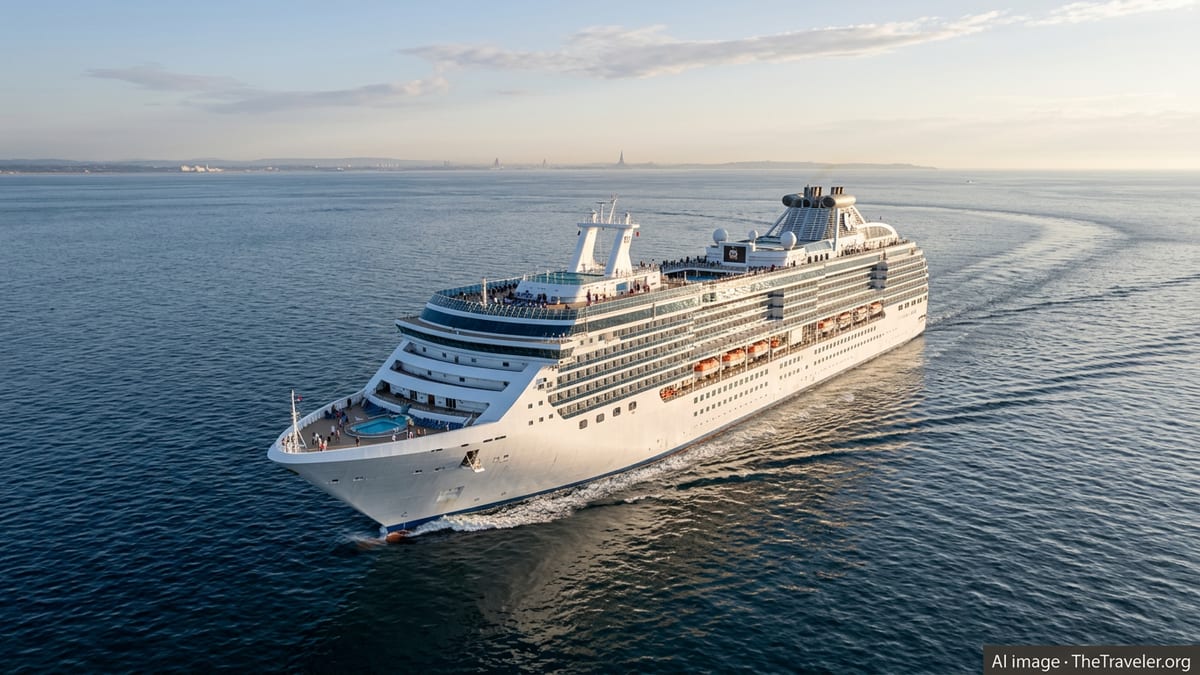
Ultra-Long Voyages Move From Niche to Mainstream
The latest 371-day itinerary, chartered by Australian agency My Cruises and operated on Oceania Cruises’ Regatta, is being billed in industry coverage as one of the longest continuous cruises ever marketed, sailing from September 2026 and circling the globe with an emphasis on immersive, slow travel experiences.
Travel trade reports describe the voyage as a blend of ocean, river, luxury and expedition segments that visits several continents and dozens of countries, reflecting a wider push by cruise brands to package year-long or near year-long itineraries for affluent travelers who want to consolidate multiple bucket-list trips into a single extended journey.
This new itinerary follows the wave of publicity created by Royal Caribbean’s 274-night Ultimate World Cruise, which departed in late 2023 and sparked widespread social media interest in months-long life at sea. The success of that sailing, which marketed highlights such as visits to 11 world wonders, showed that demand for ultra-long voyages can extend beyond a tiny niche and help fill large ships for extended periods.
Industry analysts note that with global cruise capacity forecast to grow by nearly 20 percent between 2022 and 2028, operators are increasingly experimenting with longer, more complex routes to differentiate their offerings and lock in high-spending guests for extended stretches.
United States Homeports Capture High-Value Demand
Ports in the United States remain among the primary beneficiaries of the long-cruise boom, largely because many around-the-world itineraries start, end, or turn around in major American gateways. Publicly available data from Cruise Lines International Association (CLIA) show that US ports already anchor a cruise sector generating tens of billions of dollars in direct spend and supporting hundreds of thousands of jobs across tourism, transport, retail and services.
Studies of individual US homeports help illustrate the potential impact when ultra-long voyages are layered onto an already busy schedule. At Port Everglades in Florida, for example, pre-pandemic activity as one of the world’s top three cruise homeports translated into millions of passengers a year and extensive overnight stays in local hotels, with research indicating that a majority of passengers spent at least one night in South Florida before or after their voyage.
In Texas, the Port of Galveston has emerged as one of North America’s fastest-growing cruise gateways. A local economic analysis cited in port documentation estimated that cruise passengers and crew generated around 125 million dollars in direct spending in 2019, averaging close to 1,000 dollars per passenger when associated travel and local purchases were counted. Longer voyages beginning or ending in such ports typically intensify this effect, as passengers spend more time arranging flights, touring nearby regions and purchasing higher-value pre-cruise packages.
Research summarized by organizations including the World Travel & Tourism Council (WTTC) and CLIA indicates that the economic footprint of cruise travel extends beyond port fees and ship provisioning into a broad value chain that includes travel agencies, ground transport, cultural attractions and retail. Extended itineraries that repeatedly use US ports as waypoints or changeover hubs reinforce this network and can lengthen the average stay of international visitors.
Greece Positions Itself as a Strategic Mediterranean Hub
Greece, and particularly its island destinations, is emerging as another prominent winner from the appetite for extended luxury cruises. Mediterranean segments remain a core selling point in most world itineraries, and Greek ports from Piraeus and Corfu to Santorini and Rhodes continue to feature heavily in marketing materials for both traditional and ultra-long voyages.
Research compiled by European and regional cruise observatories shows that Greek ports capture value through a combination of passenger spending ashore, excursion bookings and port-related services. A recent analysis focused on Corfu, for example, mapped the cruise value chain and found that passenger expenditure is distributed across city spending, organized excursions, local transport and other services, underscoring how even brief port calls can reach deep into the local economy.
At the same time, Greek destinations are being woven into new private-destination concepts aimed squarely at higher-spending guests. Royal Caribbean’s Ultimate Destinations program includes a Royal Beach Club in Santorini, indicating that the country’s most famous islands are central to future plans for curated shore experiences. Such infrastructure can be particularly attractive for world-cruise guests who might call multiple times in a season and seek exclusive, repeatable experiences.
Despite recent reports of softer cruise traffic at Piraeus in the first half of 2026, longer-term forecasts from international bodies suggest that the Eastern Mediterranean remains a priority for both mainstream and luxury lines. Ultra-long cruises that route through the region several times over the course of a year have the potential to smooth some seasonality and deepen economic ties between Greek ports and global source markets.
Global Ripple Effects Reach Secondary Ports Worldwide
The economic influence of ultra-long cruises is not limited to a handful of marquee ports. Academic and policy research reviewed by the OECD, CLIA and others indicates that each cruise call typically injects significant spending into local economies through passenger purchases, crew spending and ship-related outlays on fuel, provisioning and port services.
Meta-analyses of cruise ports suggest that passengers on standard itineraries spend on the order of 100 to 150 dollars per port visit on items such as excursions, food, souvenirs and local transport, with higher figures in homeports where guests also pay for hotels and long-haul flights. In cities like San Diego, estimates place the benefit of a single ship call at around 2 million dollars in local economic activity from ship provisioning and associated services alone, before counting what visitors spend ashore.
For destinations incorporated into year-long itineraries, repeat calls over many months can turn cruise traffic into a significant pillar of the visitor economy. Studies of European ports such as Barcelona and Mediterranean islands indicate that cruise passengers contribute hundreds of millions of euros annually, supporting thousands of jobs in sectors ranging from retail and hospitality to transport and cultural services.
New research by WTTC highlights an additional long-term dimension: more than 60 percent of cruise passengers are reported to return to destinations they first visited by ship. For ports that repeatedly host world-cruise segments, the exposure created by thousands of high-spending guests can translate into future land-based tourism, extending the impact of a single 371-day voyage well beyond its sailing dates.
Balancing Growth, Infrastructure and Community Concerns
The boom in long-duration cruising also raises questions about capacity, environmental pressures and community well-being in ports that hope to benefit. Urban-planning studies and environmental assessments from large port cities in Europe and North America point to concerns about congestion, air quality and strain on heritage sites when multiple large vessels call in a single day.
Researchers note that these pressures can be especially acute in compact historic centers that attract world-cruise guests for iconic landmarks. Destinations such as Venice, Barcelona and several Aegean islands have been the subject of debates over daily visitor caps, ship-routing restrictions and the design of shore-excursion flows to avoid overcrowding at sensitive sites.
Policy-focused reports from international bodies suggest that longer cruises heighten the need for careful coordination between cruise lines, port authorities and local tourism planners. When a vessel is carrying guests who will be at sea for many months, expectations about shore experiences, infrastructure quality and environmental standards can be particularly high, prompting investment in upgraded terminals, alternative fuels and shore-power systems.
As more 300-plus day itineraries come to market, analysts expect ports in the United States, Greece and other regions to refine strategies that maximize local benefits while managing impacts. The emerging world-cruise boom is likely to remain a visible test case for how the broader cruise industry adapts growth ambitions to evolving sustainability expectations.
Details on the 371-day "Explorations by Norwegian" world cruise
WTTC Cruising for Impact report on cruise tourism
CLIA overview of the global economic and social impact of cruising