


More news on this day
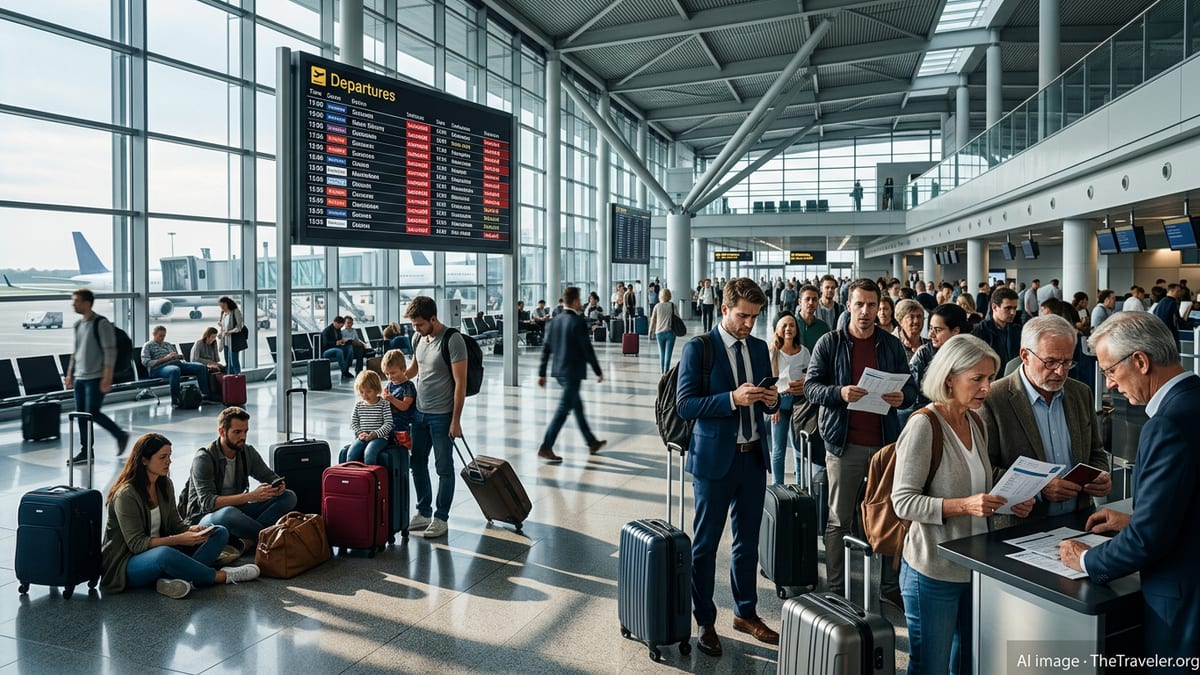
Hundreds of passengers have been forced to sleep on terminal floors and airport seats across Kenya after a strike by aviation workers severely disrupted flight operations at Jomo Kenyatta International Airport in Nairobi and other major hubs.
Get the latest news straight to your inbox!
Strike brings airports to a standstill
Flight schedules across Kenya were thrown into disarray from the early hours of Sunday, August 30, 2026, as aviation workers began coordinated go-slows and walkouts at key facilities. Published coverage indicates that staff linked to the Kenya Aviation Workers Union (KAWU) withdrew their labour at the Kenya Civil Aviation Authority, Kenya Airports Authority and regional carrier Jambojet, triggering prolonged delays and cancellations at multiple airports.
The impact has been most visible at Nairobi’s Jomo Kenyatta International Airport (JKIA), the country’s main international gateway, where hundreds of travellers reported being unable to board scheduled flights as departures were pushed back for hours or removed from departure boards. Reports from local outlets describe crowds waiting in departure halls and near check in areas as airlines struggled to reorganise operations around reduced air traffic control capacity and airport staffing.
Media reports also point to similar disruption at Moi International Airport in Mombasa and other regional airports, with domestic and regional routes particularly affected. Passengers on early morning services faced queues stretching through terminal corridors as aircraft remained on the ground awaiting clearances and handling services.
The strike follows a period of heightened tension in Kenya’s aviation sector, including earlier industrial action and strike notices in February 2026, and comes barely a month after a government brokered truce that had temporarily calmed labour relations in the industry.
Workers press for welfare, pay and recognition
According to publicly available union and media reports, the latest action is rooted in long running disputes over staff welfare, salary progression and recognition arrangements. Workers represented by KAWU have been pushing for improved working conditions and the implementation of collective agreements that they say have stalled for years.
Coverage of the dispute notes that staff at the airports authority and aviation regulator are seeking a review of pay scales, harmonisation of benefits and the implementation of allowances that were negotiated but not fully rolled out. Some reports add that there has been no comprehensive salary review for key categories of airport workers since the mid 2010s, despite growing passenger numbers and increasing operational demands.
Union statements cited in local media also highlight a demand for formal recognition at some employers, including low cost carrier Jambojet, and the resolution of grievances involving Kenya’s Salaries and Remuneration Commission. The breakdown of a framework agreement reached in late July, which had set timelines for negotiations at individual organisations, appears to have been a trigger for the renewed strike.
The result has been a coordinated slowdown affecting critical functions such as air traffic control, security checks and ground handling, significantly reducing the capacity of airports to process flights even where aircraft and crews are ready to operate.
Passengers face overnight waits and missed connections
Travellers passing through JKIA on Sunday and into Monday reported extensive waits and a lack of clarity about revised departure times. Published coverage from Nairobi indicates that many passengers spent the night of August 30 on terminal seats and floors as airlines worked to secure hotel accommodation or rebook affected itineraries.
Airlines operating out of JKIA have acknowledged ongoing disruption. A customer update from Kenya Airways on August 30 reported that scheduled flights were departing with average delays of two to three hours due to “operational constraints” in air traffic control services, and advised passengers to monitor their bookings closely through the carrier’s website and mobile app.
Travel industry associations and local media reports describe a growing number of missed onward connections, particularly for passengers connecting from regional flights through Nairobi to long haul services. Some travellers opted to cancel trips altogether after facing repeated rolling delays, while others were bussed to hotels to await further instructions.
At smaller airports, reports mention passengers experiencing diversions and extended holding patterns as aircraft waited for landing slots or routing guidance. The knock on effect has extended beyond Kenya’s borders, with regional services into and out of Nairobi affected by the limited throughput at JKIA.
Airlines and airport operators flag continuing delays
Kenya Airports Authority has issued public advisories warning of delays on departing flights at its facilities and urging passengers to confirm their flight status with airlines before heading to the airport. The authority has indicated through published statements that it is coordinating with aviation agencies and carriers in an effort to keep essential services running and minimise disruptions where possible.
Local news outlets report that some entrances and access roads around JKIA and Nairobi’s Wilson Airport have at times been affected by worker actions, compounding congestion in terminal areas. Airport notices have urged travellers to allow extra time for check in and security screening, and to prepare for significant queuing even where flights remain scheduled.
Kenya Airways and other carriers have encouraged customers to update contact details on their bookings so that text and email alerts on delays or rebookings can be delivered promptly. The national airline has described the situation as fluid and has not provided a firm timeline for the full resumption of normal schedules.
Travel agents and tour operators are monitoring the situation closely, with the Kenya Association of Travel Agents noting that long waits at JKIA and other hubs have created uncertainty for both inbound tourists and Kenyan travellers heading overseas at the tail end of the peak season.
What travelers should know if flying through Kenya
Publicly available advisories from airport and airline channels recommend that passengers due to fly into or out of Kenyan airports in the coming days stay in close contact with their carriers and avoid travelling to the airport without a confirmed departure time. Many airlines are allowing affected travellers to rebook without penalty, particularly where onward connections are no longer viable.
Industry bodies suggest allowing significantly longer than usual for check in and security procedures at JKIA, Wilson, Mombasa and other major airports if travel cannot be postponed. Travellers may also want to ensure they have access to travel insurance that covers delays linked to labour disputes, as accommodation and meal costs can mount quickly when flights are pushed back overnight.
For international visitors currently in Kenya, tour operators advise checking with local agents or hotel concierges for the latest local information, as conditions can vary by airport and time of day. Domestic flights serving safari destinations and coastal resorts may be particularly sensitive to knock on delays from Nairobi, so flexible planning is recommended.
With negotiations between aviation workers and employers still reported to be unresolved as of August 31, the prospect of further disruption remains. Travellers with imminent itineraries through Kenyan airports are being urged, through publicly accessible advisories, to keep monitoring updates and to prepare for unexpected changes to their plans.
Citizen Digital coverage of the ongoing strike
Kenya Airways customer update on delays at JKIA
Kenya Airports Authority advisory on flight delays
Kenya Association of Travel Agents briefing on the disruption