


More news on this day
Canada’s Rocky Mountaineer is drawing fresh attention to its flagship First Passage to the West, a 590‑mile daylight rail journey that pairs sweeping mountain vistas with historic rail corridors and contemporary luxury for travelers planning 2026 itineraries.
Get the latest news straight to your inbox!
Epic 590 Miles Through Canada’s Mountain Corridor
Publicly available information shows that Rocky Mountaineer’s First Passage to the West remains the company’s signature Canadian itinerary, running more than 590 miles between Vancouver and the Rocky Mountain resorts of Banff or Lake Louise. According to recent coverage focused on the route, the train traces the Fraser Valley before climbing past the Coast Mountains and into the dramatic confines of the Fraser and Thompson river canyons, then ascending toward the Continental Divide in the heart of the Rockies.
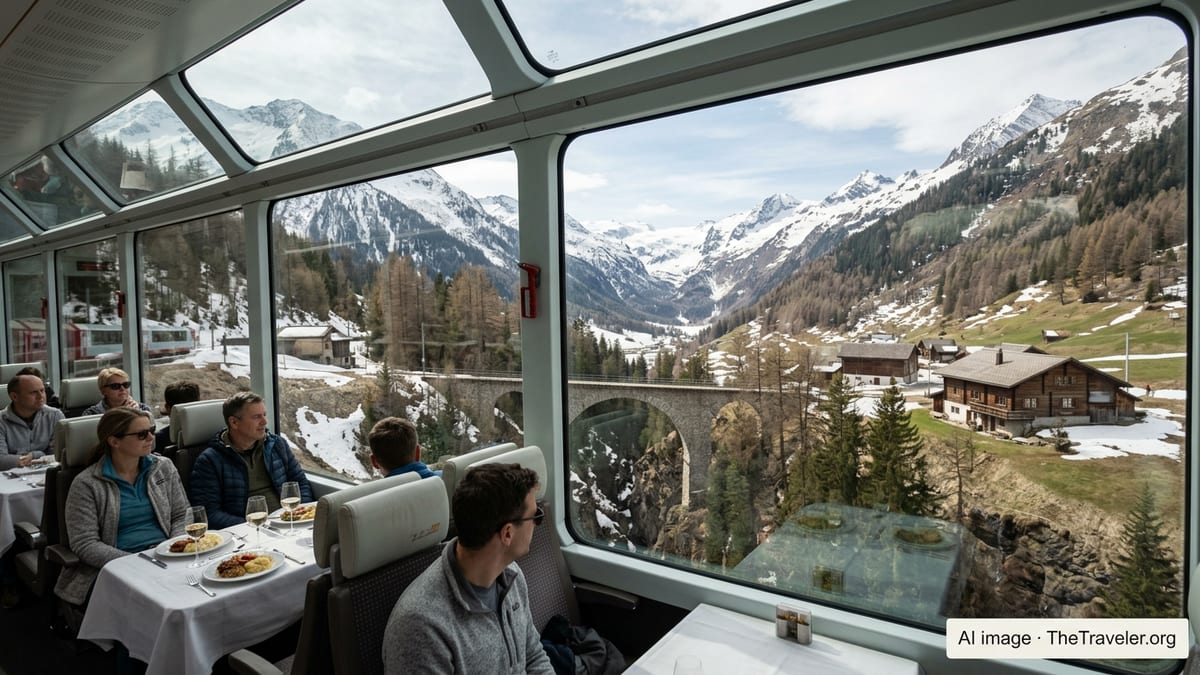
Reports indicate that the journey is structured as a two-day, daylight-only trip with an overnight in Kamloops, allowing every segment of the line’s canyons, peaks and river gorges to be seen in full daylight. Travelers cross historic points such as Hell’s Gate in the Fraser Canyon and follow rail lines that helped open western Canada to settlement, while modern glass-domed coaches and upgraded onboard service frame the landscape as a continuous panorama.
Travel planners describe the 590-mile run as a centerpiece in 2026 Canadian rail itineraries, often combined with extra hotel nights and sightseeing in Vancouver, Banff, Lake Louise or Jasper. The current focus on the route underscores its role as an experiential journey where the scenery itself, rather than speed or direct point-to-point transport, is the main draw.
Historic Rail Lines and Engineering Landmarks
According to historical summaries, the line used today by Rocky Mountaineer follows Canadian Pacific Railway and Canadian National Railway corridors that date back to the late nineteenth and early twentieth centuries. These mountain mainlines were built through some of the most challenging terrain in the country, with construction requiring tunnels, bridges and spiral track alignments to manage steep grades.
Reports note that travelers on First Passage to the West pass near or over several notable rail landmarks, including the vicinity of the Spiral Tunnels in Kicking Horse Pass and classic viewpoints such as Morant’s Curve near Lake Louise. While the Rocky Mountaineer operates as a modern tourist service, the route it uses still carries the legacy of early transcontinental passenger trains that once linked the Prairies with the Pacific Coast.
Background material on the company indicates that the Rocky Mountaineer brand emerged in 1990, after the previous daytime transcontinental service through the Rockies was discontinued as a regular public-transport route. The revival of the line as a dedicated sightseeing train preserved access to one of Canada’s most storied rail corridors, reframing it as a premium travel experience centered on landscape and history rather than simple transportation.
Luxury Onboard Experience in Daylight Only
Recent travel guides describe the Rocky Mountaineer as a flagship example of modern luxury rail, emphasizing daylight-only operations, panoramic glass-dome coaches and multi-course meals served at passengers’ seats or in dedicated dining areas. The focus is on slow travel, with the train moving at speeds that allow guests to watch the transition from coastal rainforest to semi-arid canyon and then to alpine forest and glacier-fed rivers.
Coverage of the line notes that travelers can select between service levels, with premium tiers providing bi-level coaches, outdoor viewing platforms and elevated regional cuisine. Overnight stays are off the train in hotels at Kamloops and in the mountain towns at either end of the route, a model that allows the most scenic sections to be scheduled during the middle of the day when visibility is highest.
Public information on pricing places Rocky Mountaineer in the upper tier of Canadian rail options, with fares reflecting the inclusion of meals, luggage handling and curated commentary along the way. For many travelers, the line is positioned less as a practical way to cross the Rockies and more as a special-occasion journey comparable to an upscale cruise, with the 590-mile route serving as a compact but intensive introduction to western Canada’s mountain landscapes.
Route Options and 2026 Schedule Highlights
Travel planning resources for the 2026 season show that First Passage to the West sits alongside several other Rocky Mountaineer itineraries in western Canada. These include Journey Through the Clouds between Vancouver and Jasper, Rainforest to Gold Rush between Vancouver and Jasper via Whistler and Quesnel, and the limited-time Passage to the Peaks link between Banff, Lake Louise and Jasper. All are marketed as multi-day, daylight-only rail journeys that can be combined into longer packages.
According to 2026 schedule information compiled by specialist Canadian rail operators, Rocky Mountaineer services typically run seasonally from April to October, when daylight hours and weather conditions are most favorable. Departures on First Passage to the West are offered in both directions between Vancouver and the Rockies, giving travelers flexibility to start their journey on the Pacific Coast or in the mountain parks.
Tourism-focused reports highlight that the 590-mile First Passage corridor continues to attract strong demand from international visitors, particularly those seeking to link city stays in Vancouver and Calgary with time in Banff and Lake Louise. The combination of scheduled departures, bundled hotel nights and optional excursions in the mountain parks positions the line as a turnkey product for travelers who prefer a structured but scenic journey through western Canada’s interior.
Growing Appeal of Scenic Rail in Western Canada
Industry analyses point to a broader resurgence of scenic rail travel, with Rocky Mountaineer frequently cited as a leading example in North America. The First Passage to the West route, in particular, aligns with rising interest in itineraries that emphasize slower, landscape-focused journeys over long distances by air or road. For many visitors, the train offers a way to experience the Canadian Rockies without driving mountain highways or organizing complex self-guided logistics.
Destination marketing materials suggest that the train’s profile has been boosted by extensive media coverage and social sharing of imagery from its glass-domed cars, with recognizable stretches of track and mountain backdrops becoming visual shorthand for luxury travel in Canada. As travelers plan 2026 and 2027 trips, the 590-mile Rocky Mountaineer route is frequently presented as an anchor experience around which broader itineraries across British Columbia and Alberta are built.
With multiple routes now operating in western Canada and the American Southwest, the company’s Canadian flagship remains a focal point of interest. The First Passage to the West line continues to embody the blend of historic rail infrastructure, dramatic mountain geography and contemporary onboard comfort that has defined the Rocky Mountaineer brand for more than three decades.
Travel + Leisure: Guide to Rocky Mountaineer’s First Passage to the West
Rocky Mountaineer: First Passage to the West route overview
Canadian Rockies Trains: Rocky Mountaineer routes and 2026 highlights