


More news on this day
November 2024 coverage in Railway Gazette International highlighted how high speed corridors, urban rail expansion, digital train control and shifting regulatory policy are reshaping rail markets from Europe and Asia to the Americas.
Get the latest news straight to your inbox!
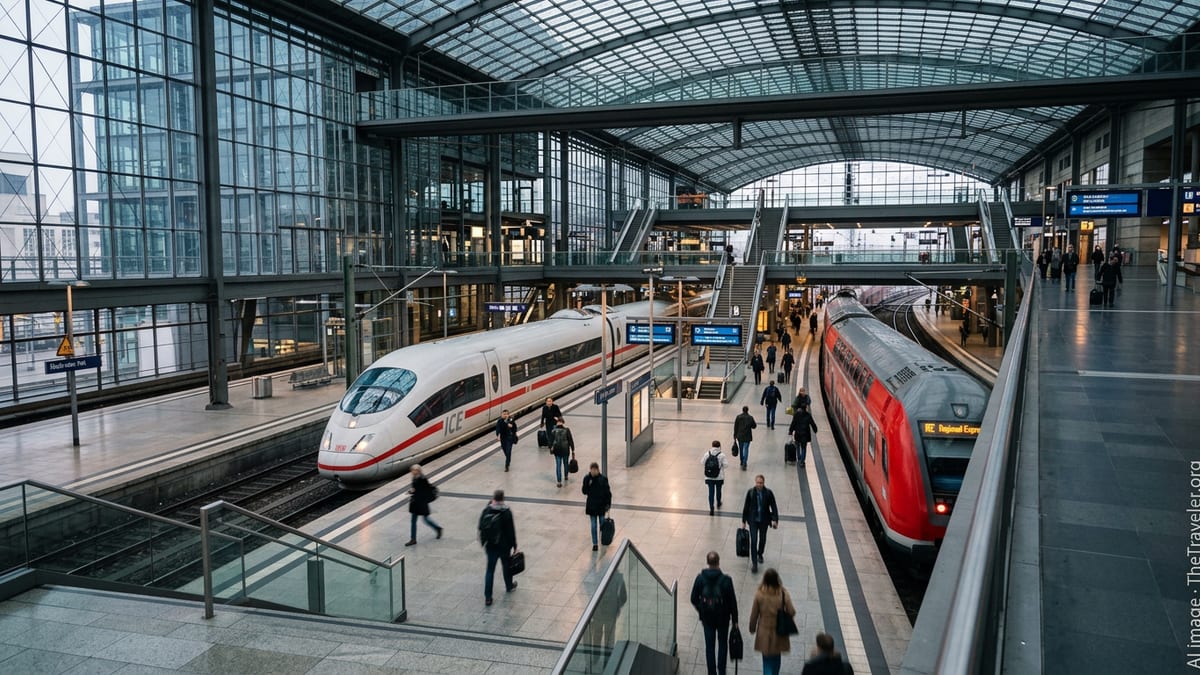
High Speed Rail Experience and Expansion in Focus
November’s reporting placed high speed rail at the center of long distance mobility debates, with attention split between mature networks and emerging corridors. Features on the evolution of Japan’s Shinkansen system revisited six decades of operational experience, emphasizing reliability, network effects and the broader economic geography shaped by fast intercity links. This historical lens was used to frame current questions facing countries now planning or upgrading high speed routes.
Alongside Japan’s experience, coverage examined proposals and active projects in Europe and Asia, where governments continue to weigh cost, demand and environmental impact. Plans for new or extended high speed corridors were reported in several countries, with feasibility work focusing on journey time reductions between major cities and the ability to compete with short haul aviation. The reporting pointed to growing expectations that new routes should be designed from the outset for strong integration with regional and suburban rail networks.
Environmental performance remained a recurring theme. Publicly available analysis referenced by the magazine showed that high speed lines are increasingly assessed over their full life cycle, including embodied emissions in civil works and materials. November’s articles reflected how operators and infrastructure managers are being pushed to demonstrate that projects deliver not only faster journeys but also credible long term sustainability gains over road and air alternatives.
Another aspect highlighted was the financial and institutional framework for delivering large projects. Coverage indicated that multi decade investment horizons, complex approval processes and changing political priorities continue to shape timelines. Reports on ongoing tenders and stalled procurements underlined how supply chain capacity, cost escalation and risk allocation are now core issues for high speed rail decision making.
Urban Rail and Metro Projects Advance Worldwide
Railway Gazette International’s November output also devoted space to urban and suburban rail expansion, reflecting intense global interest in low carbon city transport. Round ups from the month showed light rail, metro and suburban projects moving forward in Europe, Asia, the Middle East and Latin America, from incremental line extensions to entirely new systems in rapidly growing metropolitan areas.
One notable strand was the emphasis on intermodal integration. Reports described projects where metro or light rail lines are being configured around park and ride facilities, bus interchanges and pedestrian connections, with planners aiming to reduce private car use on congested corridors. In some cases, underground or partially underground alignments were highlighted as a way to insert high capacity public transport into dense urban fabrics without displacing surface activity.
The November coverage further noted how secondary cities are now adopting technologies once confined to larger capitals. Automated metro operations, platform screen doors and advanced passenger information systems featured prominently in descriptions of lines under construction. These deployments were portrayed as part of a wider trend in which smaller networks seek to match the service frequency, reliability and perceived quality of established megacity metros.
Financing models for urban rail also came under scrutiny. According to published coverage, public authorities are experimenting with public private partnerships, land value capture and development rights around stations to fund construction and operations. Railway Gazette International’s reporting illustrated how these approaches can align transport investment with urban development, while also bringing commercial risk sharing and new stakeholders into traditionally public led projects.
Digital Signaling, ETCS and Network Modernisation
Signaling, train control and telecommunications technologies were another key component of the November 2024 agenda. Articles and news items surveyed continuing deployment of the European Train Control System across freight and passenger lines, as well as trials of higher capacity variants intended to support dense suburban and intercity operations. Publicly available information indicated that railways are increasingly looking to digital train control to unlock capacity gains without major new civil works.
Beyond Europe, the magazine reported on contracts for automatic train protection and traffic management systems on new and modernised main lines, including schemes in Southeast Asia. These projects were described as combining modern interlockings, centralized traffic control and, in some cases, moving block functionality, with the goal of improving safety margins and headways while maintaining compatibility with existing rolling stock fleets.
Railway communications were also in transition. November’s reporting pointed to the gradual shift away from legacy GSM-R networks, with operators considering or piloting new platforms based on 4G and 5G technologies. Some case studies highlighted arrangements that blend terrestrial networks with satellite connectivity to improve coverage on remote or cross border routes, with the promise of more reliable voice and data links for both operations and passengers.
The broader theme running through the signaling and communications coverage was resilience. Reports noted that digital architectures allow more flexible traffic management during disruptions, support better condition monitoring of infrastructure and rolling stock, and open pathways for automation of certain functions. At the same time, the articles acknowledged the need for robust cybersecurity and clear operational rules as railways become more dependent on complex software based systems.
Freight, Access Policy and Market Liberalisation Debated
On the policy side, November 2024 articles drew attention to evolving approaches to freight access and market structure, particularly in Europe and its neighboring regions. Railway Gazette International reported that some governments are reassessing earlier moves toward full liberalisation of rail freight, with decisions on track access and open access operations being revisited in light of market performance and strategic considerations.
One example highlighted in the magazine was a policy reversal in southeastern Europe, where a government decided against opening up its infrastructure to foreign freight operators as previously envisaged. Publicly available information suggested that concerns about national interests, network control and investment incentives were among the factors influencing that decision. The case was presented as part of a wider discussion on how smaller rail markets balance competition, interoperability and financial stability.
Freight developments elsewhere in the world pointed in a different direction, with reports indicating continued efforts to standardise cross border operations, harmonise technical rules and promote intermodal corridors. Railway Gazette International’s November coverage referenced initiatives to improve terminal infrastructure, raise line speeds on key freight routes and deploy digital tools for train management and asset tracking, all intended to make rail more competitive against road haulage.
Environmental regulation added another layer of complexity to the freight debate. As climate policies tighten, the magazine noted that governments and shippers are under pressure to transfer more traffic from road to rail. November’s reporting showed how this objective is shaping investment priorities, with upgrades to freight corridors and terminals framed as essential components of national and regional decarbonisation strategies.
Long Term Investment, Resilience and Skills
A recurring theme across the November 2024 issue was the long term nature of rail investment and the growing emphasis on resilience. Railway Gazette International drew together examples from high speed, urban and freight projects to illustrate how climate adaptation, extreme weather preparedness and asset management are now central to project design and renewal programmes.
Public information referenced in the magazine showed infrastructure managers focusing on trackbed stability, bridge and tunnel strengthening, and improved drainage to cope with more frequent heatwaves, heavy rainfall and flooding. Case studies from several continents indicated that these measures are moving from reactive works after incidents to planned interventions embedded in multi year maintenance cycles.
The November coverage also drew attention to workforce and skills challenges. As projects grow more complex and technology intensive, demand is rising for specialists in systems engineering, software, data analytics and digital construction techniques, alongside traditional civil and mechanical disciplines. Reports suggested that railways, suppliers and academic institutions are collaborating more closely on training pathways, apprenticeships and professional development to address potential skills gaps.
Funding stability formed the final strand of this discussion. Railway Gazette International’s reporting underscored that sustained, predictable investment frameworks are widely regarded as necessary to deliver the scale of renewal and expansion now envisaged in many countries. The November 2024 content indicated that where governments provide clear multi year commitments, rail organisations are better able to plan major upgrades, attract private finance where appropriate and manage supply chain capacity across rolling stock, infrastructure and technology providers.