


More news on this day
Travelers flying to, from, and within New Zealand are seeing a more reliable experience as Air New Zealand reports improved on-time performance and rolls out faster, more automated rebooking when cancellations hit, a combination aimed at reducing both delays and the time spent scrambling for new flights.
Get the latest news straight to your inbox!
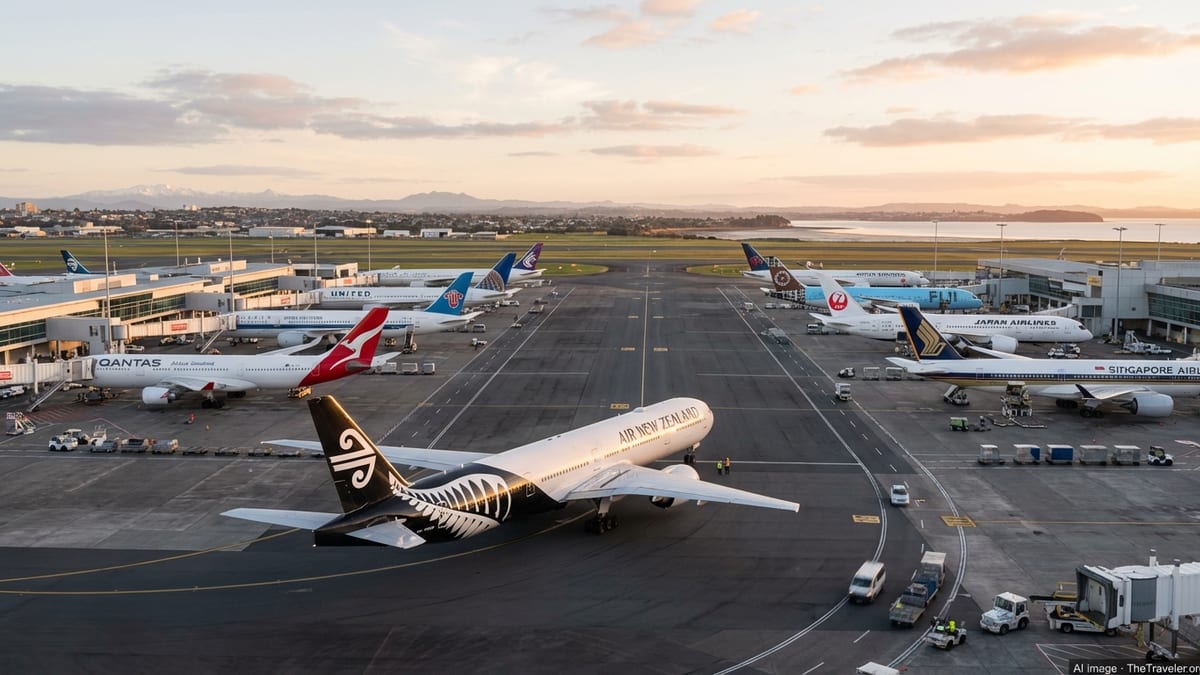
On-time performance trends show measurable gains in 2026
Air New Zealand reported that 83.1% of its July 2026 flights arrived within 15 minutes of schedule, describing the result as a 6.4 percentage point improvement compared with July 2025. The airline also pointed to stronger performance across its network, including international services and operations at Auckland, the country’s busiest hub.
Government-published aviation on-time performance reporting for July 2026 adds more context on specific categories. For Air New Zealand’s domestic competitive jet routes in July 2026, the report shows 83.3% on-time arrivals and 82.0% on-time departures, with a 0.8% cancellation rate for that month. For trans-Tasman routes in July 2026, the same reporting shows 74.7% on-time arrivals and 64.9% on-time departures, with a 1.1% cancellation rate.
The airline has also highlighted a reduction in reactionary delays, the knock-on disruptions that occur when one late flight cascades into later departures. Publicly available operational reporting indicated a year-on-year reduction in reactionary delay minutes in July 2026, alongside fewer cancellations versus the same month a year earlier.
Faster rebooking shifts disruption from “hours” to “minutes”
The most tangible change for passengers may come when things still go wrong. Air New Zealand has been expanding Automated Passenger Rebooking (APR), a technology intended to speed up how quickly customers are placed onto alternative flights after cancellations.
According to the airline’s published operational update dated August 19, 2026, APR was introduced for domestic flights in mid-2025 and is being extended to international cancellations. The same update indicates that before APR, rebooking after a cancellation could take hours and, for some long-haul cancellations, as long as four to six hours.
With automation in place, the airline’s published description indicates most customers can be rebooked in under 20 minutes, even on its largest aircraft. That faster first placement can matter because it gives travelers a confirmed option earlier, while still leaving room for those who prefer different timings to adjust when alternate seats exist.
Air New Zealand has also framed APR as a way to reduce bottlenecks for customer-service teams during major disruption, allowing staff to focus on complex itineraries, special assistance needs, and cases where automation cannot easily resolve a journey.
Self-service rebooking expands, pushing more fixes into the app
Air New Zealand’s broader push toward self-service is visible in its app and online booking tools, which increasingly route disrupted passengers toward digital changes instead of long queues or call waits. The airline’s disruption guidance for customers emphasizes monitoring updates in the Air NZ app and managing flight options online when changes occur.
App store release notes for the Air NZ app also describe ongoing enhancements to disruption self-service, including expanded capabilities for customers affected by major schedule changes on domestic return journeys, allowing eligible travelers to rebook both inbound and outbound segments in-app.
In practical terms, these improvements are designed to handle different disruption types: sudden day-of-travel cancellations, weather-driven delays that ripple across the network, and airline-initiated schedule adjustments made ahead of time. Each scenario can involve different rebooking windows, different seat availability constraints, and different passenger priorities, such as protecting onward connections.
What travelers should know about rebooking expectations and rights
While automation may speed up the process, it does not eliminate the underlying constraints of weather, airport congestion, and aircraft availability. Air New Zealand’s published customer service and tarmac delay plan outlines rebooking commitments that can apply when flights are delayed, rescheduled, or cancelled on the day of departure.
For disruptions described as within the airline’s control in that plan, the airline’s published policy includes rebooking passengers on the next available Air New Zealand flight or with a partner airline within nine hours of the original departure time, with additional rerouting options when that is not possible. For disruptions described as outside the airline’s control, the same plan references rebooking on the next available Air New Zealand flight or a partner airline within 48 hours of the original departure time, with further rerouting options if that cannot be achieved.
Travelers flying within New Zealand also face a changing consumer and aviation rights landscape. Air New Zealand’s disruption help pages point customers toward passenger rights under New Zealand’s Civil Aviation Act 2023 for domestic cancellations and delays, while New Zealand government consumer guidance outlines that remedies can depend on whether the disruption was within an airline’s control and which legal framework applies to the itinerary.
For travelers connecting to international services, the key takeaway is that reliability improvements and faster rebooking reduce uncertainty, but they do not guarantee same-day alternatives on high-demand routes. Keeping app notifications on, monitoring booking changes early, and understanding what can be adjusted online versus what needs direct support can still make a meaningful difference, especially during winter weather and peak travel periods.