


More news on this day
October 2024 coverage in Railway Gazette International highlighted a rail sector balancing large scale investment in high speed services with targeted upgrades to commuter, metro and freight networks across multiple regions.
Get the latest news straight to your inbox!
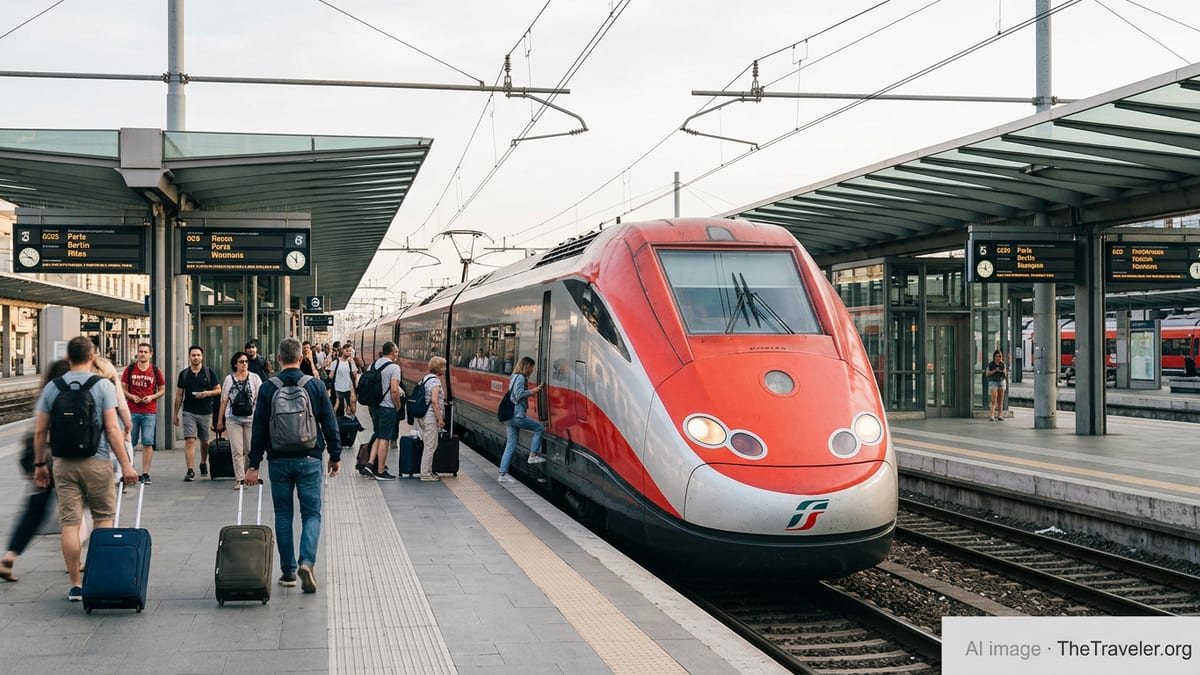
High Speed Train Production and Fleet Modernisation
Reports from the October 2024 coverage point to a sustained pipeline of high speed train investment as governments and operators seek additional capacity and more efficient fleets. Industry summaries describe new production agreements for high speed trainsets intended to support growth on busy intercity corridors while replacing older rolling stock that is more costly to maintain and less energy efficient.
According to publicly available information, one focus of the reporting is on long term framework contracts that allow operators to phase deliveries over several years. This approach is designed to smooth demand for manufacturers, provide flexibility to match capacity with ridership, and encourage incremental technical improvements across successive batches of trainsets rather than relying on infrequent step change procurements.
The October material also underlines how high speed fleet orders increasingly incorporate features previously associated with conventional regional multiple units. These include more generous multi purpose spaces for luggage and bicycles, upgraded accessibility, and onboard systems that can interface more easily with digital traffic management and condition based maintenance platforms.
Urban Rail Expansion from India to North Africa
Urban and suburban rail development featured prominently in the October 2024 output, reflecting rapid growth in large metropolitan areas and the need to improve daily mobility with lower emissions. In India, coverage highlights the role of international finance in supporting a new suburban rail network for Bengaluru, where a substantial multi hundred million euro loan has been agreed to develop several corridors intended to relieve severe road congestion and offer more predictable travel times.
The Bengaluru suburban scheme, as described in project briefings, forms part of a wider portfolio of Indian urban rail investments that blend metro, regional rail and bus rapid transit. The October reporting stresses that such projects increasingly come with technical assistance for local agencies, focusing on issues such as integrated ticketing, passenger information and long term asset management so that new infrastructure can be operated reliably from the outset.
In North Africa, the October 2024 coverage draws attention to feasibility studies in Morocco for new passenger links around Tanger. Public summaries indicate that the work includes options to connect the city centre with the airport and stadium facilities, together with a potential line towards Tétouan. These studies are positioned as a way to extend the benefits of earlier investment in the country’s high speed corridor by improving onward distribution for both residents and visitors.
Freight Incentives and Terminal Upgrades
Rail freight policy and terminal investment also form a significant strand of the October 2024 round up. One example cited is a British initiative where a new container service has been launched with the aid of temporary waivers on track access charges for fresh flows. Publicly available descriptions explain that this type of incentive is intended to reduce the financial risk of starting new freight services so that operators and customers can test routes and schedules before committing to long term contracts.
Alongside targeted incentives, the October material notes continuing work to modernise freight yards and intermodal terminals. For infrastructure managers in Europe, published technical papers referenced in the same period describe efforts to optimise transshipment yards that act as interfaces between road and rail. The objective is to handle growing volumes efficiently without requiring extensive new land take, using better layout design and data driven planning of train and truck movements.
Together, these developments suggest that policy makers are looking beyond headline main line projects to the practical conditions that make rail freight competitive. By lowering entry costs for new services and improving the performance of key hubs, the measures reported in October aim to capture a greater share of long distance goods traffic and support wider climate and congestion objectives.
Digitalisation and Network Performance
Digital tools and data driven planning are recurring themes in the October 2024 coverage of Railway Gazette International. Across both passenger and freight operations, the reporting points to growing interest in analytics based approaches to capacity, resilience and customer experience. This aligns with a wider industry shift toward managing networks dynamically rather than relying solely on fixed timetables and static infrastructure assumptions.
Academic and technical work referenced during the period includes research on train rescheduling models for disrupted networks and on assessing the capacity of freight yards under varying traffic patterns. Although these studies are not limited to any single country, they illustrate how railway operators and infrastructure managers can apply optimisation techniques to reduce delays, prioritise key flows and restore regular service more quickly after incidents.
On the passenger side, the October material notes increasing use of ridership data to inform service planning, particularly for urban and suburban routes. Public information suggests that operators are paying closer attention to how different groups of passengers use the network at various times of day, with the aim of allocating rolling stock and staff more efficiently while maintaining acceptable crowding levels.
Positioning for Future Growth
Across these strands, the October 2024 reporting in Railway Gazette International depicts a rail sector preparing for future growth while adapting to changing travel patterns and economic conditions. Large scale high speed orders and suburban network projects signal confidence in long term demand, yet much of the detailed coverage focuses on practical questions of financing, operations and technology deployment.
The mix of articles indicates that railways are pursuing a combination of new construction, targeted upgrades and digital optimisation rather than relying on a single strategy. Whether through capacity enhancements for busy intercity routes, new suburban corridors in rapidly growing cities, or operational improvements at freight hubs, the initiatives highlighted in October share a common aim of making rail a more attractive and resilient mode.
For the wider travel sector, these developments point to an environment where rail is expected to play a central role in both domestic and international mobility. As the projects and policies documented in October 2024 move from planning to delivery, their progress is likely to feature heavily in future editions of industry coverage and to shape travel choices for years to come.