


More news on this day
Winter weather has a familiar way of turning airport schedules into guesswork, but a major airfield change taking shape at Tri-Cities Airport in Pasco, Washington could reduce one of the biggest cold-season choke points: the time it takes to deice aircraft before departure.
Get the latest news straight to your inbox!
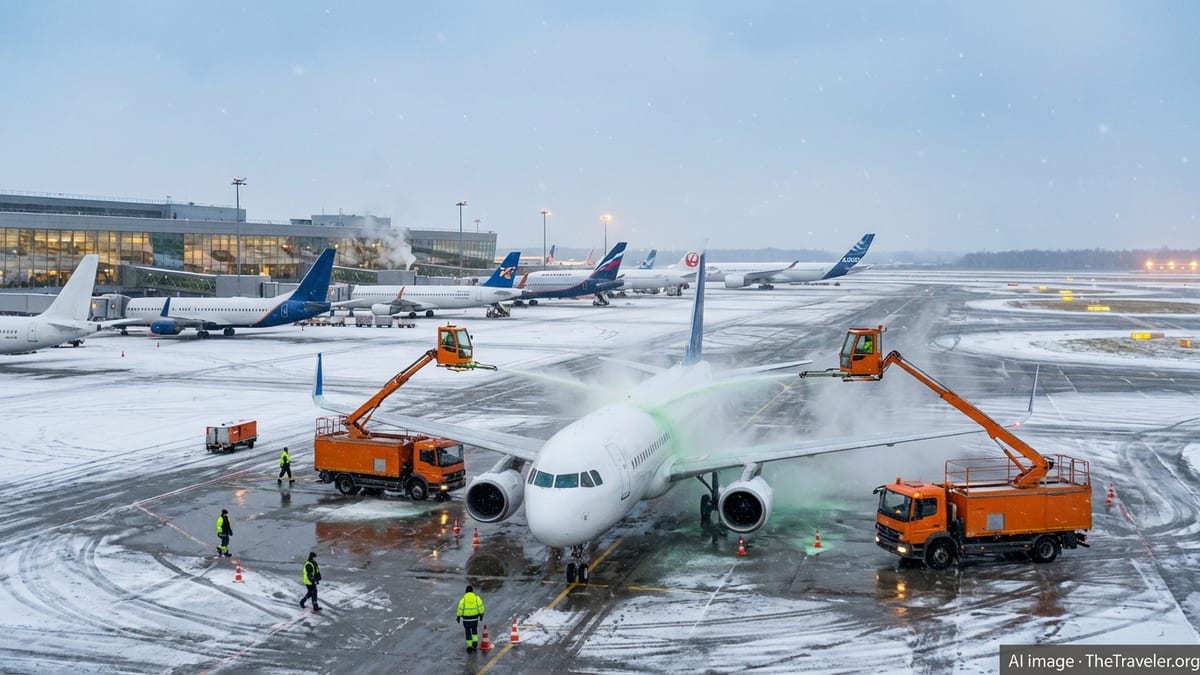
What’s changing at PSC and why it matters in snow season
Published coverage dated September 18, 2026 indicates Tri-Cities Airport (PSC) has secured more than $8.3 million in federal Airport Improvement Program funding to expand its aircraft deicing facility and complete related airfield work. The same coverage describes the core operational goal in plain terms: increase the airport’s ability to deice more planes at once, so departures do not stack up when snow or freezing conditions hit.
The deicing pad expansion is designed to allow up to three aircraft to undergo deicing simultaneously, according to the published report. At airports with limited pad space, aircraft can end up queued on taxiways or held at gates waiting for their turn, a delay that can ripple into missed connections and crew-time issues even when runways themselves remain usable.
Deicing is often a hidden cause of winter delays because it is time-sensitive and must be performed close to departure. When demand spikes during a storm, an airport’s capacity to move aircraft through that step becomes as important as runway snow removal.
Funding details and the construction timeline travelers should watch
The published coverage breaks the federal support into three grants, including a $5.3 million component for design, construction, and construction management of the deice pad expansion, along with an additional $2.95 million tied to the Infrastructure Investment and Jobs Act for added construction elements. A separate grant of $87,694 is described as supporting relocation of FAA power infrastructure serving equipment including a stand-alone weather sensor and a precision approach path indicator.
For travelers, the dates matter as much as the dollars. The same report points to project bidding during 2026 and schedules construction to begin in March 2027. That places the heaviest work after the current winter cycle, with benefits more likely to show up in later seasons once the new pad and supporting taxiway connections are in service.
Separate publicly available bid documentation for a Tri-Cities Airport “Deice Pad Expansion” project lists an Airport Improvement Program project number and describes typical airfield construction scope, including pavement removals, drainage and trench drains, new concrete and asphalt paving, electrical work such as cabling and conduit, taxiway edge lighting and signage, and spent aircraft deicing runoff infrastructure. Even without a traveler seeing these elements directly, they are the kinds of behind-the-scenes upgrades that determine how quickly an airport can reset after a messy storm.
Taxiways, sensors, and airfield layout: the less visible pieces that affect delays
The funding announcement also ties the deicing work to new taxiway construction, identifying Taxiways B1 and B2 as part of the package, along with expanded deicing runoff infrastructure. Taxiway geometry influences how efficiently aircraft can move between gates, pads, and runway thresholds; during snow events, that efficiency becomes more critical because plowed corridors and restricted pavement can narrow routing options.
Relocating FAA weather and navigational equipment is another detail that can sound bureaucratic but has operational consequences. Weather sensors and approach-path visual aids support safe decision-making and consistent operations when visibility drops or conditions change rapidly, and moving them can be necessary to keep the airfield compliant as pavement is reconfigured.
PSC has also been running other modernization projects in recent years. The airport’s construction updates describe runway shift and apron work intended to bring parts of the airfield into compliance with FAA engineering standards and to support growth. While those projects are not specifically branded as winter-ops improvements, a more efficient layout can indirectly help cold-weather resilience by reducing ground congestion when operations are already stressed.
Environmental handling of deicing runoff: capacity without the mess
Deicing creates a second challenge beyond scheduling: what to do with glycol-laden runoff. Industry coverage over the past two years has highlighted Tri-Cities Airport’s interest in improving how it treats deicing wastewater, including trial work focused on reducing the strength of spent deicing runoff before it can be discharged to local wastewater treatment systems.
That environmental angle matters because storm response is not just about spraying more fluid. Airports must manage collection, containment, and treatment in order to scale deicing operations responsibly. Expanded runoff infrastructure and containment can help an airport deice more aircraft without creating downstream bottlenecks that force limits on how much fluid can be applied or stored during prolonged events.
For travelers, the practical takeaway is that “deicing capacity” is more than pad size. It is the entire system: pavement layout, drainage, containment, and the ability to keep aircraft moving safely while meeting environmental requirements.
What passengers can expect and what won’t change
A deicing expansion does not eliminate winter delays outright. Snow and ice can still disrupt airline schedules for reasons beyond a local airport’s control, including aircraft arriving late from storm-impacted hubs, crew legality constraints, or air traffic flow restrictions when a region-wide weather system hits multiple airports at once.
Still, the specific improvement described for PSC targets a common local pain point: the ground queue that forms when multiple departures need deicing in a short window. By increasing the number of aircraft that can be processed simultaneously, the airport’s plan aims to reduce wait times and improve operational efficiency during freezing conditions, according to the published coverage.
Between now and the start of construction in March 2027, travelers can watch for operational advisories related to bidding and staging, and for any airfield notices during periods when taxiway work or drainage construction requires temporary reroutes. The largest payoff, however, is expected after the deicing pad expansion and related taxiways enter service, when winter weather returns and the airport’s new throughput gets tested in real time.