


Kotor is one of the most beautiful places on the Adriatic, but it often surprises first-time visitors that it is not a classic beach resort. The medieval old town sits on a deep, fjord-like bay where the shoreline is lined more with stone houses and jetties than with long sandy beaches. You can absolutely swim here and find memorable waterfront spots, but you need to know where to look, what to expect, and when it makes more sense to hop over to Budva and the open sea.
Get the latest updates straight to your inbox!
Does Kotor Actually Have Good Beaches?
The short answer is that Kotor is a wonderful place to be by the water, but it is not a conventional “beach destination.” Around the old town itself, the waterfront is dominated by the cruise port, marina and sea wall, with only tiny gravel patches and stone steps leading into the bay. You will see locals dropping in for a quick swim next to the city walls in summer, but most visitors prefer to move a few kilometres along the shore where the water is cleaner and the setting more relaxed.
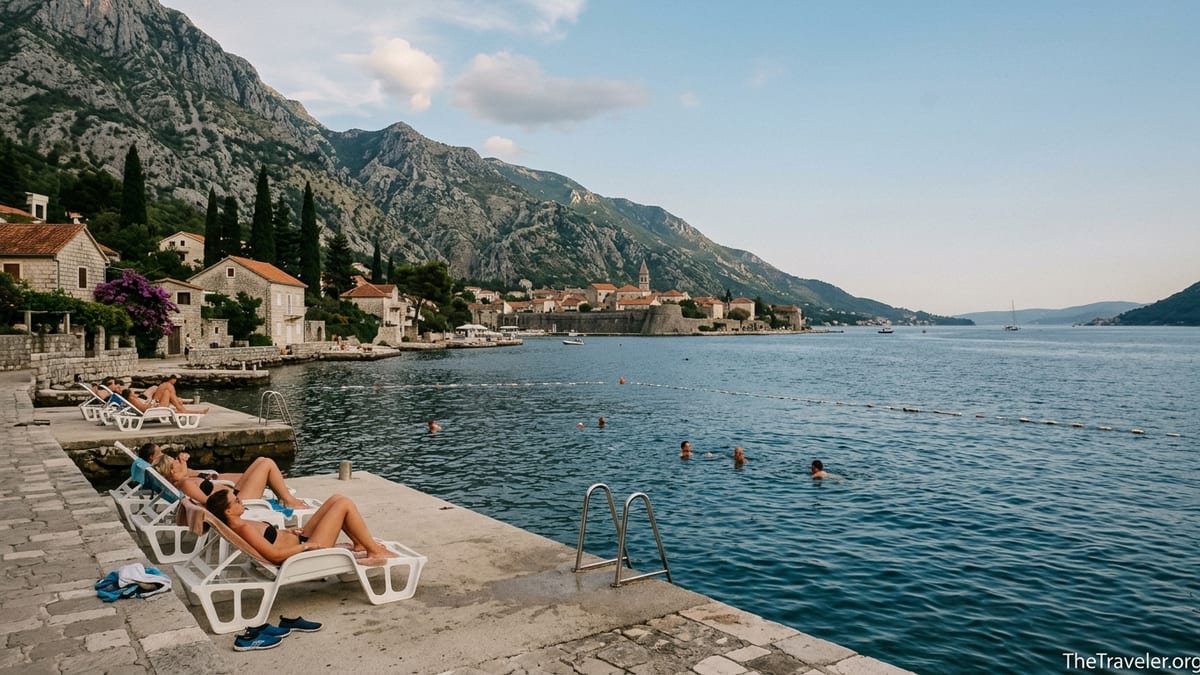
Instead of long sand, the Bay of Kotor offers a patchwork of pebble coves, narrow strips of shingle, and concrete bathing platforms built in front of stone villas. Places advertised as “beaches” on hotel listings often mean a private pontoon with ladders into the sea rather than an expanse of sand. This feels magical at sunset, when the light hits the mountains and you can float with terracotta roofs behind you, but it is different from the Budva Riviera’s classic beach experience.
In practical terms, this means Kotor is ideal if you want to combine swimming with history, boat trips and slow evenings on the promenade, rather than spending all day stretched on a wide sandy bay. If your main priority is long beach days with plenty of space, wave action and multiple bar options, you will be happier basing in Budva or at least planning easy day trips there.
Water quality around the bay is generally good in summer, with local authorities monitoring popular swimming spots, but there are ongoing concerns near busy port areas where boat traffic and runoff are higher. As a rule of thumb, avoid swimming right by Kotor’s main pier or in front of the largest marinas, and instead walk or bus 10 to 15 minutes out of town toward Dobrota or further villages where the bay is more open and residential.
Dobrota: Kotor’s Most Convenient Swimming Zone
Dobrota starts just north of Kotor Old Town and stretches for several kilometres along the inner bay, with a seafront path, small pebble strips and countless private and semi-public jetties. If you are staying without a car, this is the easiest area to treat as your “beach.” You can walk from the old town gate to the first usable swimming spots in around 10 minutes, and buses or taxis connect you further along the waterfront if you want quieter corners.
Many guesthouses and boutique hotels in Dobrota advertise “waterfront” access. In practice, this usually means a shared stone terrace with sun loungers and metal ladders into the bay. During July and August, expect to pay roughly 8 to 15 euros for a pair of loungers and an umbrella at small beach bars and platforms, similar to other parts of the Montenegrin coast. Several low-key cafés serve espresso, local beer and simple snacks right by the water, so you can easily spend half a day swimming and reading without moving far.
The beach area often labelled “Dobrota Beach” in travel guides is a narrow but pleasant stretch of pebbles and platforms, with a roped-off swimming zone, a small bar and rental loungers in high season. Snorkelling is surprisingly good on calm mornings, with fish congregating around the rocks and ladders. It does get crowded in peak summer afternoons when temperatures are high and cruise passengers spill out of Kotor in search of a swim, so arrive before 10 a.m. if you want a front-row spot by the water.
If you walk or cycle further north through Dobrota, the waterfront grows a little quieter and more residential. Simple concrete steps between houses are often technically public access, though some are clearly intended for residents. A good rule is to look for places where locals are already sunbathing or where a bar has set out loungers; ask before settling on clearly private jetties. In the evening, this promenade is one of the most atmospheric places to be in Kotor Bay, with the fortress lit up across the water and locals strolling between cafés.
Perast, Bajova Kula & Other Bay Beaches Near Kotor
Beyond Dobrota, several smaller villages around the bay offer a more relaxed swimming experience and a slightly wilder feel, while still being easy day trips from Kotor. The best known is Perast, about 12 kilometres up the bay, a baroque stone village facing the two iconic islets of Our Lady of the Rocks and Saint George. Perast does not have a broad beach either, but its waterfront is lined with platforms and tiny pebble coves where you can slip into clear, usually calmer water than right in front of Kotor.
In Perast, one of the most popular swimming hangouts is a rustic beach-bar setup near the central part of the village, where loungers sit right on the stone terrace and you look straight out to the islands. Expect to pay a similar 10 to 15 euros for two beds and an umbrella in peak season, with service that leans more toward cold drinks and simple meals than full-scale beach-club theatrics. You can combine an hour or two of swimming with a short boat ride to Our Lady of the Rocks and still be back in Kotor by late afternoon.
Between Kotor and Perast, Bajova Kula has built a reputation as one of the bay’s prettiest small beaches. Tucked under laurel trees with a wooden pier and a strip of pebbles, it feels more like a cove than a built-up resort. There is a small bar, a few rows of loungers and good water clarity on most summer days. Because space is limited, it fills quickly in July and August, especially on weekends when locals drive out for a swim. If you are coming by car or taxi from Kotor, aim to arrive before late morning or after 4 p.m. for a better chance at a front-row lounger.
Other bay villages like Orahovac, Prčanj and Morinj each have their own versions of narrow pebble beaches, simple bars and jetties. Orahovac, in particular, has a slightly longer arc of pebbles and often cleaner water thanks to its position near the narrower part of the bay. Even if you base yourself in Kotor, it is worth planning at least one afternoon or sunset swim in one of these villages. Buses run along the bay, but in high season a short taxi ride can save time and costs roughly 10 to 20 euros each way, depending on distance and traffic.
Beach Clubs, Platforms and Practicalities Around the Bay
Beach culture around Kotor is more about intimate waterfront terraces than big-name clubs. You will not find the kind of all-day party beach clubs that define parts of Budva or Croatia’s Hvar here. Instead, expect small bars or restaurant terraces that have added a few loungers on their stone jetties, where the vibe runs from quiet couples reading under parasols to families teaching children to swim off the ladder.
Typical pricing across the bay in summer 2026 runs at around 8 to 15 euros for two loungers and an umbrella on these small platforms, slightly less in quieter villages and shoulder season months like June and September. Some venues waive the charge if you are a restaurant guest and spend a similar amount on food and drinks, so it is worth asking. Ordering a coffee or a glass of Vranac red wine while you dry off is part of the rhythm of the day; this is more “swim between long lunches” than “spend eight straight hours on the sand.”
Facilities can vary a lot. Some spots have changing cabins, showers and decent toilets; others are little more than a ladder into the sea next to a kiosk selling cold drinks. If you are particular about amenities, look for better-known places in Dobrota, Orahovac or Bajova Kula where there is at least one proper beach bar or restaurant. Families with young children might appreciate Morinj’s shallow entry and grassy back area, where kids can play out of the full sun.
It is also useful to remember that the bay is busy with boat traffic in peak season. Speedboats run constant shuttle services to the Blue Cave, island monasteries and outer-bay beaches. When choosing a platform, avoid spots directly next to small marinas or where boats are continually tying up and casting off. The quieter corners just beyond main jetties tend to feel safer and more peaceful for swimming, especially if you like longer laps parallel to the shore.
Water Shoes, Pebbles and Swimming Comfort
Nearly all of Kotor’s swimming spots and nearby bay beaches are pebble or concrete rather than sand. The pebbles vary from coarse shingle to larger rounded stones, and many entries involve a few uneven rocks before you reach deeper water. For most adults, this is manageable with a bit of care, but many travellers find simple water shoes make a big difference in comfort, especially if you are planning to swim every day.
You do not need anything technical: inexpensive neoprene or mesh water shoes sold in Kotor’s small sports shops and kiosks do the job. Expect to pay the equivalent of around 10 to 20 euros depending on brand and quality, though bringing your own from home is often cheaper. These also protect against the occasional sea urchin that may lodge among rocks in less-trodden areas, particularly if you are swimming off natural rocky ledges rather than formal platforms.
Because much of the access is via ladders, less confident swimmers might appreciate using simple inflatable noodles or a small float, which you can buy in supermarkets and beach stalls around the bay for just a few euros. The bay itself is usually calm, with only light chop from passing boats, so it is well suited to leisurely lane-like swims parallel to shore once you are in the water.
The lack of sand also has upsides. The water generally stays clearer than at busy sandy beaches, since there is less stirred-up sediment, and you will not be brushing sand off everything you own. Towels or lightweight beach mats are enough for lounging on concrete terraces, and some travellers like to bring a thin yoga mat or foldable foam pad to make lying on stone more comfortable during long afternoons.
Summer Crowds, Water Quality & When Budva Is Better
From late June through August, both Kotor and Budva experience their peak tourist season. Kotor sees regular cruise ship calls, meaning that on some days thousands of day-trippers pour into the old town. Many of them take boat tours or shuttle to nearby swimming spots, which is why Dobrota platforms and small bay beaches can feel surprisingly busy between late morning and mid-afternoon. If you want quieter swims, aim for early mornings, late evenings, or shoulder months such as June and September.
As for water quality, the bay is enclosed and relatively deep, so pollutants can linger longer than on open-coast beaches flushed by waves. Environmental reports in recent years have highlighted localised microbiological concerns in parts of Kotor Bay, especially close to urban centres and port infrastructure. In everyday terms, this translates to avoiding swims right by Kotor’s cruise pier or the busiest marina corners and opting instead for residential stretches further out, such as mid- to north-Dobrota, Orahovac, Bajova Kula or Perast, where water circulation is generally better.
Budva, by contrast, sits directly on the Adriatic with a string of open-sea beaches. If your priority is clear, moving water and a classic beach atmosphere, Budva usually wins. Slovenska Plaža, the main town beach, is busy and backed by a concrete promenade, but it is long enough to absorb crowds. Mogren Beach, a pair of coves reached on foot from Budva Old Town, offers dramatic cliffs, turquoise water and a mix of pebbles and sand that many visitors rank among Montenegro’s most beautiful urban beaches. Jaz and Bečići, a short drive or bus ride away, provide longer arcs of sand and pebble with full facilities, water sports and more space to spread out.
In practical terms, Budva is the better base if you imagine your trip as almost entirely beach-focused: long days on the sand, trying different coves, and dipping into nightlife afterwards. The Budva Riviera has dozens of beach bars, from simple kiosks to DJ-driven venues that go late into the night. Prices for sunbeds are similar to Kotor’s or slightly higher at the most famous beach clubs, but you get broader beaches and more choice. From Kotor, Budva is roughly a one-hour bus ride in normal traffic, so even if you stay in the bay you can plan one or two beach days there to scratch the open-sea itch.
Planning Your Base: Kotor, Bay Villages or Budva?
Deciding where to stay comes down to how you balance beach time with atmosphere and sightseeing. Staying inside Kotor Old Town puts you in the heart of the action, with centuries-old stone alleys at your doorstep and the fortress trail rising behind the city walls. You can walk to Dobrota for swims, but you will not have a true beach right below your window. This is a great choice if you are happy trading some sand time for history, dining and nightlife.
Dobrota itself is a smart compromise for many travellers. By basing in a waterfront guesthouse there, you wake up directly on the bay, with a ladder or pebble patch effectively functioning as your “house beach.” You are still just a short taxi or 25 to 30 minute seaside walk from Kotor Old Town for sightseeing and evenings out. This setup works especially well for couples and slower-paced trips where you alternate relaxed swimming days with one or two big excursions by boat or car.
Perast and other bay villages like Orahovac or Prčanj offer an even quieter alternative. Here, evenings are about waterfront dinners and low-key strolls, with limited bar or nightlife options beyond a few terraces. You will have small jetties and coves to swim from, and in Perast you get the bonus of island views that are stunning at sunset. These bases suit travellers who value tranquillity and scenery over variety of restaurants and late nights.
If, after weighing this up, you find yourself craving long beaches, a choice of sandy and pebbly bays, and livelier nightlife, Budva is the more logical base. From there you can day-trip to Kotor for its old town and bay views, then return to Jaz, Mogren or Bečići for afternoon swims. Some travellers split a week between both: three or four nights in Kotor or Dobrota for culture and bay scenery, then three or four nights in Budva or even further south near Sveti Stefan or Ulcinj for extended beach time.
The Takeaway
Kotor is, first and foremost, a historic bay town with outstanding scenery. It offers charming swimming opportunities on platforms and small pebble coves in Dobrota, Perast, Bajova Kula and other nearby villages, but it does not have wide sandy beaches. If you come here expecting a traditional resort strip, you may be surprised; if you arrive ready to dive from jetties beneath stone houses and spend evenings watching the fortress glow above the bay, you will likely love it.
For travellers whose ideal holiday is more about swimming breaks between sightseeing, café-hopping and boat trips, basing in Kotor or Dobrota makes perfect sense. Pack water shoes, be selective about where you swim in the bay, and target shoulder months or early/late hours in peak season for calmer experiences. You will be rewarded with luminous light on the mountains, glassy morning water and the simple pleasure of stepping from a café table almost straight into the sea.
For those who dream of long stretches of sand or shingle, with waves rolling onto bigger beaches and busy beach bars behind them, Budva and the wider Budva Riviera are a better fit. From there you can still visit Kotor in a day to see its old town and bay, but your primary base will match your beach expectations more closely.
The good news is that Montenegro’s coast is compact enough that you do not have to choose entirely. With an hour or so between Kotor and Budva by road, you can easily weave both styles of seaside into a single trip: swim from jetties under Kotor’s walls one day, then splash in the open Adriatic at Mogren or Jaz the next.
FAQ
Q1. Can you swim directly in Kotor town?
You can, but the better swimming spots are a short walk or bus ride away toward Dobrota and other bay villages, where the water is cleaner and the setting more relaxed.
Q2. Is the water in Kotor Bay clean and safe?
Water quality is generally acceptable in popular swimming areas, but it is best to avoid busy port and marina zones and choose residential stretches like mid-Dobrota, Orahovac or Perast.
Q3. Do I need water shoes for Kotor beaches?
Strictly speaking, no, but most swimming spots are pebble or concrete with some rocks, so basic water shoes make getting in and out of the water much more comfortable.
Q4. Are there sandy beaches near Kotor?
Directly around Kotor Bay there are mostly pebbles and platforms. For broader sandy or sand-and-pebble beaches, you will need to go to the Budva Riviera or further south toward Ulcinj.
Q5. How far is Budva from Kotor for a beach day?
Budva is roughly an hour from Kotor by bus in normal summer traffic. Many travellers base in Kotor and take one or two day trips to Budva’s beaches.
Q6. Which Budva beaches are best if I am staying in Kotor?
If you are coming for a single day, Mogren Beach and Jaz Beach are popular choices, offering dramatic scenery, clearer open-sea water and full facilities compared with Kotor’s small platforms.
Q7. Are there family-friendly swimming spots in Kotor Bay?
Yes. Areas of Dobrota with roped-off zones, and villages like Morinj and Orahovac with gentler entries and nearby cafés, work well for families with children.
Q8. How crowded do Kotor’s swimming spots get in summer?
In July and August, small platforms and pebble strips can feel busy from late morning to mid-afternoon, especially on cruise ship days. Early mornings and evenings are quieter.
Q9. Can I find beach clubs and nightlife on Kotor’s waterfront?
You will find small bars and restaurant terraces along the bay, but not large-scale party beach clubs. For bigger nightlife and club-style beach venues, Budva is a better option.
Q10. Where should I stay if I want both beaches and Kotor’s old town?
Dobrota is a strong compromise, giving you direct waterfront access for swimming plus an easy walk or short taxi ride to Kotor Old Town for sightseeing and evenings out.