


Montenegro’s coast is compact enough that you can see a lot in just a few days, but sooner or later every trip planner hits the same question: should you base yourself in Kotor or Budva? One is a medieval bay town wrapped in mountains, the other a full-on Adriatic beach resort and nightlife hub. Both work for first-time visitors, but they deliver very different trips. This guide breaks down how Kotor and Budva really compare in 2026, with concrete examples of costs, neighborhoods, hotels and day trips so you can pick the right base for your style.
Get the latest updates straight to your inbox!
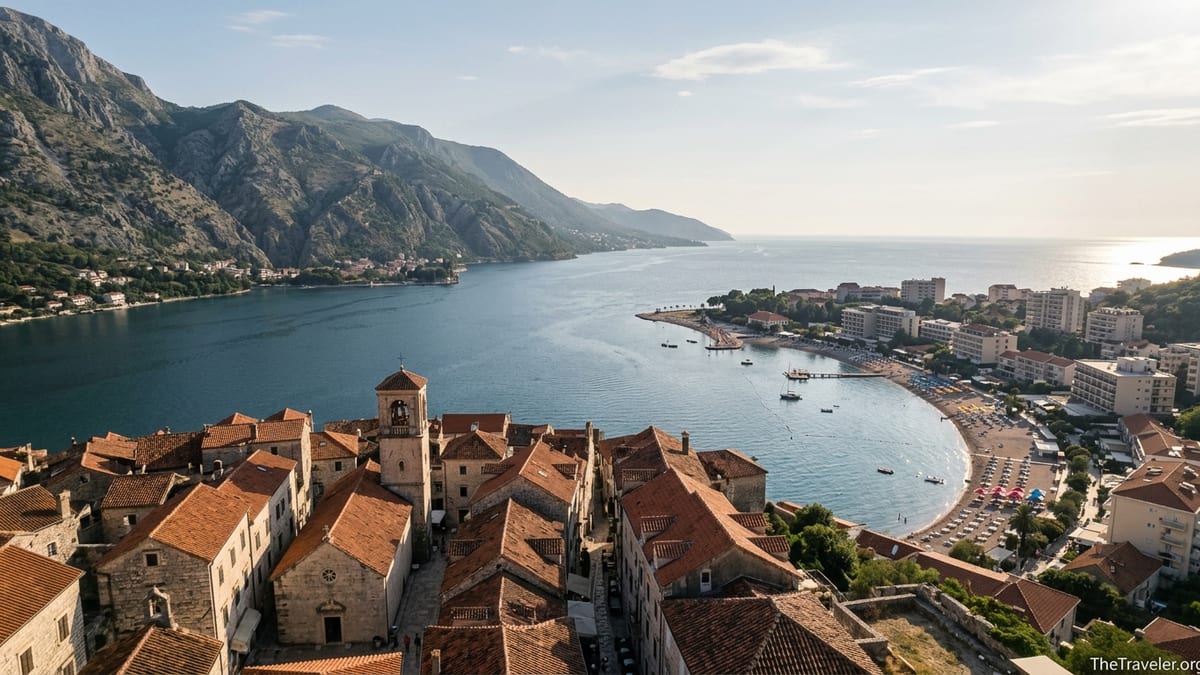
Overall vibe: bay beauty vs beach resort
Kotor sits deep inside the Bay of Kotor, a fjord-like inlet backed by steep limestone peaks. When you step through its stone gates you are in a compact Venetian-era Old Town of cobbled alleys, cat-filled squares and city walls that climb the hillside. Cruise passengers pour in for a few midday hours, but mornings and evenings feel more local and slow. There are some bars and small wine spots, yet the overall mood is atmospheric rather than high-energy.
Budva, an hour away on the open Adriatic, feels like a different country. Its own Old Town occupies a small peninsula and looks storybook-pretty from the sea, but the wider town is unapologetically a resort. High-rise apartments, beach bars pumping music, souvenir stands and water-sports rentals line the 1.5-kilometre Slovenska Plaža seafront. In July and August Budva is busy almost 24 hours a day, especially around the beach clubs and late-night venues above town.
For a first-time visitor, that means Kotor is better if you want views, history and easy access to nature, while Budva suits travellers who put beaches and nightlife at the heart of their trip. Many itineraries now split time between the two, but if you have only three or four nights, choosing the right base will decide whether your Montenegro memories are of stone alleys and bay mists or sunbeds and DJ sets.
It is also worth considering how you like to move around. Kotor makes it easy to hop by bus or boat between historic villages around the bay. Budva makes it easy to walk to different beaches or join party boats and evening events without thinking much about timetables.
Old Town charm and atmosphere
Kotor’s Old Town is the more immersive historic experience. It is a UNESCO-listed walled town where you can spend hours looping tiny lanes between churches, palaces and hidden squares. The Cathedral of Saint Tryphon dates back to the 12th century, and just wandering past laundry lines and stone doorways at dusk feels like stepping into a medieval film set. Many small hotels and apartments are actually inside restored stone houses, so you might sleep above a café on a centuries-old square.
Budva’s Old Town is smaller and often visited as a half-day trip rather than a base in itself, but it is still worth a wander. You enter through gates in the sea walls and quickly reach the main square around the Church of Saint John and the Citadel. Streets are lined with boutiques, ice cream stands and a growing number of cocktail bars. At night the ramparts and bell tower are beautifully lit, and you can sip a drink on a terrace overlooking the sea while street musicians play in the lanes below.
The key difference is what happens as soon as you walk beyond those walls. In Kotor, you step out onto a waterfront promenade with views of villages and mountains, with only a few low-key bars. In Budva, you emerge into a thick band of beach bars, souvenir stalls and apartment blocks. If you want an Old Town that feels largely like a living historic centre, Kotor wins. If you are happy with an Old Town that is more of a pretty backdrop to a modern resort, Budva is perfectly enjoyable, especially in the shoulder months of May, early June and late September.
Noise is another factor. An apartment inside Kotor’s Old Town will hear some music and bar chatter until around midnight in high season, but Budva’s Old Town and seafront can stay loud until 2 or 3 a.m. when the big clubs and beach bars are in full swing. Light sleepers who do not plan to join the party will be more comfortable in Kotor or in Budva’s quieter residential streets set back from the water.
Beaches and swimming
If you picture long sandy beaches and daily swims, Budva is the better base. Right in town you have Slovenska Plaža, a broad arc of mostly pebbly shore backed by a continuous row of cafés and snack bars. Even more appealing for many visitors are Mogren I and Mogren II, two coves tucked under cliffs west of the Old Town. You reach them via a coastal promenade that tunnels through rock, and in summer these beaches fill with both locals and tourists renting sunbeds or laying down towels on the public stretch.
A short taxi or boat ride brings you to other Budva Riviera classics such as Jaz Beach, a long bay that hosts occasional music festivals and daytime beach clubs, and Bečići, where big resort hotels line a more open stretch of shoreline. Many visitors without cars simply use local buses or water taxis to sample a different beach every day. Expect to pay in the region of 10 to 25 euros for two sunbeds and an umbrella at the more organised sections in high season, and a few euros for bottled water or coffee at the nearest bar.
Kotor itself has very limited conventional beach space. There are small, often concrete bathing platforms near Dobrota and Muo where people spread towels and climb down ladders for a quick dip in the bay, and a few short pebble patches. The water can be wonderfully calm in the early morning, but the backdrop here is stone houses and mountains rather than open-sea horizon. For a more classic beach day from Kotor, travellers typically bus or drive out of the bay toward places like Plavi Horizonti on the Lustica Peninsula or to beaches near Budva, turning a swim day into a mini day trip.
For some visitors that trade-off is perfect: a peaceful base on the bay with one or two dedicated beach days elsewhere. Others prefer to be able to walk from their accommodation to several different beaches in flip-flops. If beach time is your priority and you do not want to plan transport, Budva clearly has the edge.
Nightlife, restaurants and evening scene
Budva has long been marketed as Montenegro’s nightlife capital. In the height of summer, open-air clubs on the hills above town, such as Top Hill, run international DJs until dawn, while beach bars along Slovenska Plaža throw themed nights and live music. A typical evening might start in a wine bar or simple konoba in the Old Town, continue with cocktails on the seafront, then move to a club with an entry charge that can range from free on quieter nights to more than 20 euros for bigger events. Drinks at busy venues are roughly on par with mid-range European resort prices, with a beer in many bars starting around 3 to 4 euros and cocktails usually 8 to 12 euros.
Kotor’s evenings are much gentler. Most visitors spend the golden hour walking the city walls or climbing part of the trail toward the fortress above town, then settle into outdoor tables on squares like Trg od Oružja for seafood, Montenegrin grilled dishes and local wine. There are a few lively hostel bars and music spots that stay open late, but Kotor does not have large-scale clubs or a curated “strip” of party bars. This makes it ideal for couples, families and solo travellers who want atmosphere without a hangover culture.
Restaurant choice differs too. Budva’s wider town has everything from budget-friendly pizza and burek stands to modern seafood restaurants, Asian-inspired fusion menus and more formal hotel dining rooms. You can grab a slice of pizza on the promenade for 3 or 4 euros at lunch, then splurge on a multi-course seafood meal with wine for 30 to 40 euros per person in the evening. Kotor has fewer total options but a good spread of konobas serving black risotto, grilled octopus and local cheeses, along with bakeries and gelato stands that keep the streets busy until late.
If your idea of a perfect night is a leisurely dinner followed by a quiet drink watching the bay lights, Kotor is the match. If you want the option of beach parties, late clubs and a more international bar crowd without getting in a taxi, Budva is the clear choice.
Prices, accommodation and practicalities
Both Kotor and Budva are affordable compared with many Western European coastal destinations, but they price out differently. In peak summer, a mid-range hotel or well-rated apartment within Kotor’s Old Town or just outside the walls might run roughly 120 to 180 euros per night for a double, depending on amenities and exact location. In Budva, you will often find a wider spread: basic studios a few blocks back from Slovenska Plaža in the range of 70 to 110 euros in high season, up to 200 euros or more for seafront hotels or resorts with pools and direct beach access.
Food and drink in both towns are broadly similar, although Budva’s highly seasonal, tourist-focused strip tends to push prices up at the busiest venues. A sit-down main course at a standard Old Town restaurant in either place might be 12 to 20 euros, with house wine by the glass around 3 to 5 euros. It is still easy in both destinations to eat more cheaply by grabbing bakery items, cevapi or simple pasta dishes away from the main squares. Budva has more all-inclusive or half-board package options, which can work out cheaper for families who plan to spend most days on the beach.
Transport between the two hubs is straightforward. The distance is only about 25 kilometres as the crow flies, and buses between Kotor and Budva typically take around 60 to 90 minutes depending on the route and traffic, with tickets often in the 4 to 7 euro range bought at the station or online. Taxis and transfers are also common for travellers who do not want to navigate timetables, with private cars from either town to the other generally costing several tens of euros depending on negotiation and season.
In terms of day-to-day ease, Budva is better for travellers with mobility concerns who value flatter promenades and easy beach access. Kotor’s charms include a lot of cobbles and steps, and the famous fortress path is steep and uneven. Car parking is limited and relatively expensive in both places in July and August, so many visitors either rent a car only for certain days or rely on buses and organised tours.
Day trips and wider Montenegro itineraries
As a base for exploring wider Montenegro, Kotor is hard to beat. From the bus station or via local agencies you can join full-day “Montenegro highlights” tours that loop up the Kotor serpentine road to Lovćen National Park, stop in the old royal capital Cetinje, and continue to viewpoints over Lake Skadar before returning in the evening. Shorter boat trips on the bay visit Perast and Our Lady of the Rocks, and some include swimming stops in quieter coves or at the entrance to the Adriatic. Many itineraries for first-time visitors recommend at least one full day dedicated to the bay villages alone.
Budva’s day-trip menu leans more toward beaches and coastal experiences. Boat operators along the promenade sell half-day trips to nearby coves, snorkelling spots and viewpoints such as the islet of Sveti Nikola, often combining several swim breaks with an on-board lunch. From Budva it is also easy to visit Sveti Stefan for photos of the famous island hotel from the public beach or viewpoint above. Inland tours to places like Lake Skadar and the canyons depart from Budva as well, but if your main goal is Montenegro’s mountains and national parks, basing in Kotor or even Podgorica can cut down on driving time.
For a four or five-night first trip, a practical pattern is to spend the first two or three nights in Kotor focusing on the bay, Perast, Lovćen and possibly one long day to Durmitor or Skadar, then transfer to Budva for two nights of beach time before flying out. Travellers arriving via Dubrovnik often reverse that order depending on flight times, as Kotor sits closer to the Croatian border. Those with only three nights might choose one base and visit the other on a day trip, knowing they can always return to Montenegro to experience the other atmosphere on a future visit.
If you are visiting outside the main summer window, Kotor generally feels more “alive” in shoulder seasons, with a steadier flow of independent travellers and local life. Some of Budva’s larger beach clubs and party venues open only for the main summer period, and certain boat trips and seasonal kiosks may be limited in April or October.
Which base fits your travel style?
If you are a couple or solo traveller who loves photography, historic towns and slower evenings, Kotor is almost always the better primary base. You can fill at least two full days just with the Old Town, the fortress hike, boat trips to Perast and simple walks along the bayfront to Dobrota. Add in a third day for a national park and you already have a rich short break without ever needing a beach club. Many visitors in this category choose a stone guesthouse just outside the Old Town walls for quieter nights and easy access to swimming platforms along the bay.
Families with school-age children often lean toward Budva, especially if the kids will spend hours in the water. Being able to walk to multiple beaches, rent pedalos or paddleboards on the spur of the moment, and have ice cream, casual food and evening entertainment all on the doorstep can make logistics much easier. Parents who want a little nightlife without a long taxi ride also appreciate Budva’s concentration of bars and early-evening shows along the promenade.
Groups of friends in their twenties and thirties who prioritise nightlife nearly always prefer Budva or nearby Jaz Beach, where they can combine lazy days on sunbeds with late nights at clubs fronted by well-known regional DJs. They might still visit Kotor on a day trip for the views and fortress hike, but are usually happier returning to a base where something is happening every night. On the other hand, hikers and road-trippers tackling Montenegro’s mountain routes tend to favour Kotor or nearby villages as more logical staging points.
If you are truly split, one practical rule of thumb is to ask yourself whether you would be more disappointed by “too little party” or by “too much resort sprawl.” If your worst-case scenario is lying awake above a beach bar, Kotor is safer. If your worst-case scenario is feeling that everything shuts by 11 p.m. and the only swim options are platforms, Budva will suit you better.
The Takeaway
Choosing between Kotor and Budva is really choosing the flavour of your Montenegro trip. Kotor offers UNESCO-recognised heritage, dramatic bay scenery, and a calmer, more village-like rhythm that extends naturally into the country’s mountain and lake landscapes. Budva offers long days on the sand or pebbles, a dense strip of bars and restaurants, and some of the liveliest nightlife on this stretch of the Adriatic.
For many travellers, the ideal solution is to split time: wake up to church bells in Kotor for a couple of days, then end your trip with swims and sunsets in Budva. If you cannot, let your priorities decide. Put Kotor first if you care about old towns, hiking and scenery, and Budva first if beaches and evenings out matter more than historic depth. Either way, Montenegro is compact and well connected enough that you can still sample the other town on a day trip and understand why locals will tell you that both are worth a visit, just for different reasons.
FAQ
Q1. Is Kotor or Budva better for a first-time visit to Montenegro?
Kotor usually works better as a first base, especially for short trips. It combines a memorable Old Town, dramatic bay views and easy day trips into the mountains and nearby villages. Budva is ideal if your top priorities are beaches and nightlife, and you can still visit Kotor on a day trip.
Q2. Can I stay in one town and just day trip to the other?
Yes. Buses and taxis connect Kotor and Budva in roughly one to one-and-a-half hours, so many travellers base in one and visit the other for a full day or afternoon and evening. It is entirely realistic to hike in Kotor in the morning and be on a Budva beach by mid-afternoon in summer.
Q3. Which town is cheaper, Kotor or Budva?
Overall costs are similar, but in peak season Budva has a wider range of budget apartments while Kotor’s most atmospheric places inside or near the Old Town can price slightly higher. Food and drink do not differ dramatically, although busy Budva beach bars and clubs may charge more for drinks than small Kotor wine bars.
Q4. Is Kotor too crowded because of cruise ships?
Kotor does get intense crowds when cruise ships dock, typically in the late morning and early afternoon. The key is to explore the Old Town early or late in the day. Before 9 a.m. and after 5 or 6 p.m., the streets feel much calmer, and staying overnight lets you enjoy that quieter side that day-trippers miss.
Q5. How many nights should I spend in Kotor versus Budva?
For a four or five-night trip, many travellers spend two or three nights in Kotor and one or two in Budva. With only three nights total, choose one base and accept that you will only get a taste of the other. If your stay is a week or longer, a half-and-half split works well.
Q6. Is the water cleaner in Kotor Bay or around Budva?
Conditions vary with weather and season. The open Adriatic around Budva usually feels more like classic sea swimming, with waves and clearer horizons, while Kotor Bay can be very calm but is a semi-enclosed inlet with boat traffic. Whichever base you choose, you can always set aside a day to swim elsewhere along the coast if conditions are not ideal.
Q7. Which town is better without a car?
Both Kotor and Budva work without a car, but in different ways. From Kotor you can reach nearby villages, Perast and several national-park tours using buses and organised excursions. In Budva you can walk to multiple beaches and most nightlife, and use short taxi or boat rides to reach other coves. If you hate dealing with timetables, Budva’s walkable beach strip might suit you more.
Q8. Is Budva suitable for families, or is it just a party town?
Budva can work very well for families, especially if you choose accommodation away from the loudest parts of the seafront. Children often love the shallow water, pedalos, inflatable aquaparks and easy access to snacks and ice cream. The heavy club scene is mostly concentrated in specific venues and late-night hours, which families can avoid by choosing quieter streets and earlier bedtimes.
Q9. Where should I base myself if I want to hike?
If hiking is a priority, Kotor is the stronger base. The fortress trail above town starts right from the Old Town, and organised tours from Kotor reach Lovćen National Park, Lake Skadar and other mountain viewpoints more directly. From Budva you can still join inland hikes, but you will spend a bit more time in transit.
Q10. Is it worth splitting my stay between Kotor and Budva?
For trips of five nights or longer, splitting can be ideal. A few nights in Kotor let you focus on the bay and mountains, then moving to Budva gives you easy beach time and livelier evenings. For very short visits it is usually better to choose one base and avoid packing and checking in twice.