


More news on this day
Air travelers heading out for the Labor Day weekend are being warned to brace for crowded terminals, longer security lines and potential weather-related disruptions as the busy summer travel season comes to a close.
Get the latest news straight to your inbox!
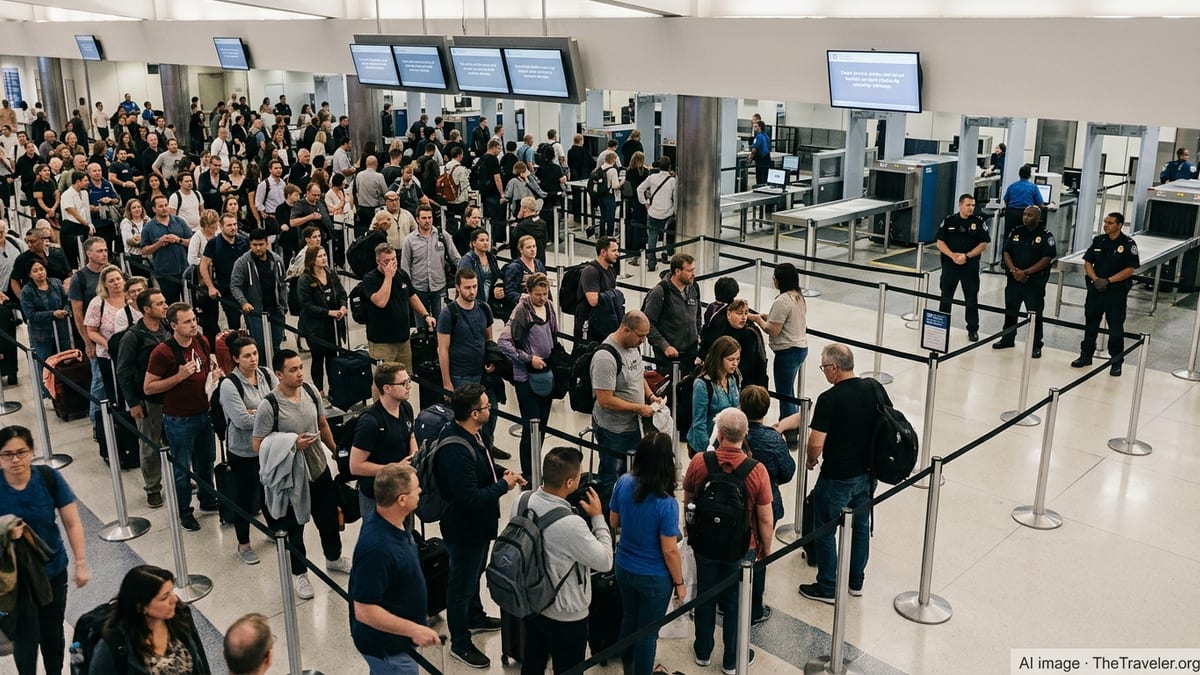
Record summer crowds push airport operations to the edge
Publicly available federal and industry data point to another intense holiday stretch at U.S. airports after a record-setting summer. A national analysis from the U.S. Travel Association shows that between Memorial Day and Labor Day in 2024, the Transportation Security Administration screened nearly 279 million travelers, about 6 percent more than the previous year. That growth trend has continued into 2026, with airlines maintaining robust schedules and many routes operating at high load factors.
AAA’s booking data for 2026’s major holiday weekends underscore the demand. The organization projected 45 million Americans would travel for Memorial Day and more than 72 million for the July 4 period, with air travel representing a growing share of those trips. Although AAA does not issue a full numerical forecast for Labor Day, its national and regional briefings characterize this weekend as the “last hurrah” of summer, with air travel volumes described as strong and in line with the season’s earlier peaks.
At the local level, airports are preparing for passenger counts that match or exceed last year’s Labor Day period. Denver International Airport, one of the country’s busiest hubs, reports that more than 368,000 passengers are expected to move through its security checkpoints from Thursday, September 3, through Monday, September 7, roughly matching 2025 levels. In Los Angeles, airport projections indicate that Friday, September 4, will be the single busiest day of the weekend at LAX, with more than 230,000 passengers arriving and departing.
For travelers, the practical impact of these numbers is a familiar one: fuller flights, congested check-in areas and longer waits at key choke points such as security and boarding gates. Industry groups note that even small operational hiccups, such as equipment outages or minor staffing shortages, can snowball into noticeable delays when infrastructure is running at or near capacity.
Higher costs and tight schedules raise stakes for delays
Air travelers are also navigating one of the most expensive Labor Day weekends in recent memory. Recent AAA analyses highlight that airfare to top domestic destinations has climbed roughly 20 percent compared with last year, while gasoline prices remain above 4 dollars per gallon across much of the country. For many households, the higher cost of getting away has translated into shorter trips and tightly packed itineraries.
Surveys from AAA’s consumer research arm show that higher travel costs, along with fuel prices and general financial concerns, are among the leading reasons some travelers have cut back on vacations in 2026. Among those still flying for Labor Day, this financial backdrop can raise expectations around punctuality and service. A single missed connection or a long delay at departure can eat into carefully planned long weekends, leaving less room to recover schedules or rebook at reasonable prices.
Airlines have been operating dense summer schedules designed to capture strong leisure demand, which can limit flexibility when things go wrong. With many flights close to full, options to re-accommodate passengers after cancellations or significant delays may be more constrained than during shoulder seasons. Travel advisors and consumer advocates have been encouraging flyers to build in additional buffer time, particularly for international connections or cruise departures that fall immediately after Labor Day.
Regional reports from AAA branches also emphasize the cumulative strain on travelers. In one recent Labor Day advisory, AAA Central Penn noted that roadside calls topped 400,000 nationwide over the previous holiday weekend, illustrating how ground transportation issues can compound air travel disruptions, especially when tight schedules leave little room for error.
Weather and congestion risks concentrated at key hubs
Beyond sheer demand, late-summer weather patterns pose an additional risk for travelers flying over Labor Day. The holiday falls during the heart of the Atlantic hurricane season and at a time when afternoon thunderstorms are common across major hub regions, including the Southeast, Texas and the Mid-Atlantic. Even when storms are not severe, low clouds, lightning and heavy rain can trigger ground stops and reroutes that ripple through national networks.
Destination trends for 2026 mean that some of the busiest airports also sit in weather-sensitive regions. AAA’s Labor Day travel snapshots list cities such as Orlando, Seattle, Boston, Los Angeles and Denver among the top domestic draws. Several of those hubs are prone to seasonal challenges, from coastal storms in New England to convective activity along the Rocky Mountain Front Range.
Airport-specific forecasts reflect the potential for bottlenecks. Los Angeles World Airports’ Labor Day planning materials, for example, describe sustained high passenger volumes at LAX from Friday through Monday, on top of an already busy summer that has included new long-haul international routes. Denver International similarly anticipates a compressed wave of travelers across the long weekend, which can amplify the impact of even short operational slowdowns.
Travel data firms that analyze holiday traffic patterns for motorists, such as INRIX, are also flagging peak afternoon and early evening windows when congestion is expected to be worst on access roads and regional highways. While their outlooks focus primarily on driving, the same traffic buildups can affect airport arrival times for flyers who rely on personal vehicles, rideshare or airport shuttles to reach their terminals.
What flyers can do to reduce the risk of disruption
Transportation groups and travel organizations are publishing detailed guidance to help passengers navigate the holiday crowds. At LAX, for instance, airport planners are urging travelers to arrive early, use real-time parking and traffic tools, and consider public transit options where available. Many large hubs now highlight online security wait-time dashboards and mobile alerts that allow passengers to adjust their arrival times or switch checkpoints when possible.
Nationally, TSA and industry partners recommend that travelers build in extra time compared with non-holiday periods, especially for early morning and late afternoon departures that coincide with peak screening volumes. For families, travelers with special needs or those checking multiple bags, additional margin can help prevent missed flights if check-in or security lines are longer than expected.
Consumer advocates also encourage flyers to monitor their flights closely in the 24 hours before departure, using airline apps and subscription-based alert services to track schedule changes. Rebooking options are often more plentiful when travelers act early, before storms or cascading delays fill the limited spare seats remaining during a crowded holiday weekend.
Published guidance from AAA and regional travel clubs stresses that flexibility is valuable, particularly for those connecting through weather-prone hubs. Choosing earlier departures, avoiding tight layovers and considering alternate airports in multi-airport cities can all reduce exposure to the busiest choke points as Labor Day traffic surges.
Strong demand underscores air travel’s continued recovery
Despite the potential for delays and higher costs, the volume of Labor Day air travel in 2026 underscores a broader recovery in leisure demand. AAA’s national and regional data show that a majority of surveyed Americans planned at least one vacation between Memorial Day and Labor Day, with many indicating they expect to maintain or increase their travel frequency compared with 2025.
Industry groups note that airport throughput and airline schedules are now consistently at or above pre-pandemic levels for peak periods, a shift that has reshaped the experience of major holiday weekends. While the risk of disruption may be elevated, the strong numbers also reflect travelers’ ongoing willingness to prioritize getaways, even in the face of higher fares and uncertain weather.
For passengers heading out this Labor Day, the message from travel organizations and airport planners is less about avoiding the skies altogether and more about realistic expectations and careful planning. With millions of others sharing terminals and runways, flyers who allow extra time, monitor conditions closely and remain flexible are likely to navigate the busy weekend more smoothly, even if some delays prove unavoidable.
AAA Labor Day travel trends 2026
AAA: Labor Day travelers face higher costs and heavier traffic