


More news on this day
On the isolated Indian Ocean island of Rodrigues, a planned runway upgrade at Plaine Corail Airport is converging with recurring weather-related flight disruptions, putting the island’s travel resilience and connectivity under renewed scrutiny.
Get the latest news straight to your inbox!
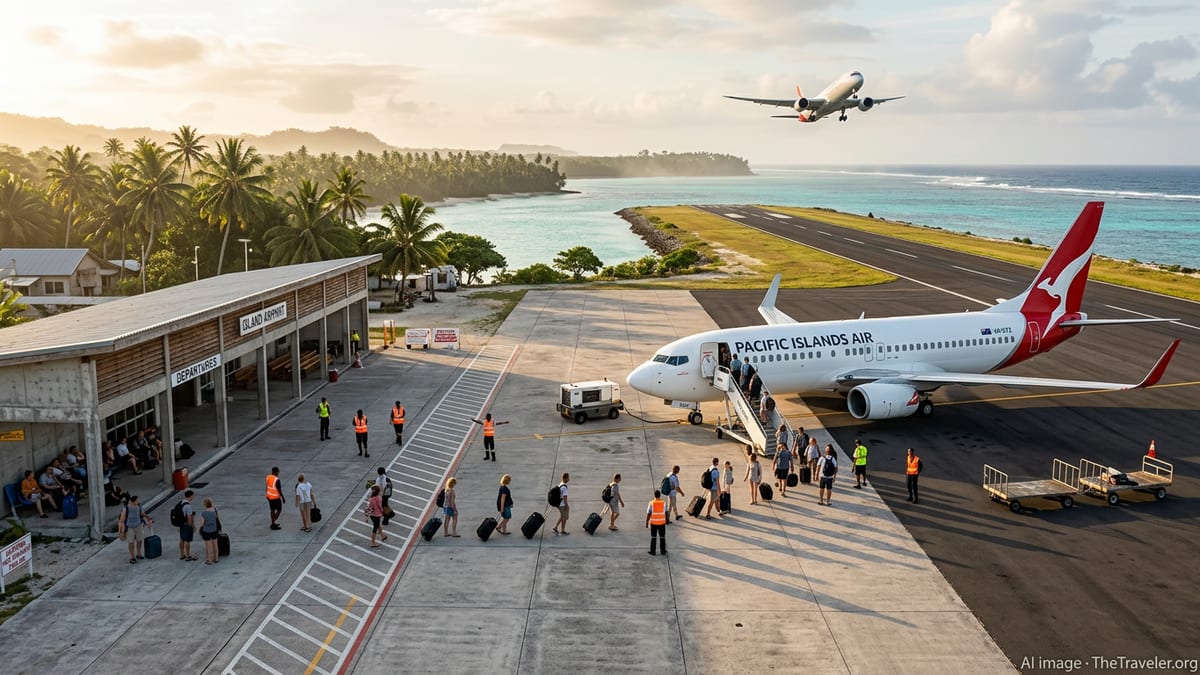
A Single Short Runway at the Heart of Rodrigues’ Connectivity
Plaine Corail Airport, also known in official listings as Sir Gaetan Duval Airport, is Rodrigues’ only air gateway, linking the island of around 40,000 residents to Mauritius and onward long-haul connections. Publicly available data show the airport has a single asphalt runway of about 1,287 meters, limiting operations mainly to turboprop aircraft such as ATR 72s used on the Mauritius–Rodrigues route.
Historic records indicate that air services between Mauritius and Rodrigues began in the 1970s, with twin‑engine turboprops connecting the smaller island to Plaisance, now Sir Seewoosagur Ramgoolam International Airport. Over time this link has become vital for tourism, medical evacuations, cargo, and routine administration, as there is no comparable maritime alternative that can match aviation for speed and reliability.
Because all regular passenger flights pass through this single short runway, any technical issue or incident has an outsized impact. Past parliamentary debates in Mauritius and Rodrigues have drawn attention to bounced landings and other minor occurrences at Plaine Corail, while emphasizing that even small disruptions can reverberate through tourism flows and essential supply chains.
Climate exposure adds to the vulnerability. Rodrigues lies in a cyclone‑prone region, and earlier systems such as Cyclone Berguitta led to temporary closures of the airport and cancellations on the Mauritius–Rodrigues route, illustrating how weather risk compounds the infrastructure constraints on a one‑runway island airport.
International Tender Advances Long‑Discussed Runway Extension
Efforts to lengthen the runway at Rodrigues have been publicly discussed for more than a decade, with earlier feasibility studies and consultancy tenders examining how an extended strip might enable larger aircraft, additional cargo capacity, and potentially direct regional links beyond Mauritius. Those deliberations moved into a more concrete phase in 2026.
In early 2026, Airports of Mauritius Ltd issued an international request for bids to build a new runway and associated airside infrastructure at Plaine Corail as part of the Rodrigues Airport Project. An aviation trade update on the tender describes “Component 1” as covering construction of the new runway and related operational facilities, setting the stage for a substantial upgrade of the island’s airfield layout.
Complementary information published by Airports of Mauritius later in 2026 details a series of addenda and clarification lists to prospective bidders on the Rodrigues Airport Project tender. These documents suggest an active competitive process, as engineering, environmental, and logistical questions surrounding the new runway design continue to be refined ahead of contract award.
Environmental and social impact assessments prepared in recent years for the expansion of Rodrigues Airport outline how a longer runway, new parking stands, and an upgraded control tower could allow operations by larger narrow‑body jets. Such aircraft, including types similar to Airbus A321 or Boeing 737 families, would increase passenger and cargo throughput, potentially cutting costs and opening new tourism markets while also concentrating more risk and activity on the same exposed coastal platform.
Weather Disruptions and Passenger Frustration Expose Fragilities
While the runway project moves through procurement, recent disruptions on the Mauritius–Rodrigues route have highlighted the day‑to‑day fragility of the existing setup. In early 2026, local media coverage described repeated delays and cancellations of flights between Mauritius and Rodrigues, with travelers expressing frustration over schedule volatility and limited rebooking options on the short‑haul route.
Airline communications that same season referenced adverse weather in the Rodrigues area as a key factor leading to cancellations and diversions. One publicly accessible airline notice, for example, detailed how several Rodrigues services scheduled for mid‑January 2026 were suspended as a tropical system intensified, with operations to resume only when conditions allowed safe flying.
Further into the year, another weather episode forced cancellations of multiple Rodrigues rotations on a single day, with the carrier indicating that flights would be rescheduled once conditions improved. Passengers already checked in at Mauritius’ main airport were offered assistance on the ground while awaiting new travel arrangements, underscoring the limited flexibility available when the only scheduled operator on the route is grounded.
These patterns echo earlier cyclone seasons in which Plaine Corail Airport shut temporarily and Mauritius–Rodrigues flights were halted. For residents and businesses, such interruptions are a recurring reminder that the island’s aviation lifeline is tightly coupled to both weather and the operational status of a single runway and a single primary airline.
Tourism, Trade and Daily Life Depend on Greater Resilience
Tourism authorities in Mauritius and Rodrigues have long promoted the smaller island as a quieter complement to the main tourist hubs, with growth in visitor numbers over the past two decades closely tracking improvements in air access. Past analyses of the airport’s role note that arrivals roughly doubled between the early 2000s and mid‑2010s, straining an infrastructure originally conceived for lighter traffic and smaller aircraft.
For tourism operators, the combination of short runway, weather exposure, and limited carrier choice has immediate commercial implications. Any prolonged disruption in flights risks hotel cancellations, lost high season revenue, and reputational damage in key source markets that increasingly expect reliable air links, even to remote islands.
The dependence extends beyond leisure travel. Food imports, medical supplies, mail, and urgent administrative movements largely travel by air. When flights are cancelled for several days, local press reports often highlight shortages and logistical challenges, reinforcing calls from Rodrigues stakeholders for more robust infrastructure and contingency planning as climate variability intensifies.
Observers of small‑island connectivity argue that the current phase of the Rodrigues Airport Project is therefore not only about enabling larger aircraft or new routes. It is also framed as a test of whether the island can build an air access system resilient enough to absorb shocks from severe weather and operational incidents without isolating its population or undermining its tourism‑led development model.
Balancing Expansion, Environment and Community Concerns
The planned upgrade at Plaine Corail does not come without trade‑offs. Environmental and social assessments circulated for the project underline potential impacts on coastal ecosystems, land use, and nearby residential communities, including earlier references to families in the Sainte‑Marie area who could be affected by the new runway alignment and safety zones.
Project documents emphasize the need to manage construction and eventual operations in a way that accounts for erosion, biodiversity, and noise, topics that have been debated in Rodrigues’ regional assembly and in public forums. Consultation exercises have drawn interest from residents who stand to gain from improved connectivity but who also face changes to their immediate surroundings and traditional livelihood patterns.
Financial structure is another aspect of the resilience equation. Previous expansions at the airport involved loan financing from domestic institutions, while the current project is associated in public reports with multilateral funding and central government backing. This raises questions about long‑term debt sustainability for a small island economy and how aviation‑driven development is expected to generate returns over time.
As bidding advances and design choices are finalized, the Rodrigues Airport Project has become a focal point for broader conversations about how small islands can secure reliable, climate‑aware air access. The outcome will shape whether Plaine Corail emerges as a more resilient hub capable of withstanding the next cycle of cyclones and passenger growth, or whether capacity constraints and weather shocks will continue to test the island’s travel lifeline.
Sources: Airports of Mauritius Ltd tender notices; African Pilot report on Rodrigues Airport Project tender; Le Mauricien coverage of the new runway; L’Express reporting on Rodrigues flight disruptions; Plaine Corail Airport background