


More news on this day
New York’s LaGuardia Airport is facing fresh disruption as a federal ground delay program, layered on top of airshow-related traffic constraints and ongoing construction, slows arrivals and departures and leaves summer travelers facing extensive waits on the tarmac and at the gate.
Get the latest news straight to your inbox!
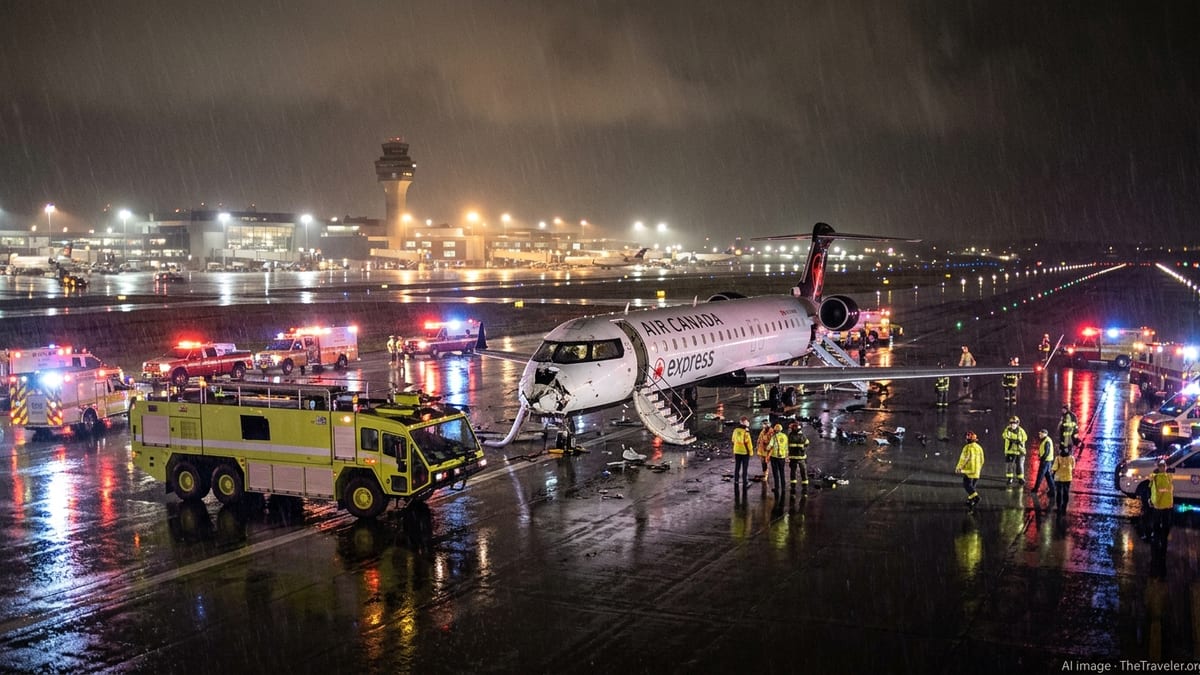
Ground Delay Program Tightens Summer Skies Over LGA
LaGuardia operates in some of the most congested airspace in the United States, and when traffic demand climbs faster than the system can handle, the Federal Aviation Administration can activate a ground delay program. Under this approach, flights destined for the airport are held at their origin so that arrival times are spread out, rather than clustering too many aircraft in New York airspace at once.
Publicly available FAA planning documents and the national airspace status page indicate that such programs have been used frequently across the Northeast during recent weather and volume surges, with New York area airports among the most affected. In practice, that means departure times are pushed back by increments that can stretch to an hour or more, even when conditions at a traveler’s home airport appear calm and skies above LaGuardia look clear.
For LaGuardia, which has limited runway capacity and tight scheduling, a ground delay program can quickly translate into a cascade of missed connections, aircraft out of position, and longer-than-expected waits for gates. Data tools such as the FAA’s Operations Network and delay reporting show that once delays exceed about 15 minutes, they are counted as system impacts and can ripple across the national route structure for the rest of the day.
Recent advisories show that when thunderstorms, low ceilings, or heavy traffic intersect, the New York terminal area can see multiple airports placed under delay management on the same day. In those scenarios, LaGuardia’s constrained layout often makes it especially vulnerable to extended congestion compared with peers that have more runways or spare gate capacity.
Airshow Traffic Adds a New Constraint
In addition to the formal ground delay program, airshow-related activity in the region is tightening available airspace and air traffic control capacity. FAA safety guidance for airshows notes that temporary airspace restrictions, dedicated arrival and departure windows for demonstration aircraft, and rerouted traffic patterns are often required to protect show operations.
When such special events occur near an already congested metropolitan area, they can effectively reduce the volume of routine commercial flights that can be safely handled in surrounding sectors during certain hours. Recent discussions among pilots and passengers, together with advisory language used by the FAA for other airports during aviation events, point to similar patterns: short-term caps on arrivals, pauses during display windows, and extra spacing between aircraft.
For LaGuardia travelers, that can translate into unexpected holding patterns or last-minute diversions when airshow activity competes for airspace and controller attention. Even if the airshow itself is not taking place at LaGuardia, regional traffic flows may be altered, forcing controllers to meter arrivals more conservatively into the New York terminal area and triggering a combination of airborne holding and on-the-ground delays.
This special event demand comes on top of typical summer peaks driven by leisure travel and business flights into Manhattan. As a result, relatively short airshow windows can result in knock-on schedule impacts that persist long after the last display aircraft has landed.
Infrastructure Constraints and Recent Disruptions
The current congestion is also intersecting with a period of infrastructure sensitivity at LaGuardia. FAA construction impact reports for recent quarters describe the airport as operating with reduced capacity and a greater likelihood of delay when runways or taxiways are partially unavailable. Seasonal overnight work windows between spring and autumn further limit flexibility for airlines to recover from daytime disruptions.
In May, coverage from local outlets highlighted how the discovery of a sinkhole near one of LaGuardia’s runways led to the closure of that runway and significant delays, underscoring how even a single point of failure can reverberate through the schedule on a busy day. While that specific issue prompted targeted repairs, it illustrated how closely balanced the airport’s operations are between smooth flow and gridlock.
Longer-term safety and modernization initiatives, including upgrades to tower simulation facilities and continued refinement of runway and taxiway layouts, are intended to improve resilience. However, planning documents show these projects unfolding over multiple years, meaning that near-term summers will continue to test the system whenever weather, construction, and special events collide.
Noise and environmental studies related to the New York airports have also pointed out that LaGuardia exhibits pronounced delay patterns even in relatively good weather, a sign that structural congestion and slot limitations remain a defining feature of the passenger experience there.
Passenger Impact: From Missed Connections to Tarmac Waits
For travelers, the interaction between a ground delay program and airshow-related constraints is most visible in departure boards filled with rolling pushback times and in-flight announcements about holding for a slot into New York. According to public delay data, once a ground delay program is in place, airlines often must repeatedly adjust expected departure times as the FAA updates arrival rates and as weather and traffic evolve.
Passengers have reported on social platforms that some LaGuardia-bound flights have been held at origin for extended periods, while others that were already airborne have been diverted to nearby airports such as John F. Kennedy International when congestion peaked. In some cases, even modest schedule changes upstream can cause crews to reach duty time limits, triggering cancellations and additional rebooking challenges.
On the ground at LaGuardia, reduced runway availability and tight gate space can leave arriving aircraft waiting on taxiways until a parking position opens. Extended waits for baggage and crowded terminal areas often follow, as multiple delayed flights arrive in quick succession once arrival rates are relaxed or a ground delay program is tapered.
Airlines typically respond by consolidating flights, waiving change fees during particularly disruptive periods, and reshuffling aircraft across their networks. Recent experience at LaGuardia and other slot-controlled airports suggests that such mitigation efforts can soften, but not eliminate, the impact of intensive delay management.
What Travelers Can Expect in the Coming Days
With the summer travel season at its peak, publicly available planning information from the FAA indicates that delay programs remain likely whenever thunderstorms, low visibility, or special events intersect with high demand in the New York region. LaGuardia, given its location and operating profile, is expected to remain under close traffic management scrutiny.
Aviation analysts note that while airshows and other special events are time-limited, they can coincide with already busy weekends, creating conditions in which relatively short ground stops have outsized effects on the day’s schedule. Weather forecasts hint that pop-up storms will continue to be a factor in the Northeast, further increasing the probability of tightly managed arrival streams into LaGuardia.
Travelers planning to use LaGuardia are likely to see longer recommended arrival times at their departure airport and should be prepared for schedule changes, especially for afternoon and evening flights when traffic volume is highest and special-event airspace constraints are more common. Industry experience suggests that first departures of the day face a lower risk of severe knock-on delays, though they are not immune if a ground program is scheduled early.
As the season progresses, ongoing FAA capacity projects and the gradual completion of airfield work are expected to help stabilize operations. In the near term, however, the combination of a formal ground delay program, airshow activity, and structural constraints means that LaGuardia passengers should anticipate a challenging stretch of travel, marked by congestion that can develop quickly and take hours to unwind.