


More news on this day
Travelers connecting through Calgary International Airport are facing a fresh round of disruption as Air Canada and Porter Airlines cancel and delay flights to major Canadian hubs, compounding an already turbulent spring for the country’s aviation network.
Get the latest news straight to your inbox!
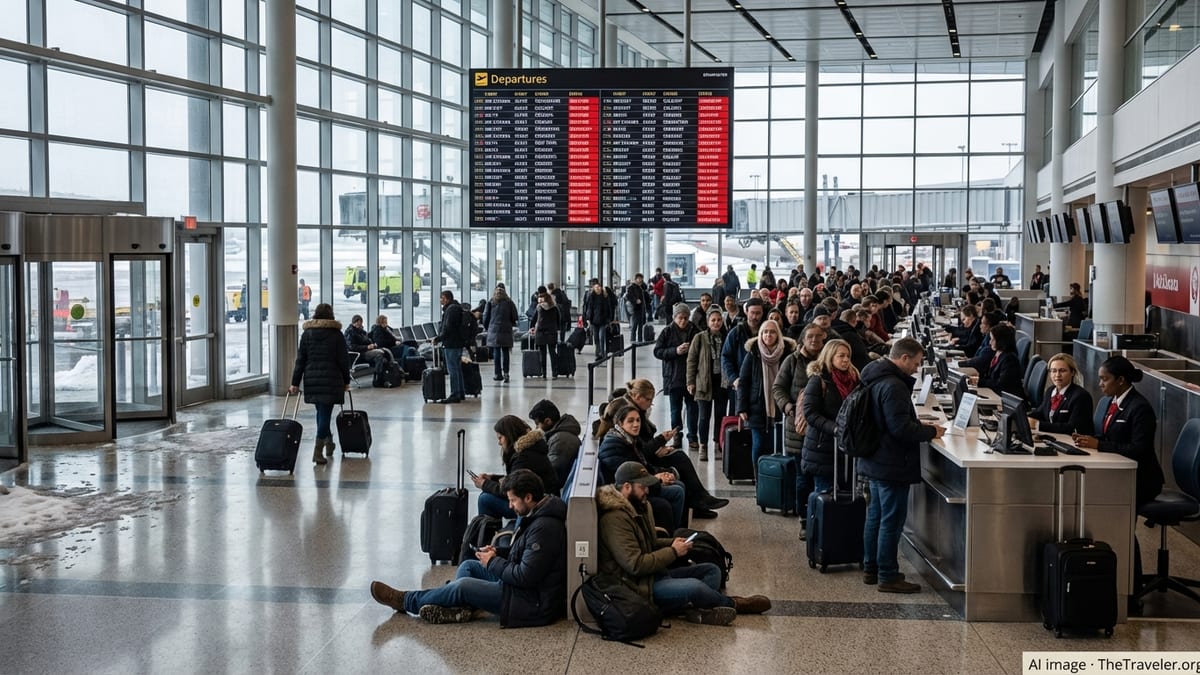
Calgary Feels the Strain as National Disruptions Continue
Calgary International Airport has repeatedly appeared among Canada’s most affected hubs during waves of delays and cancellations in 2026, with recent operational data showing high numbers of delayed services and a smaller but significant cluster of cancellations. Publicly available tracking figures from nationwide disruption days this spring indicate that Calgary has often recorded one of the highest tallies of delayed departures among major airports, even when outright cancellations remain lower than at Toronto or Montreal.
These patterns place particular pressure on airlines that use the city as a Western gateway. Calgary functions as a primary base for WestJet and an important hub and focus city for Air Canada, while Porter has been ramping up its presence with new routes into central Canadian markets. When schedules tighten or aircraft rotations slip behind, Calgary’s role as a connecting bridge between Western Canada and the rest of the country means even local weather or staffing issues can trigger ripple effects for passengers travelling far beyond Alberta.
Recent nationwide tallies compiled by aviation data services and travel-industry trackers show that Canada has endured multiple days of heavy disruption since late winter, including events where hundreds of flights were delayed or nearly one hundred were canceled across key airports in Toronto, Vancouver, Montreal, Calgary and Ottawa. On some of these days, Calgary’s share of affected flights ranked near the top of the national list, raising concerns about the resilience of its hub operations as peak summer travel looms.
For passengers, the practical result is growing uncertainty around tight connections and early-morning departures from Calgary into the country’s biggest cities. Reports highlight instances where travelers who planned to funnel through Calgary for onward flights to Toronto, Montreal or Ottawa have instead been met with last-minute schedule changes, limited rebooking options and crowded departure areas as airlines work to re-stabilize their networks.
Air Canada Adjusts Schedules to Major Hubs
Air Canada has repeatedly stood out in 2026 disruption statistics, with several recent days where the carrier posted dozens of delayed flights and a notable number of cancellations across its national network. Data compiled by independent passenger-rights platforms and flight-tracking services show that Air Canada has been among the hardest-hit airlines during widespread disruption events, with operations at Toronto Pearson, Montreal Trudeau, Vancouver and Calgary frequently appearing at the center of the problems.
Network maps and schedule information indicate that services linking Calgary to Air Canada’s main hubs, especially Toronto Pearson and Montreal Trudeau, are particularly important within the airline’s domestic strategy. When the carrier undertakes “pre-cancellations” to protect long-haul or high-demand flights during periods of stress, short-haul or medium-haul domestic sectors can be among the first to be trimmed. That can include Calgary links to Eastern Canada, where multiple daily frequencies allow planners to consolidate passengers but leave some flights removed from the board.
Recent operational breakdowns across Canada have shown how even a localized issue, such as weather affecting a single region or an air traffic bottleneck at one hub, can quickly cascade into Air Canada’s broader schedule. Aircraft and crew operating into Calgary from Toronto or Montreal may arrive significantly late or be reassigned, leading to follow-on cancellations or revised departure times on routes that many passengers use for onward international connections.
Passenger-rights organizations note that when disruption is within an airline’s control, Canadian regulations may entitle travelers to assistance, rebooking and, in some cases, compensation. However, the picture becomes more complex when winter weather, cold-related operational constraints or air traffic control restrictions contribute to the delays, circumstances that have repeatedly affected Canada’s major hubs since January.
Porter’s Growing Calgary Links Face Early Tests
Porter Airlines, best known for its strong presence in Eastern Canada, has been steadily expanding its network of jet services linking western cities such as Calgary with Ottawa and Toronto. Flight schedules for routes like Calgary to Ottawa show non-stop itineraries using Porter’s newer jet fleet, aimed at attracting both business and leisure travelers seeking alternatives to traditional hub carriers.
As Porter integrates these Calgary routes into its broader system, the airline is also encountering the same operational headwinds affecting the wider industry. National disruption data from recent months list Porter among the airlines experiencing knock-on delays and cancellations on days when Canada’s major airports struggle with congestion, weather or staffing constraints. When Porter trims or reschedules Calgary flights on short notice, passengers bound for central Canadian hubs may find that rebooking options are limited compared with larger competitors that operate higher daily frequencies.
Porter’s publicly available tarmac-delay and service policies outline how the carrier manages extended ground holds and irregular operations, underscoring that factors such as weather, gate availability and air traffic control restrictions can all trigger lengthy waits. These documents highlight the regulatory obligations airlines face when flights are stuck on the ground but also illustrate the operational challenges newer or expanding carriers can face when their aircraft and crew rotations are disrupted at multiple airports simultaneously.
For travelers, the impact of a canceled or heavily delayed Porter service from Calgary to a hub like Ottawa can be significant, particularly when the flight is intended to feed into onward domestic or transborder connections on partner airlines. Reaccommodation often requires a mix of rerouting through other hubs or overnight stays, adding cost and uncertainty at a time when passenger demand for reliable schedules is rising ahead of the busy summer season.
Why Calgary Is Vulnerable to Ripple Effects
Calgary’s position within Canada’s aviation network helps explain why the airport features prominently in disruption reports even when the initial cause of delays lies elsewhere. As a major base for WestJet and an important node for Air Canada and Porter, the airport sits at the intersection of long-haul flights, regional links across the Prairies and British Columbia, and key domestic trunk routes to Toronto, Montreal, Vancouver and Ottawa.
When problems arise at any of these larger hubs, downline sectors to and from Calgary can quickly be affected. Industry trackers describe how an early-morning delay on a Toronto or Vancouver rotation, for example, can propagate through the day’s schedule, pushing back subsequent Calgary departures and forcing airlines to consolidate or cancel certain flights to restore balance. That dynamic has been evident during several intense disruption days in 2026, when Calgary recorded large numbers of delayed flights despite relatively stable local conditions.
Historical weather patterns also play a role. Calgary and the surrounding region experienced notable cold snaps and winter storms earlier in the year, events that temporarily slowed or paused airport operations and contributed to a backlog of departures. Even when conditions improved, the resulting operational hangover left airlines managing misaligned aircraft positions, crew time limits and maintenance windows, all of which can prompt targeted cancellations on routes that might otherwise appear straightforward on a route map.
The airport’s status as a key gateway to the Rockies and Western Canada tourism destinations means that load factors on many flights are high during peak periods, leaving limited spare capacity when disruptions occur. As a result, travelers affected by a cancellation from Calgary to a major hub may find that alternative seats on later flights or on other airlines are quickly snapped up, turning a short operational adjustment into a longer interruption of travel plans.
What Travelers Can Expect in the Coming Weeks
With summer travel demand building, analysts and passenger-advocacy groups expect Canada’s major airports to remain under pressure, and Calgary is unlikely to be an exception. Recent nationwide statistics illustrating hundreds of daily delays and dozens of cancellations on the worst-affected days suggest that even incremental strains on the system can translate into significant disruption for passengers connecting between Western and Eastern Canada.
Travel-industry guidance emphasizes that travelers using Air Canada or Porter to connect from Calgary to key hubs such as Toronto, Montreal, Vancouver and Ottawa should continue to monitor their flight status closely and allow extra time for connections. Publicly available disruption overviews and airport-level statistics highlight that short-haul domestic sectors can be particularly vulnerable to last-minute schedule changes when airlines attempt to shield long-haul operations or recover from earlier delays.
Observers also point out that Canada’s Air Passenger Protection Regulations provide a framework for care and, in some cases, compensation, but the level of support a traveler can expect depends heavily on whether the root cause of a disruption lies within an airline’s control. As mixed causes have dominated recent events, from cold weather and storms to system-wide operational breakdowns, passengers are encouraged by consumer groups to document their itineraries, keep records of delay durations and understand the difference between weather-related and controllable disruptions.
For now, Calgary remains an essential but stressed link in Canada’s domestic network, with Air Canada and Porter both adjusting their schedules to navigate a challenging operating environment. The extent to which airlines can stabilize performance on Calgary’s key hub routes in the coming weeks will help determine whether the airport can shake off its recent association with some of the country’s most visible delays and cancellations.