


More news on this day
Travelers across the United States faced another day of fractured itineraries after disruption at New York’s LaGuardia Airport led to cancellations and dozens of delays on major airlines, stranding passengers and rippling across key hubs including Boston, Chicago and Atlanta.
Get the latest news straight to your inbox!
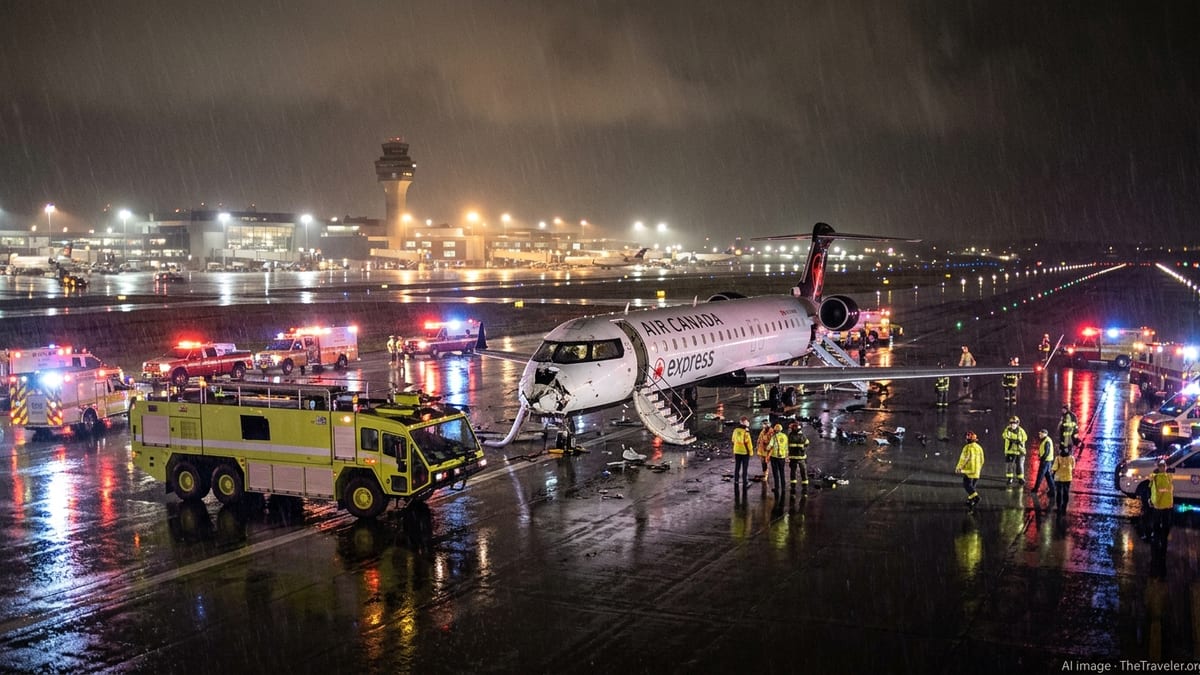
LaGuardia disruptions cascade across domestic network
New reporting on recent operations at LaGuardia highlights how even a relatively small number of cancellations and under one hundred delays can trigger widespread travel headaches. According to published coverage focused on LaGuardia’s performance this week, carriers including Delta Air Lines, JetBlue, American Airlines, United Airlines and Southwest recorded two cancellations and 78 delays linked to the New York airport, feeding into a broader pattern of operational strain across the national network.
These figures sit within a volatile month for LaGuardia. Publicly available information shows that the airport has repeatedly ranked among the most delay affected facilities in the country, with previous days this June seeing more than 200 delayed departures and multiple cancellations as storms, congestion and tight crew schedules converged. On several occasions LaGuardia has topped national rankings for delays, underscoring its vulnerability as a heavily used, capacity constrained urban hub.
Because LaGuardia supports dense schedules to major business centers, disruption there magnifies quickly. A single late inbound aircraft from New York can cause knock on delays for the same plane and crew on later segments to cities such as Boston, Chicago and Atlanta. As the delay count creeps higher, recovery windows narrow and airlines struggle to reposition both aircraft and staff, increasing the risk that short delays evolve into missed connections and overnight strandings.
Recent operational data and industry analysis emphasize that even modest disruption at LaGuardia can leave gate areas crowded and departure boards filled with rolling delay notices. While the number of outright cancellations in this latest episode remained limited, the concentration of delays during peak travel periods amplified the impact on passengers trying to make onward flights across the country.
Major US carriers feel the strain
The latest wave of travel disruption again placed the country’s biggest airlines under pressure. According to aviation tracking data cited in travel industry coverage, Delta Air Lines, JetBlue, American Airlines, United Airlines and Southwest all reported delayed departures on routes touching LaGuardia, with some services scrubbed outright as the day wore on.
These carriers collectively dominate domestic traffic in and out of New York and its connecting hubs. Delta operates a significant share of LaGuardia’s business heavy routes, including links to Atlanta and Midwestern cities. American and United channel passengers through Chicago and other central hubs, while JetBlue and Southwest provide a mix of point to point and connecting services to leisure and secondary markets. When all of these airlines encounter operational issues at the same New York gateway, available options for rebooking and rerouting narrow rapidly.
Reports indicate that some of the disruptions were driven by inbound aircraft arriving late from other congested airports, forcing knock on delays for their LaGuardia departures. In other instances, crew scheduling limits and aircraft rotation requirements appear to have constrained airlines’ ability to recover their timetables quickly, resulting in the pair of cancellations noted in the latest figures.
Operational snapshots from previous days this month show similar patterns on these same carriers, suggesting that the LaGuardia event formed part of a wider period of strain. Southwest and United recently recorded hundreds of delays at Denver, while American saw a spike in disruptions at Charlotte and Miami, illustrating how issues at one node can intersect with pressure points elsewhere in their networks.
Boston, Chicago, Atlanta and other hubs feel knock on impacts
Although the latest disturbance centered on LaGuardia, its effects were widely felt. According to aviation performance summaries and airport focused travel alerts, flights between New York and Boston, Chicago and Atlanta were among those most exposed to delay, as these routes form high frequency corridors for business and connecting traffic.
Boston Logan has already experienced several difficult days this month, with separate reporting indicating more than 300 delayed flights on a single June date when multiple carriers grappled with weather and congestion. When LaGuardia based aircraft feeding Boston arrive late or depart behind schedule, it compounds existing pressure on Logan’s gate and runway availability, especially during morning and evening banks.
Chicago and Atlanta, key hubs for American, United and Delta, also face immediate consequences when New York schedules slip. Industry briefings describe how delayed LaGuardia departures can cause missed connections in Chicago O’Hare and Atlanta, leading to further delays on services radiating out to smaller regional airports and long haul destinations. Even when only a handful of flights are officially cancelled, the resulting misaligned connections can create what travelers experience as rolling disruption throughout the day.
Other cities across the United States, from Florida to the Midwest, can experience downstream effects as aircraft and crews arrive late from impacted hubs. As operational planners juggle resources to keep high demand routes moving, secondary markets may see schedule changes or last minute aircraft swaps, subtly spreading the impact of a New York centered disruption far beyond the Northeast corridor.
Weather, congestion and tight schedules combine
Analysts reviewing recent performance trends point to a familiar mix of factors behind the latest LaGuardia difficulties. Variable summer weather in the Northeast, busy airspace and tightly sequenced schedules all play a role in making the airport vulnerable to cascading delays. When thunderstorms or low visibility reduce arrival and departure rates, the tightly packed timetable at LaGuardia leaves little slack for recovery.
The broader US network has shown similar stress points in recent weeks. Separate travel advisories highlight significant delay and cancellation spikes at airports such as Denver, Charlotte and Miami, where storms, air traffic flow restrictions and high passenger volumes collided. In this context, LaGuardia’s two cancellations and 78 delays form part of a nationwide pattern of intermittent bottlenecks affecting major hubs and their satellite routes.
Operational data compiled by transport regulators has long documented how high utilization of aircraft and crew can turn routine disruptions into daylong problems. Airlines seek to maximize efficiency by keeping planes in near constant motion, but this approach reduces the margin for absorbing unexpected weather or airspace constraints. At slot controlled and capacity limited airports like LaGuardia, even minor irregularities can stack up quickly.
While upgrades to terminals and airfield infrastructure in recent years have improved the passenger experience on the ground, air traffic management and schedule design continue to shape what travelers see at the departure boards. Industry observers note that as demand remains strong, particularly on key business and leisure routes, carriers are walking a fine line between efficient utilization and operational resilience.
Passengers face missed connections and uncertain rights
For passengers, the statistical description of two cancellations and 78 delays translates into long lines at service desks, missed meetings and, in some cases, overnight stays away from home. Travel rights organizations note that even delays of 30 to 60 minutes can ruin connecting itineraries at hubs like Chicago O’Hare and Atlanta, especially when minimum connection times are tight or when subsequent flights are already heavily booked.
Publicly available guidance from consumer advocates urges travelers caught in LaGuardia related disruption to document their delays carefully, keep receipts for unexpected expenses and check airline specific policies on rebooking, meal vouchers and hotel accommodation. Recent federal rulemaking has also sharpened disclosure requirements around passenger rights when delays or cancellations are within an airline’s control, although the practical details can vary by carrier and by cause of disruption.
In the near term, aviation analysts suggest that passengers flying through LaGuardia and its major partner hubs may wish to allow longer connection windows and monitor flight status closely on days with unsettled weather forecasts. As this latest episode illustrates, even a small cluster of cancellations paired with under one hundred delays can produce outsized effects across the interconnected web of US domestic flights.