


More news on this day
Italy’s FS Group is advancing its plan to enter the competitive Paris–London rail market in 2029, confirming an order for a new fleet of high-speed trains designed to run through the Channel Tunnel and expand cross-border travel options for passengers.
Get the latest news straight to your inbox!
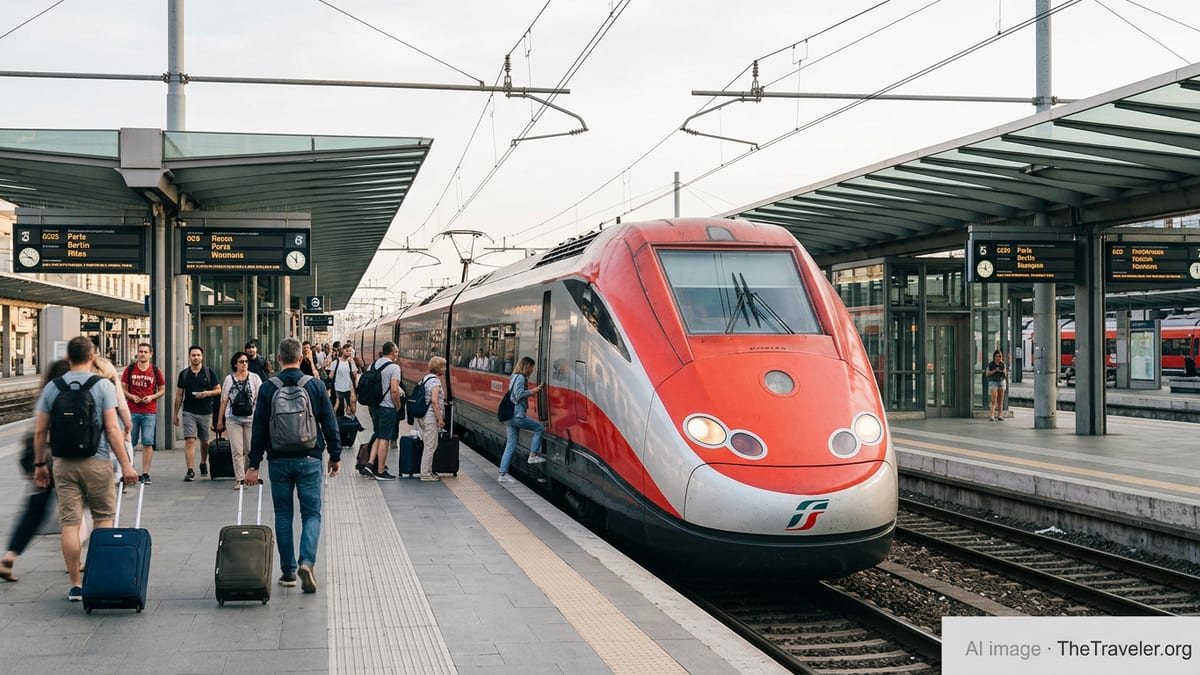
Strategic Order Underpins FS Group’s Cross-Channel Plan
Publicly available information indicates that the new train order is the operational cornerstone of FS Group’s intention to start Paris–London services by 2029. The project forms part of the Italian rail group’s wider European high-speed strategy, framed in its 2025–2029 planning horizon, which prioritizes international routes and competition on key corridors.
The trains are understood to be based on the Frecciarossa family of high-speed rolling stock already used by FS Group subsidiaries in Italy and on the existing Paris–Milan route. These trainsets are being specified for Channel Tunnel operation, which requires compliance with dedicated fire, safety and power-system standards that differ from conventional European high-speed lines.
While full commercial details of the contract have not been disclosed in open reports, industry coverage suggests that FS Group is committing to a substantial multi-year investment to secure enough units for an intensive timetable. Earlier filings related to the Paris–London project have referenced a target of around ten daily return services, a level that would position the Italian operator as a visible challenger on one of Europe’s busiest rail corridors.
The new order follows several years of preparatory work, including regulatory applications, capacity negotiations and infrastructure agreements on both sides of the Channel. The confirmation of trains purpose-built for the route is a signal that FS Group now considers the remaining steps, such as final safety certifications and terminal access, to be achievable within the 2029 timeframe.
Paris–London Corridor Set for New Competition
The planned deployment of FS Group’s high-speed trains between Paris and London comes at a moment when the cross-Channel market is preparing for additional operators. Existing services have historically been dominated by a single brand, but a combination of infrastructure capacity and political support for rail is opening the way for new entrants that can meet the tunnel’s technical and safety requirements.
Briefings and public regulatory documents indicate that the Channel Tunnel and High Speed 1 infrastructure can accommodate more high-speed paths per hour than are currently used. This spare capacity has encouraged several companies, including consortiums backed by Spanish and British investors, to explore London–continental Europe operations in the coming decade.
FS Group’s order for high-speed trainsets dedicated to the Paris–London route signals that the Italian company intends to secure an early position among these new players. By committing to rolling stock years in advance of the planned launch, the group is seeking to align manufacturing, testing and staff training with the tight timescales imposed by tunnel access rights and station slot allocations.
For passengers, the expected effect is a broader choice of fares, schedules and onboard products linking the French and British capitals. Analysts following the sector note that more operators can encourage sharper pricing, diversified service levels and better resilience when disruption affects one carrier, provided that infrastructure capacity and border-control processes are managed effectively.
Frecciarossa-Inspired Trains Aimed at Seamless European Connectivity
According to FS Group material already published for investors and regulators, the new trains are set to draw heavily on the design and technical platform of the Frecciarossa high-speed fleet. These trains are known for multi-system capability, allowing them to run under different electrification and signaling systems, an essential feature for cross-border services that must move between French high-speed lines, the Channel Tunnel and British infrastructure.
The forthcoming units for the Paris–London route are expected to incorporate enhanced safety features required for long undersea tunnels, alongside adaptations for the particular passenger-processing model used at terminal stations where border controls are conducted before departure. Public information on previous Frecciarossa orders points to a focus on high energy efficiency, noise reduction and a mix of seating classes with business, premium and standard products.
By choosing a platform already proven in high-speed commercial service across multiple countries, FS Group reduces technical risks compared with an entirely new design. At the same time, tailoring the new train order to the Channel Tunnel environment allows the company to optimize capacity, luggage space and onboard services to the profile of Paris–London travelers, which ranges from daily business passengers to leisure tourists connecting to longer itineraries.
Industry commentary suggests that the new rolling stock could also be configured to support future extensions beyond the core corridor. With Paris already serving as a hub for FS Group’s existing Milan services, there is potential for through-ticketing and coordinated timetables that link London with major Italian cities via a single high-speed rail journey.
2029 Launch Tied to Infrastructure and Regulatory Milestones
The 2029 target for Paris–London operations reflects both the time needed to build and test the newly ordered trains and the broader infrastructure and regulatory path that FS Group must navigate. Channel Tunnel operations require approvals from safety authorities on both sides, as well as from the binational body overseeing tunnel access and technical compliance.
Publicly accessible correspondence with regulators in the United Kingdom has underlined the importance of securing depot and maintenance capacity near London, along with daytime and overnight access to High Speed 1. FS Group’s strategy includes leveraging its existing presence in the British market through Trenitalia UK, which already participates in intercity operations, and combining this with its fast-growing high-speed activities in France.
The arrival of the new trainsets will need to be coordinated with a sequence of test runs, driver training and evacuation exercises in the tunnel environment. Experience from previous high-speed operators suggests that this phase can last many months, particularly when rolling stock is newly introduced to the route. The 2029 timeline therefore leaves a relatively narrow margin for delays in manufacturing or approval processes.
Alongside technical milestones, slot allocation at major stations such as Paris Gare du Nord and London St Pancras International will shape the final timetable. As more operators seek access, coordinating platform availability with border control capacity and passenger flows will be a decisive factor in determining how many services FS Group can run from the first year of operation.
Implications for Travelers and Europe’s Rail Network
For travelers, the order of new high-speed trains dedicated to the Paris–London corridor represents a concrete step toward greater choice and potentially lower dependence on short-haul flights between the two capitals. The planned 2029 launch aligns with broader European policy objectives that encourage modal shift from air to rail on routes where high-speed infrastructure already exists.
Observers note that high-speed rail offers competitive journey times once airport access, security checks and boarding are factored in, especially on city-pair distances similar to Paris–London. The addition of another operator equipped with modern rolling stock could further strengthen rail’s position by improving punctuality, increasing seat capacity and diversifying service offerings throughout the day.
From a network perspective, FS Group’s move reinforces a broader trend in which national rail incumbents expand beyond their home markets and compete on open-access international routes. The company is using the combination of its French and British subsidiaries, together with its Italian high-speed expertise, to create a more integrated north–south axis linking the United Kingdom, France and Italy by rail.
If the 2029 start date is achieved and the new trains perform as planned, the Paris–London project could serve as a template for additional cross-border expansions. For now, the confirmed train order anchors the initiative in a tangible asset and marks a significant step toward reshaping how passengers move between two of Europe’s most important cities.