


More news on this day
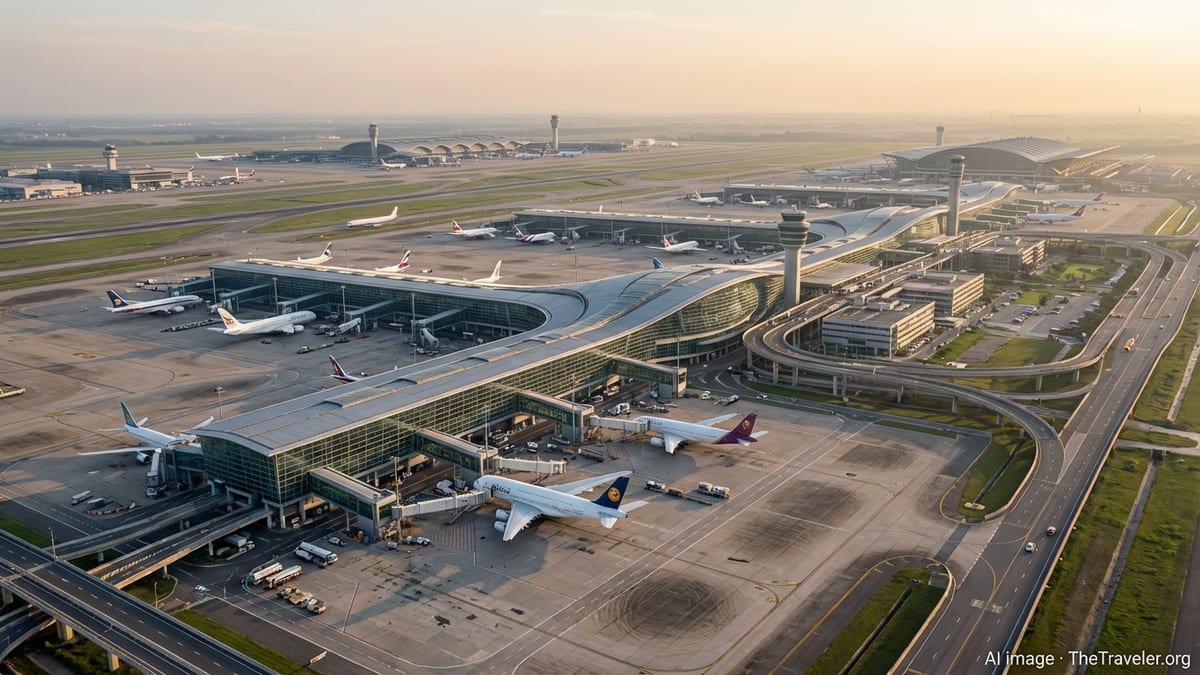
Airports across Asia are accelerating big-ticket technology upgrades, with Singapore Changi, Bangkok Suvarnabhumi and Seoul Incheon among the hubs rolling out biometric checks, automation and digital services to keep passengers moving as travel demand climbs.
Get the latest news straight to your inbox!
Changi Pushes Ahead With Passport-Free, Contactless Journeys
Singapore Changi Airport has emerged as a front-runner in biometric travel, with authorities moving toward a largely passport-free experience at its terminals. Publicly available information shows that automated lanes using facial and iris recognition have been expanded so that most passengers can clear immigration without presenting a physical passport or boarding pass, relying instead on their enrolled biometrics.
These systems are part of a broader “single token” concept designed to link a traveler’s identity from check in through security and boarding. By tying each touchpoint to the same biometric profile, Changi aims to reduce queue times while coping with a sharp rebound in passenger volumes. Reports indicate that automated clearance now handles the vast majority of arrivals and departures, freeing space and staff from traditional manned counters.
The technology rollout has not been limited to immigration. Changi has also expanded self service bag drops, automated check in kiosks and mobile-based processes that allow passengers to complete formalities before reaching the terminal. Airport publications describe these investments as crucial to meeting projected long term traffic growth without a corresponding increase in terminal footprint or labor.
Beyond convenience, the biometric systems are being framed as a security upgrade. Matching multiple identifiers, such as face and iris, at high speed is intended to make it harder for travelers to use fraudulent documents, while background systems analyze passenger data in real time. The result is a high tech gateway where much of the processing takes place behind the scenes, with travelers experiencing only a brief pause at each gate or kiosk.
Bangkok Suvarnabhumi Expands Smart Lanes and Digital Platforms
Bangkok’s Suvarnabhumi Airport is also deepening its use of digital tools as part of an ongoing expansion program. According to corporate filings from Airports of Thailand, recent fiscal years have seen the roll out of more automated security and immigration lanes, upgraded screening equipment and expanded use of data analytics to manage flows through the terminal.
The airport’s operator has positioned digital technology and innovation as a central pillar of its strategy, highlighting projects that integrate knowledge management systems, real time monitoring and more efficient baggage handling. These initiatives are intended to support Suvarnabhumi’s long running capacity increase, which aims to lift the hub’s passenger handling capability significantly through new concourses and terminal improvements.
Suvarnabhumi’s upgrades are taking place alongside work at Don Mueang and other Thai airports, where shared systems are being extended to create a more seamless national network. Airport documents note that standardized digital platforms and innovation programs are being introduced across all facilities under Airports of Thailand, with the goal of improving both service quality and sustainability metrics.
For travelers, the most visible changes are likely to include more self service options, from check in kiosks to automated lanes at border control, as well as clearer wayfinding and real time information dashboards. Behind the scenes, integrated digital systems are designed to help operators anticipate crowding, adjust staffing and respond more quickly to disruptions.
Incheon Scales Up Smart Pass and Biometric Boarding
Incheon International Airport near Seoul is another major hub moving rapidly toward fully biometric departures. Public announcements from Incheon International Airport Corporation and local media coverage describe the expansion of “Smart Pass,” a facial recognition service that allows registered passengers to move from security to the boarding gate using only their face as identification.
Smart Pass has been progressively rolled out to additional checkpoints and, according to recent sustainability and bond reports, is being extended to all boarding gates at both of Incheon’s terminals. Travelers enroll their facial image and passport details through a dedicated mobile app or partner financial apps, creating a biometric profile that can be verified at automated gates.
These measures are part of a broader “smart airport” roadmap that includes remote baggage services, advanced screening technologies and digital platforms that connect airlines, ground handlers and authorities. Incheon’s latest disclosures emphasize the role of these tools in maintaining punctuality and service standards as the hub competes with other Northeast Asian gateways.
Industry analyses suggest that large scale biometric programs such as Smart Pass can significantly cut boarding times and reduce congestion in gate areas. For airlines, faster boarding can translate into shorter turnaround times, while passengers benefit from fewer document checks and shorter queues at peak periods.
Automation, Biometrics and AI Become the New Airport Standard
The rapid pace of change at Changi, Suvarnabhumi and Incheon reflects a wider shift across global aviation. Technology providers and airport groups are increasingly promoting integrated platforms that combine biometrics, self service bag drops and AI-based monitoring to move passengers more efficiently through terminals.
Biometric systems now appear at multiple checkpoints, from e-gates and automated immigration lanes to boarding gates and common use bag drop units. Industry publications report that facial recognition, in particular, is being integrated into self service platforms to accelerate identity verification and reduce the need for repeated manual checks. Many hubs are testing or adopting “one ID” concepts in which a single biometric token unlocks each stage of the journey.
Airports are also using data and predictive analytics to smooth flows and manage disruptions. Real time information about passenger arrivals, security wait times and baggage volumes allows operators to reallocate staff or open additional lanes when needed. This kind of behind-the-scenes optimization is seen as essential to handling post pandemic traffic growth while keeping service levels high.
At the same time, the increased reliance on biometrics and automation is prompting continued debate about privacy, resilience and inclusivity. Some passengers remain wary of sharing biometric data, and system outages have occasionally led to visible delays when automated lanes are taken offline. Many airports are therefore maintaining parallel traditional counters and clear opt-out options, while emphasizing data protection policies and security benefits.
Asia’s Tech-Led Hubs Signal What Travel May Look Like Next
Taken together, the recent upgrades at Singapore Changi, Bangkok Suvarnabhumi and Incheon International show how leading hubs are using technology to reinforce their competitive positions. Each airport is investing heavily in biometrics, automation and digital platforms, but applying them in ways tailored to local demand, infrastructure and regulatory frameworks.
For passengers, these changes are reshaping the airport experience into a series of short, largely automated interactions, often navigated with a smartphone and a biometric profile rather than paper documents. As projects mature and more airlines integrate with airport systems, travelers can expect smoother connections, faster processing and fewer touchpoints where queues traditionally formed.
Analysts note that these developments are likely to influence investment decisions at other hubs, particularly in regions where traffic growth is strong but physical expansion is constrained. Asia’s early movers are effectively serving as test beds for large scale biometric and automation projects, demonstrating both the potential time savings and the practical challenges.
With more airports now considering or deploying similar solutions, the initiatives under way in Singapore, Thailand and South Korea offer an early preview of how international travel may function over the coming decade, as identity becomes increasingly digital and the traditional passport plays a smaller role at the border.