

More news on this day
Memorial Day weekend travel plans for thousands of passengers have been upended after repair work on a sinkhole near a main runway at New York’s LaGuardia Airport slipped behind schedule, forcing extended runway closures and sparking a new wave of flight cancellations and delays.
Get the latest news straight to your inbox!
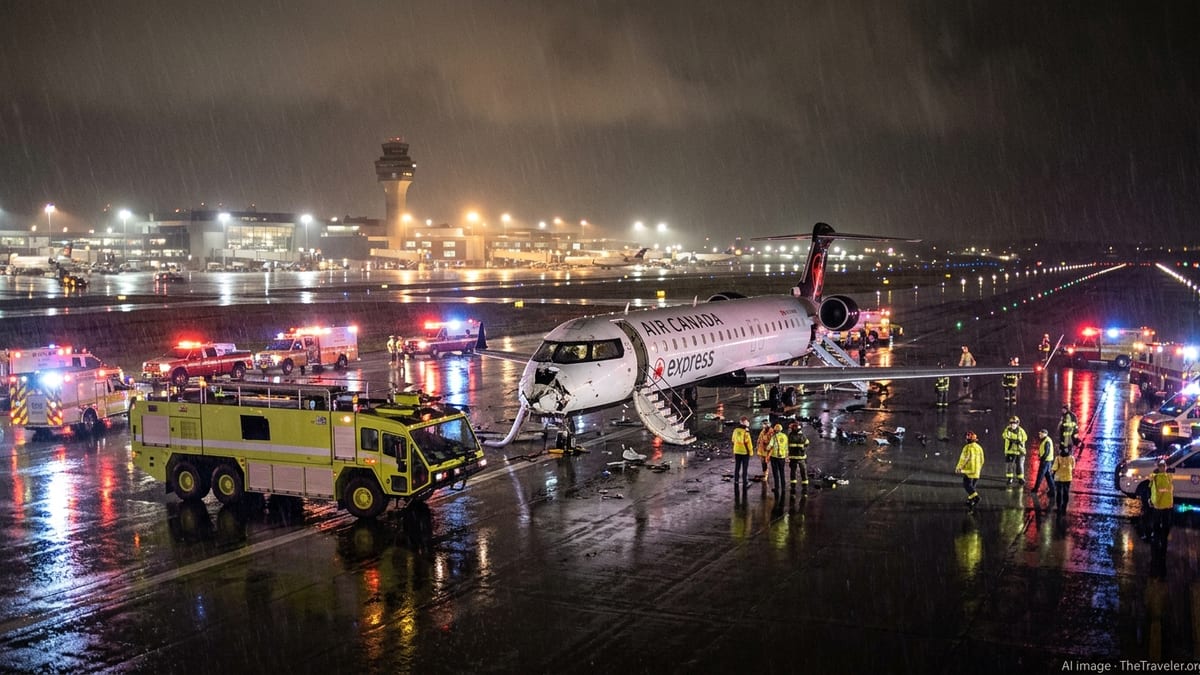
Runway 4/22 Closure Stretches Into Busy Travel Period
Publicly available information shows that a sinkhole was discovered late Wednesday morning, May 20, near Runway 4/22, one of LaGuardia’s two primary runways. The defect was identified during a routine airfield inspection and led to an immediate shutdown of the runway as engineers moved in to assess the damage and stabilize the area.
Reports from multiple news outlets describe the sinkhole as located on or adjacent to a taxiway at the edge of Runway 4/22, rather than in the main touchdown zone. Even so, the proximity to active traffic lanes left airport managers with little flexibility, effectively reducing LaGuardia’s capacity by about half at the start of the pre holiday rush.
Initial estimates indicated that repairs could be completed by midday Thursday, May 21, allowing the runway to reopen in time to absorb the steep increase in Memorial Day weekend departures. However, subsequent updates from regional broadcasters and aviation focused coverage indicate the timeline was revised more than once, with the expected reopening pushed into Friday, May 22, typically one of the heaviest travel days of the season.
The shifting schedule has turned what might have been a short term operational hiccup into a prolonged constraint at one of the country’s busiest domestic hubs, magnifying the impact on airlines and travelers.
Cancellations Mount As Memorial Day Rush Begins
Data aggregated from flight tracking services and reported by travel industry outlets indicates that hundreds of flights into and out of LaGuardia have been canceled or significantly delayed since the runway was closed. Average departure delays stretched well past an hour at various points on Wednesday and Thursday, with rolling ground delay programs further constraining operations.
With only one primary runway available, airlines have had to trim schedules, consolidate passengers onto fewer flights, and re time departures to fit within the reduced capacity window. Some aircraft have been diverted to other New York area airports, including John F. Kennedy International and Newark Liberty International, creating additional congestion at those facilities and complicating rebooking efforts.
The timing could hardly be worse for travelers. Memorial Day weekend traditionally marks the informal start of the U.S. summer travel season, and forecasts from airline and tourism analysts had already pointed to record passenger volumes this year. The LaGuardia disruption is now layering infrastructure related capacity limits on top of already tight schedules and high load factors.
Passengers trying to depart New York have reported spending hours in terminal queues as they seek new itineraries, while inbound travelers have faced last minute reroutes, overnight delays, or the prospect of beginning their holidays at a different airport than planned.
Repair Delay Highlights Infrastructure Vulnerabilities
According to published coverage, emergency construction teams have worked around the clock at LaGuardia to excavate the affected pavement, inspect the underlying subgrade, and fill and repave the depression. The decision to extend the closure beyond the initial Thursday target appears linked to the need for additional inspections and curing time to ensure the runway and adjacent taxiway can safely handle full loads.
Aviation analysts note that LaGuardia’s airfield sits on a mix of historic landfill and former shoreline, conditions that can heighten susceptibility to settlement and water related erosion. Prior federal reports on airport construction and maintenance have highlighted the challenges of keeping older airfields in top condition while sustaining heavy traffic volumes and frequent work windows.
The current incident is drawing renewed attention to the fragility of critical infrastructure at capacity constrained airports. A relatively small area of subsidence has generated outsized disruption, demonstrating how little margin for error remains at a facility where two main runways handle dense schedules throughout the day.
Industry observers point out that while emergency repairs can restore short term functionality, longer term resilience may require more extensive drainage improvements, ground stabilization, and proactive monitoring to detect early signs of subgrade failure before they evolve into sinkholes or structural voids.
Ripple Effects for Airlines and Travelers Nationwide
The ongoing closure of Runway 4/22 is not only a New York problem. Network wide schedules show that LaGuardia serves as a key node for shuttle routes along the East Coast, regional links throughout the Northeast, and connections deeper into the U.S. domestic system. When one of its main runways goes offline, aircraft and crews quickly fall out of position, and those imbalances cascade across airline networks.
Travel data providers tracking same day and next day disruptions report increased cancellations and lengthy delays at downline airports as carriers adjust to fewer available slots at LaGuardia. Flights that would normally originate or terminate there are being reassigned, rerouted, or scrubbed altogether, affecting passengers far from New York who may not immediately connect their own disruption to a sinkhole they never see.
According to aviation planners, the combination of peak season demand, limited spare aircraft, and tight crew duty rules leaves little slack in the system to absorb a sustained cut in runway capacity at a major hub. Some carriers are prioritizing routes with high business or connecting traffic, while leisure oriented services appear more vulnerable to schedule cuts during the repair period.
Travel advisors are encouraging passengers with flexible plans to consider alternate New York area airports where possible and to monitor their reservations closely for last minute schedule changes as the weekend progresses.
What Travelers Can Expect Through the Holiday Weekend
As of Friday morning, May 22, publicly available information suggests that crews at LaGuardia are aiming to complete repairs and reopen Runway 4/22 at some point during the day, although specific operational times remain fluid. Even once the runway returns to service, the backlog of displaced flights and out of position aircraft is expected to take time to unwind.
Travel experts caution that residual delays and scattered cancellations may persist into the latter part of the weekend, particularly on routes that rely heavily on LaGuardia based aircraft and crews. Passengers whose flights are still scheduled are being advised by airlines and airport notices to arrive early, allow extra time for check in and security, and be prepared for gate changes or rolling departure time adjustments.
For those yet to begin their journeys, monitoring real time flight status and considering rebooking options before heading to the airport can reduce the risk of extended terminal waits. While the sinkhole itself may soon be patched and paved over, the operational aftershocks are likely to shape the experience of Memorial Day travelers in and out of New York for several days.
The incident is also likely to inform future planning at LaGuardia and other high traffic airports, where balancing ongoing modernization projects with the need for resilient, uninterrupted operations remains an increasingly complex challenge.