


More news on this day
Operations at Cascavel’s Adalberto Mendes da Silva Airport in western Paraná were disrupted on 31 August after LATAM Airlines flight LA3858, an Airbus A320 from São Paulo–Guarulhos, experienced a runway excursion during landing, coming to rest off the paved surface without reported injuries among the 151 people on board.
Get the latest news straight to your inbox!
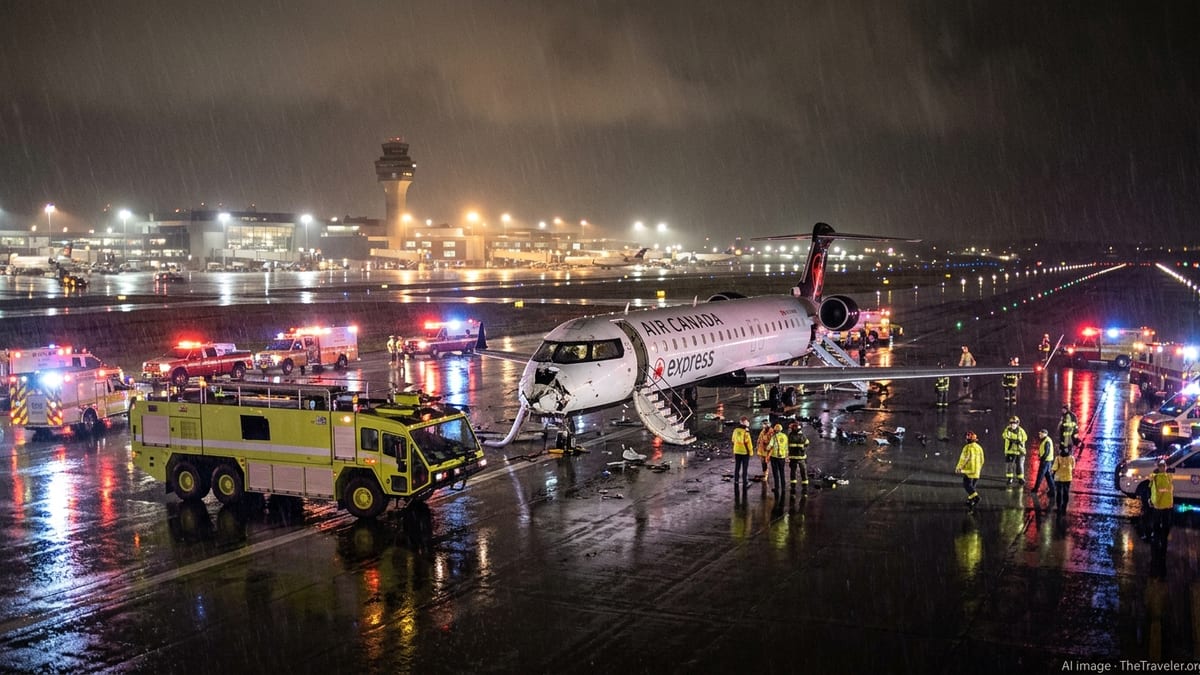
Incident During Morning Arrival at Cascavel
Publicly available incident summaries indicate that the Airbus A320, registered PR-MYO, was operating the regular LATAM Airlines Brasil service LA3858 from São Paulo–Guarulhos to Cascavel on the morning of 31 August 2026. The aircraft landed on Cascavel’s single runway shortly before 10:00 local time, amid reports of rain and wet surface conditions in the region.
Aviation occurrence databases describe the event as a runway excursion during the final phase of landing, when the aircraft had already decelerated to low speed and was preparing to turn on the runway for backtrack operations. Instead of completing the turn, the jet departed the paved surface and became stuck in soft ground near the end of the runway, short of the physical runway limit.
Brazilian and international media reports converge on the timing of the occurrence at around 9:45 a.m. local time, noting that the excursion happened after touchdown rather than during the approach itself. Images shared by local outlets show the aircraft resting with its landing gear embedded in muddy terrain adjacent to the runway strip.
According to published coverage, all 145 passengers and six crew members were safely evacuated, with no reports of injuries. The aircraft remained intact and upright, though its position off the pavement required specialized equipment for recovery and temporarily blocked use of the affected runway.
Weather, Runway Conditions and Early Operational Details
Preliminary operational data and weather information point to challenging meteorological conditions at Cascavel around the time of the landing. Reports compiled from aviation weather observations show thunderstorms and rain moving through the area during the morning, resulting in a wet runway and reduced braking environment.
Some flight tracking summaries note that LA3858 entered a holding pattern before its final approach, suggesting that the crew initially delayed descent while monitoring changes in weather and airfield status. After conditions were deemed suitable for landing, the aircraft continued its approach and touched down on Cascavel’s short regional runway.
Incident digests referencing technical details state that the A320 had slowed to approximately taxi speed when the crew attempted a turnaround maneuver on the runway to backtrack toward the terminal, a common practice at airports without full-length parallel taxiways. It was during this low-speed phase, rather than during high-speed rollout, that the aircraft’s wheels left the paved surface and rolled into softer ground.
Analysts note that multiple factors typically come under review in similar cases, including runway length, friction levels on wet pavement, crosswind components, and the specific handling of braking and steering during the final meters of rollout. At this stage, publicly available reports emphasize that findings remain preliminary and that the sequence described is based on early data rather than a completed investigation.
Impact on Cascavel Airport Operations
The excursion immediately affected operations at Cascavel Airport, which serves as an important regional gateway for western Paraná. Media outlets in Brazil report that the runway was closed following the incident to allow for inspection, aircraft recovery and safety checks, halting scheduled movements at the airfield.
According to news coverage, the return leg of the rotation, flight LA3859 from Cascavel back to São Paulo–Guarulhos, was cancelled after the event. Passengers expecting to depart on the affected service were re-accommodated on later flights and via alternative arrangements, as the airport managed both the operational disruption and passenger flow within a confined terminal area.
With the aircraft immobilized off the runway, airport teams faced the task of stabilizing the ground around the landing gear, coordinating towing and recovery operations and verifying that no structural damage to the runway or safety areas had occurred. Such procedures are a standard requirement before regular traffic can resume at airports following excursions, regardless of whether the aircraft itself is heavily damaged.
Cascavel’s role as a hub for regional business and agricultural travel in Paraná meant that even a temporary closure had knock-on effects for local logistics and same-day connections. However, coverage indicates that the absence of injuries and the contained nature of the incident allowed authorities to focus primarily on technical recovery and scheduling adjustments rather than emergency medical response.
Passenger Experience and Airline Response
Regional and international outlets describe a controlled disembarkation process following the excursion, with passengers leaving the aircraft via mobile stairways rather than through emergency slides. Images and video clips circulating on social media and in broadcast segments show travelers being assisted onto the airfield and transported by ground vehicles to the terminal.
Public statements reproduced in Brazilian travel and news media indicate that LATAM Airlines Brasil reported no injuries among passengers or crew and highlighted that assistance was being provided to those on board. The airline also noted that it was cooperating with the ongoing review of the event and that the aircraft had exceeded the runway limit at low speed during the final phase of landing.
Accounts in regional press mention that some passengers faced delays and missed onward connections as a result of the runway closure and flight cancellation. In such circumstances, standard commercial aviation practice typically includes offering rebooking options, refreshments or accommodation depending on the length and nature of the disruption, although specific individual arrangements are not detailed in publicly accessible sources.
For Cascavel’s traveling public, the excursion added to growing attention on operational margins at smaller regional airports that host narrowbody jets like the Airbus A320. Social media commentary captured by aviation forums and local outlets referenced both the limited runway length and the intense rainfall on the morning of 31 August as perceived contributors to the event.
Next Steps for the Investigation and Safety Review
The incident is expected to be examined by Brazilian civil aviation investigators, in line with international procedures that call for a systematic review of runway excursions. Publicly available aviation databases have already catalogued the case as an incident involving a runway excursion on landing of an Airbus A320, listing core details such as the flight number, route, registration and number of occupants.
Published analyses note that investigators typically examine flight data recorder information, cockpit voice recordings, maintenance logs and air traffic control records to reconstruct the full profile of the approach, landing and rollout. Particular emphasis is often placed on braking performance, thrust reverser use, steering inputs and the exact point along the runway where the aircraft left the paved surface.
Runway surface condition reports and airport infrastructure data, including the presence and dimensions of runway end safety areas, are also likely to feature in the review. In similar events worldwide, findings sometimes lead to recommendations on pilot training for operations into shorter runways, updates to airport operating minima or infrastructure changes such as resurfacing and drainage improvements.
While the inquiry into LA3858 at Cascavel is at an early stage, the absence of injuries and the limited apparent damage to the aircraft suggest that the episode will be studied as a safety learning opportunity rather than a major accident. The case adds to a broader body of data on how modern narrowbody jets interact with regional airport constraints, especially under rapidly changing weather conditions that can challenge landing performance margins.