


More news on this day
Two people were killed, dozens more were injured and traffic ground to a standstill after a coach bus carrying airline crew members overturned and crossed into oncoming lanes on the Long Island Expressway in Queens late Monday night.
Get the latest news straight to your inbox!
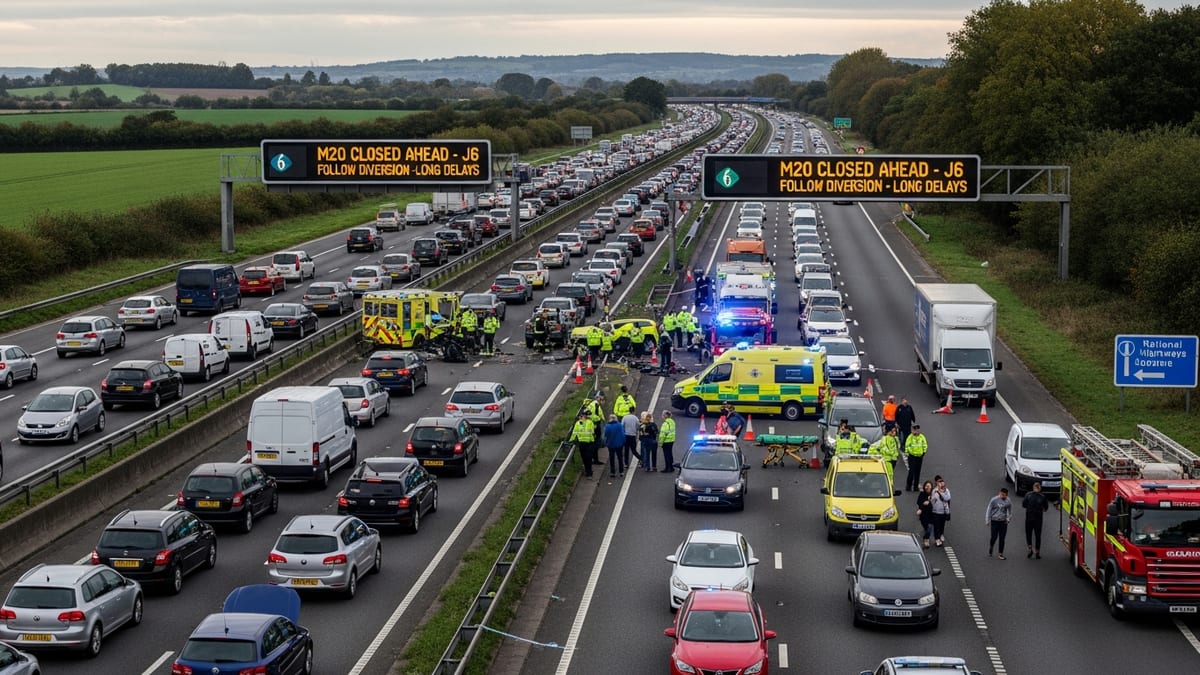
Late-night rollover in Maspeth turns deadly
Publicly available information shows that the crash occurred around 11:45 p.m. on Monday near the Greenpoint Avenue exit in the Maspeth section of Queens. The westbound coach bus, operating as a chartered airport shuttle, was traveling toward a hotel when it became involved in a multi-vehicle collision on the busy corridor.
Reports indicate the bus first struck at least one passenger vehicle in the westbound lanes before hitting the concrete median that separates directions of traffic on the Long Island Expressway. The impact appears to have caused the bus to overturn, cross the barrier and slide into oncoming eastbound lanes, where it collided with additional vehicles.
Coverage from multiple outlets describes a chaotic scene with heavy damage to the coach and several cars, debris scattered across the roadway and a large emergency response. Two people were pronounced dead, including the bus driver and at least one passenger, while roughly 20 other people sustained injuries ranging from minor to critical.
The Long Island Expressway, already known for congestion and frequent crashes, was closed in both directions for hours into the early morning as first responders attended to the injured, removed trapped occupants and worked to clear wreckage from the expressway.
Airline crew among those aboard chartered coach
According to published coverage, the coach bus was transporting crew members from a Royal Jordanian flight that had arrived earlier in the evening at John F. Kennedy International Airport. Around 15 airline crew members were reported to be on board the shuttle headed from the airport to their hotel when the crash occurred.
Reports indicate that some of the injured were among this airline crew contingent, with several taken to area hospitals for evaluation and treatment. Information made public so far suggests that injuries included fractures, head trauma and other serious conditions typically associated with high-speed rollovers and secondary collisions.
As details continue to emerge, coverage notes that most of the injuries occurred on the bus, although several occupants of the struck vehicles were also hurt. The mix of international airline staff and local motorists underscores the wide reach of a major crash on a regional transportation artery that links Queens, Long Island and routes toward Manhattan.
Travel industry observers point out that airline ground transportation, including contracted shuttles for crew, is a routine part of long-haul operations. Incidents of this severity involving airline personnel away from the airfield remain relatively rare, which has drawn additional attention to the circumstances surrounding this collision.
Traffic gridlock ripples across Queens and Long Island
The crash quickly created extensive traffic disruptions on one of the New York City region’s most critical travel corridors. Publicly available traffic data and local reports show that the Long Island Expressway was shut down in both directions near the crash site for several hours overnight and into the morning commute.
With multiple lanes blocked by the overturned bus, damaged vehicles and emergency equipment, drivers were diverted onto local streets in western Queens. This diversion reportedly backed up traffic through Maspeth, Woodside and neighboring communities, while eastbound drivers headed toward Long Island encountered long delays stretching well beyond the crash scene.
Travel coverage and commuter reports describe morning trips that were extended by an hour or more for some motorists, as residual delays persisted even after some lanes reopened. For travelers heading to and from airports or connecting to other major routes, the disruption added another layer of complication to already time-sensitive journeys.
Transportation observers note that incidents of this scale on the Long Island Expressway can have regionwide effects, as drivers attempt to reroute via the Brooklyn-Queens Expressway, Grand Central Parkway and local arterials. The result can be a temporary but widespread slowdown across multiple boroughs and suburban corridors.
Investigations focus on cause and crash dynamics
According to news coverage, local and federal investigators have opened inquiries into what led to the deadly rollover. Reports indicate that the National Transportation Safety Board is examining the crash alongside local investigators, with attention on vehicle speed, mechanical condition, roadway design and driver actions prior to impact.
Early descriptions of the crash dynamics highlight a sequence that began with contact between the bus and at least one westbound vehicle, followed by a collision with the median and a rollover into opposing traffic. Similar incidents on divided highways often involve questions about barrier height, bus stability and how quickly a driver can react once a large vehicle begins to veer or jackknife.
Investigators are expected to review on-board cameras if present, electronic control modules, maintenance records for the coach and any available traffic camera footage from the expressway. Toxicology testing and interviews with surviving passengers and other drivers typically form part of the fact-gathering process in a crash of this magnitude.
Transportation safety analysts point out that motorcoach crashes, while relatively infrequent compared with everyday fender-benders, can produce severe outcomes because of the number of occupants involved, the higher center of gravity of large buses and their frequent operation at highway speeds.
Renewed attention on motorcoach and expressway safety
The Long Island Expressway crash in Queens arrives amid ongoing conversations about highway safety and the regulation of motorcoach operations in the United States. Advocacy groups frequently highlight the need for robust driver training, strict adherence to hours-of-service limits and regular inspections to reduce the risk of fatigue and mechanical failure.
Publicly available information from prior highway bus disasters has often prompted calls for stronger roof-strength standards, better occupant protection and improved roadside barriers designed to prevent heavy vehicles from vaulting into opposing lanes. While the specific causes of the Queens crash remain under investigation, its severity has renewed focus on whether existing safeguards are sufficient on heavily traveled urban expressways.
For local travelers, the incident is a stark reminder of the vulnerability of commuters and professional drivers sharing dense, high-speed corridors. Residents of Queens and Long Island rely on the expressway for daily trips to work, school and airports, and any extended closure reverberates through schedules, businesses and logistics networks.
As official investigations proceed and more information becomes available, attention is likely to turn to potential engineering changes, enforcement strategies or operational adjustments that could help reduce the likelihood of similar multi-vehicle crashes on the Long Island Expressway and comparable routes across the region.