


More news on this day
A moderate earthquake near Granada in southern Spain has shaken residents and visitors across Andalusia, prompting enhanced monitoring of seismic activity and renewed scrutiny of travel safety measures in one of the country’s most visited regions.
Get the latest news straight to your inbox!
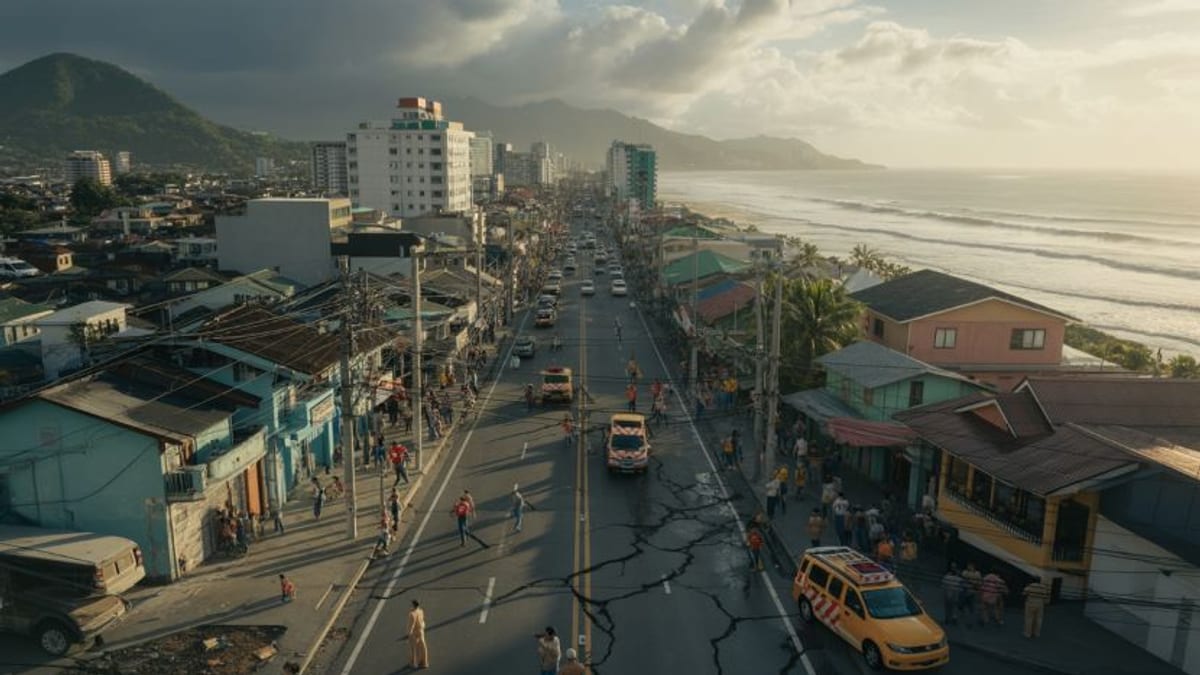
Fresh Seismic Jolt Near Granada Rattles Tourist Heartland
According to publicly available data from Spain’s national seismic networks and international monitoring agencies, a shallow earthquake of around magnitude 5 struck shortly after 1 a.m. local time on August 15 near the town of Alhendín, a short distance south of Granada. The tremor was felt widely across the province and in several other Andalusian cities, with residents reporting shaking that caused objects to fall and plaster to crack.
Initial readings placed the event at roughly magnitude 4.8 before subsequent assessments revised the figure closer to magnitude 5. Reports indicate that the epicentral area lies within the seismically active belt that stretches across southern Spain, where moderate quakes are relatively infrequent but not unusual. The depth of about 10 kilometers contributed to the shaking intensity experienced in the Granada metropolitan area.
Publicly available information from regional emergency services shows that damage has been largely limited to structural cracks, fallen cornices and minor façade collapses. There have been no confirmed reports of fatalities, and only a small number of minor injuries have been mentioned in local coverage. Even so, the night-time timing and the strong, sudden jolt have renewed public concern about seismic risk in one of Spain’s most important cultural tourism hubs.
The quake follows a series of smaller tremors recorded in the same general area in the hours before the main event, reinforcing scientific assessments that the Granada region remains one of the country’s primary zones of tectonic activity.
Emergency Plans Activated As Monitoring Steps Up
Regional authorities in Andalusia activated established emergency procedures soon after the earthquake, in line with Spain’s national civil protection framework for seismic events. Publicly available statements indicate that the regional plan for seismic risk was moved to a higher alert phase, allowing fire services, local police and technical inspection teams to deploy to affected municipalities.
Teams have been carrying out rapid building checks around the epicentral zone, particularly in Alhendín and nearby towns in Granada’s metropolitan belt. Historic centers and densely built districts have been prioritized, given the potential for older structures to suffer damage from even moderate shaking. Access has been restricted around buildings where loose masonry, roof tiles or ornamental features pose a risk to passersby.
In Granada itself, which combines dense residential neighborhoods with landmark sites and university buildings, public information campaigns have focused on reassuring residents while also encouraging caution. Local media report that residents are being asked to stay clear of cordoned-off streets, follow instructions from emergency services and report any fresh cracks or tilting walls in their homes.
Spain’s national geophysical agencies continue to monitor the Granada fault systems closely, analyzing aftershocks and refining models used to estimate potential impacts from future events. The latest tremor is being treated as an important data point for ongoing research into the seismic behavior of southern Spain’s mountain ranges.
Impact on Granada’s Tourist Economy and Visitor Experience
Granada, home to the Alhambra palace complex and a busy network of hotels, guesthouses and short-term rentals, attracts millions of visitors each year. While early reports suggest that the latest earthquake has not caused major damage to headline attractions, the event has prompted a visible tightening of safety protocols in and around key tourist sites.
Publicly available information from local tourism bodies and media outlets points to increased structural inspections at historic monuments, churches and museums. Some smaller attractions and individual buildings have temporarily limited access while engineers complete visual checks. Larger sites have introduced short-term crowd management measures, including staggered entry times and narrowed circulation routes around scaffolding or temporary protective structures.
Hotels and guesthouses have been using standard safety scripts to brief guests on emergency exits, assembly points and what to do in the event of significant aftershocks. Some properties have reported a small number of booking changes from visitors seeking clarification on conditions, but the bulk of travel plans for the late summer season appear to be continuing as scheduled.
Travel industry analysts note that Spain has previously demonstrated strong resilience in the face of localized natural hazards, with tourism flows typically resuming quickly once infrastructure is confirmed safe. Market commentary suggests that the latest quake is more likely to trigger short-term adjustments to itineraries within Andalusia rather than large-scale cancellations.
Seismic Risk Along Spain’s Southern Tourist Corridor
Scientific assessments of Spain’s seismicity consistently highlight the southern third of the country, including Granada, Málaga, Almería, Murcia and parts of Alicante, as the most active region. This belt covers many of Spain’s best-known holiday destinations, from inland heritage cities to popular coastal resorts on the Mediterranean.
Studies published in recent years on historical earthquakes and risk scenarios in Spain indicate that damaging events of moderate to strong magnitude have occurred repeatedly over centuries in and around Granada’s mountain front. While the probability of a major quake in any given year remains relatively low, authorities treat the area as a priority for emergency planning and technical preparedness.
The concentration of visitors in historic centers, where narrow streets and older masonry structures are common, adds a tourism-specific dimension to risk assessments. Planning documents emphasize the need to maintain evacuation routes, reinforce vulnerable façades and ensure rapid communication with visitors who may be unfamiliar with local emergency procedures.
Experts involved in these studies underscore that building codes for new construction in Spain already incorporate seismic criteria informed by the country’s recorded events. The challenge lies largely in the retrofitting and regular inspection of legacy buildings, many of which also carry heritage protections that complicate structural interventions.
Travel Advice: Cautious Normality For Visitors To Granada
For travelers holding bookings in Granada and wider Andalusia in the coming days, publicly available guidance from travel advisories and local authorities continues to characterize the situation as one of cautious normality. Transportation infrastructure, including Granada’s airport, rail links and main highways, is operating without major disruption, and essential services remain intact.
Travel safety experts recommend that visitors to southern Spain in the near term take several straightforward precautions. Checking accommodation for visible structural issues, familiarizing oneself with exit routes and following any posted restrictions around damaged buildings are widely cited as sensible steps. It is also advisable to monitor local news broadcasts or official social media channels for updates on aftershocks or localized closures.
Tour operators and major booking platforms are generally maintaining standard terms while offering flexibility on date changes for those directly affected by any temporary closures of specific properties or attractions. Insurance providers commonly cover trip disruptions linked to natural events where policies include relevant clauses, but travelers are encouraged to review conditions carefully.
Despite the overnight shock, current assessments suggest that Granada and its surrounding tourist areas are expected to remain open and functioning, supported by an elevated level of monitoring and a renewed focus on seismic preparedness as the peak holiday season continues.