


More news on this day
Hundreds of passengers were left waiting at Boston Logan International Airport on June 23 as a fresh wave of delays and cancellations involving Republic Airways, JetBlue, American Airlines, Air Canada and other carriers rippled through flight networks in the United States, Canada, Europe and Asia.
Get the latest news straight to your inbox!
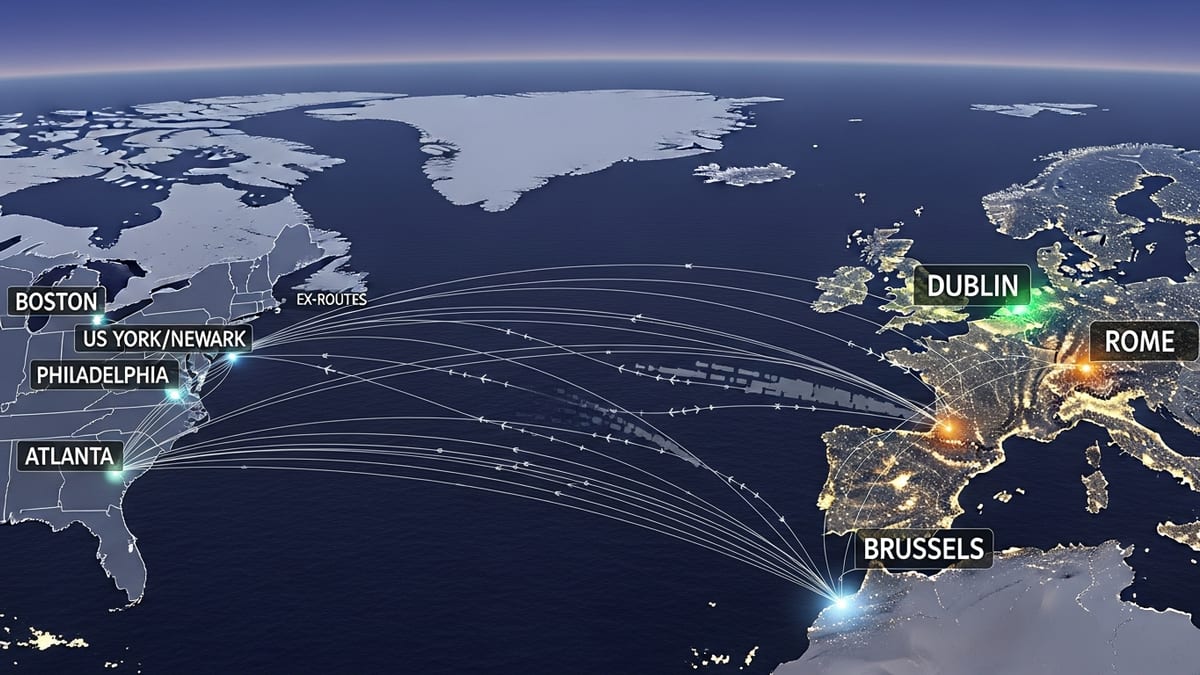
Severe Disruptions Hit Boston Logan Travelers
Publicly available tracking data on June 23 indicated at least 354 delayed flights and 67 cancellations across a wide mix of airlines and hubs, with Boston Logan among the hardest hit departure points. Regional operator Republic Airways, along with JetBlue, American, Air Canada and several European and Asian carriers, appeared prominently in the disruption tallies compiled from airport and aviation data platforms.
At Boston Logan, the knock-on effect of schedule changes left departure boards showing clusters of late afternoon and evening flights pushed back by an hour or more, while some regional services were removed from schedules entirely. The pattern largely affected domestic routes up and down the East Coast and to Midwestern cities, but a handful of transatlantic and transpacific services were also impacted.
Passengers booked on Republic-operated regional flights for major brands such as American and Delta were particularly exposed to last-minute adjustments, with some services listed as delayed before ultimately being cancelled. Travelers reported via social media that gate changes and rolling departure times added to the uncertainty, especially for those attempting to make onward connections through larger hubs.
Although operations continued at Boston Logan, the combination of late arrivals, aircraft repositioning and tight turnaround times created bottlenecks that cascaded across the evening schedule. Analysts note that regional airlines operating on behalf of larger carriers tend to feel strain quickly when inbound aircraft are delayed, reducing flexibility to recover during busy travel periods.
Weather, Congestion and Knock-On Effects Across Continents
Beyond Boston, delay and cancellation metrics showed a wider pattern of disruption spanning major airports in the United States, Canada, Spain, Italy, Germany, Turkey and South Korea. Aviation tracking dashboards pointed to weather systems over parts of North America and Europe, as well as congestion in crowded airspace corridors, as key contributors to the day’s irregular operations.
In Canada, flights operated by Air Canada and partner carriers through Montreal, Toronto and Vancouver showed elevated delay rates, particularly on long-haul routes to Europe. Schedule data indicated that some transatlantic departures were held on the ground to ensure crew rest compliance and to await arriving aircraft, contributing to late-night arrivals at European hubs.
Across the Atlantic, airports in Spain, Italy and Germany reported clusters of delayed departures during the European evening peak. Services heading toward North America were among those most affected, with departures to Boston, New York and other East Coast gateways departing behind schedule. Turkish and South Korean carriers also appeared in delay statistics, reflecting broader pressure on global schedules rather than isolated problems at a single hub.
Industry observers note that as transatlantic and transpacific traffic has rebounded, airlines are operating with tighter spare capacity. When storms, air traffic control restrictions or operational hiccups arise, they can quickly propagate from one region to another, leaving travelers several time zones away dealing with the consequences.
Republic, JetBlue, American and Air Canada Under the Microscope
The latest round of disruptions comes at a time when Republic Airways and other regional operators have already been facing scrutiny over schedule reliability, pilot availability and aircraft utilization. Government and watchdog reports in recent months have highlighted the particular vulnerability of smaller and mid-sized communities when regional schedules are thinned or repeatedly delayed.
JetBlue, which maintains a large presence at Boston Logan, has been working to stabilize operations and improve completion rates after periods of elevated cancellations in past seasons. Recent industry analyses suggest that the carrier has reduced overall cancellation rates compared with earlier years, but days with widespread weather or air traffic control constraints still expose the network to significant disruption, especially at congested Northeastern airports.
American Airlines and Air Canada, both of which rely heavily on regional partners such as Republic for feeder traffic, are also affected when smaller jets cannot operate as planned. According to schedule and fleet data, a single cancelled regional leg can cause passengers to misconnect with long-haul services, forcing rebookings and putting additional strain on inventory during already busy travel days.
Operational experts point out that while large mainline carriers often have more resources to deploy spare aircraft or crews, their dependence on regional affiliates can limit how quickly they recover from widespread delays. This dynamic was visible in June 23’s data, as delays on regional routes feeding major hubs showed up alongside longer-haul disruptions within the same airline groups.
Stranded Passengers Confront Long Lines and Limited Options
For many travelers at Boston Logan and other affected airports, the day’s irregular operations translated into long lines at check-in counters and customer service desks. Social media posts and local broadcast coverage described passengers queueing to rebook onto later flights or to find hotel rooms when same-day options were no longer available.
Families traveling at the start of the peak summer season appeared prominently among those stranded, with some attempting to piece together alternative routings through different hubs or carriers. In several cases, published schedules showed travelers being offered itineraries with overnight connections or multi-stop journeys replacing what had been originally booked as nonstop flights.
Consumer advocates advise that on days with widespread disruption, inventory for next-day departures can tighten quickly, particularly on routes connecting popular holiday destinations in Spain, Italy and coastal regions of Turkey. Travelers who are flexible on dates and departure airports may find better options, while those tied to specific connections or tours are more likely to face extended delays and higher out-of-pocket expenses for food and lodging.
Air passenger rights rules vary considerably between regions, adding another layer of complexity. While European regulations provide defined compensation in certain delay and cancellation cases on flights to or from the European Union, North American travelers often rely on individual airline policies that emphasize rebooking over monetary payments except in limited circumstances.
What Travelers Can Do as Summer Disruptions Mount
With the June 23 disruptions arriving early in the peak holiday period, travel specialists recommend that passengers build additional buffers into itineraries for the rest of the season. That can include scheduling longer layovers when making international connections, opting for morning departures that are less exposed to cascading delays, and monitoring flight status closely in the 24 hours before departure.
Publicly available guidance from aviation agencies and consumer groups suggests that travelers should familiarize themselves with airline contracts of carriage and, on international routes, with local passenger rights frameworks. Knowing when carriers are obligated to provide meals, hotel vouchers or alternative transportation can help passengers make informed decisions at the airport and during post-trip claims.
Analysts also note that travel insurance policies, including those bundled with some credit cards, can help offset costs arising from missed connections, extended delays or forced overnight stays. However, policy terms often distinguish between disruptions caused by weather, air traffic control restrictions and airline operational issues, so passengers are urged to review coverage details before departure.
As airlines, airports and regulators continue to review recent near-miss incidents and operational stress points in the U.S. and abroad, the June 23 disruptions at Boston Logan and across multiple continents underline how quickly a localized set of problems can become a global challenge for air travelers. For now, industry data suggests that vigilance, flexibility and advance preparation remain the best tools for passengers aiming to navigate an increasingly crowded sky.