


More news on this day
Malaysia Airlines has begun restoring a portion of its Kuala Lumpur–Jakarta schedule after days of disruption caused by volcanic ash from Indonesia’s Anak Krakatau, as Jakarta’s main airport progressively reopens to international traffic.
Get the latest news straight to your inbox!
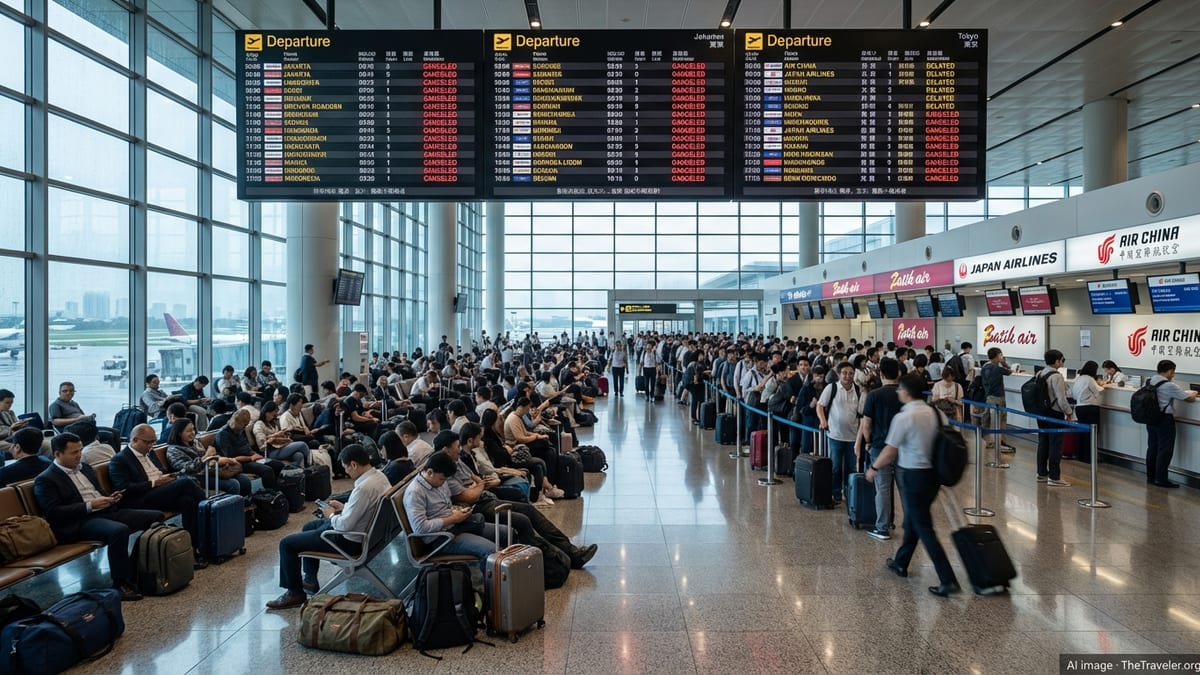
Gradual Resumption Follows Complete Grounding
According to Malaysia Airlines’ latest operational notice on 8 September 2026, the carrier is gradually resuming services between Kuala Lumpur International Airport (KUL) and Jakarta’s Soekarno-Hatta International Airport (CGK) as conditions improve following the Anak Krakatau eruption.
For 8 September, publicly available information from the airline shows that flights MH717 and MH721 from Kuala Lumpur to Jakarta, along with return service MH716 to Kuala Lumpur, are operating as scheduled. Another Kuala Lumpur bound flight, MH723, is also listed to run, signalling a cautious return of traffic on one of Southeast Asia’s busiest business corridors.
The restoration of these rotations comes after nearly two days in which Jakarta’s main gateway either fully halted or sharply curtailed movements due to ash clouds, impacting almost 3,000 flights across multiple airlines and leaving large numbers of passengers facing extended delays or rebooking.
Selected Cancellations Still in Place
Despite the partial restart, Malaysia Airlines retains several cancellations on 8 September. The same corporate advisory identifies flights MH713 and MH711 from Kuala Lumpur to Jakarta, plus their return sectors MH712 and MH710 from Jakarta to Kuala Lumpur, as remaining cancelled. Jakarta–Kuala Lumpur service MH726 is also not operating.
The pattern reflects a phased approach, with core peak services returning first while lower-priority or overlapping frequencies stay suspended as airport capacity and airspace conditions stabilise. The airline indicates through its public updates that it continues to monitor the evolving situation and is communicating schedule changes directly to affected customers.
Malaysian media reports add that, at the height of the disruption on 6 September, Malaysia Airlines and Batik Air together cancelled around 20 Malaysia–Jakarta flights in a single day, while airport operator Malaysia Airports later reported a total of 31 Jakarta-bound cancellations from Malaysian airports as ash forced the closure of Soekarno-Hatta.
Anak Krakatau Eruption Rippled Across the Region
The flight disruption stems from a renewed burst of activity at Anak Krakatau, the volcanic island in the Sunda Strait roughly midway between Java and Sumatra. Indonesia’s volcanology agency reported ash plumes climbing to several kilometres in altitude and dispersing across parts of western Java and southern Sumatra, drifting into key aviation corridors that feed Jakarta.
International coverage indicates that Jakarta’s Soekarno-Hatta airport suspended operations on 6 September as the ash cloud encroached on departure and arrival paths, with airlines including Malaysia Airlines, Singapore Airlines, AirAsia and carriers from Lion Air Group all cancelling services into the Indonesian capital. The closure, extended in stages as meteorological and ash observations evolved, quickly cascaded through regional schedules.
By 8 September, local and international airlines began announcing plans to restore flights as conditions improved. Low-cost carrier AirAsia, for example, reported the resumption of most affected services to and from Jakarta, signalling that the main hub’s reopening was holding and that air traffic control assessments supported renewed operations.
Safety Prioritised as Ash Risk Continues
Volcanic ash presents serious hazards for jet engines and aircraft systems, and global aviation procedures call for significant caution whenever ash is detected near flight paths. Guidance from civil aviation authorities in the region stresses that airlines and air navigation service providers must avoid areas of known or forecast ash, even if that means large-scale schedule disruption.
In this latest episode, Indonesia’s transport ministry and meteorological agencies worked with airlines and airports to map ash dispersion and determine when it was safe to reopen Jakarta’s skies. Malaysia’s own aviation authorities have previously highlighted similar precautions in dealing with volcanic events elsewhere in Indonesia, advising passengers to track airline announcements closely whenever eruptions coincide with prevailing winds toward major routes.
For Malaysia Airlines, the balance has been to restore connectivity on the high-demand Kuala Lumpur–Jakarta link while retaining flexibility to adjust frequencies if Anak Krakatau’s activity or wind patterns change. The carrier’s notices emphasise that passenger and crew safety remains the primary consideration, even as commercial pressures push for a swift return to normal operations.
What Travelers on the Kuala Lumpur–Jakarta Route Should Expect
For travelers, the partial resumption means that same-day options between the Malaysian and Indonesian capitals are returning but not yet fully back to pre-disruption levels. Seats on operating flights may be tighter than usual in the short term as airlines accommodate stranded passengers alongside new bookings.
Malaysia Airlines’ public advisories urge customers to keep contact details updated via the “My Booking” function on the carrier’s website so they can receive real-time notifications on any further schedule changes. Travelers are also directed to digital channels such as airline chat support or call centres for rebooking and assistance, reflecting the elevated demand on customer service as operations normalise.
Industry observers note that Anak Krakatau’s behaviour in the coming days will shape how quickly the Kuala Lumpur–Jakarta corridor returns to its full schedule. If ash emissions remain low and winds favourable, more frequencies are likely to be reinstated. Should activity intensify again, however, further tactical cancellations or timing adjustments cannot be ruled out.
For now, the reopening of Soekarno-Hatta and the restart of several key Malaysia Airlines flights mark a significant step toward restoring one of Southeast Asia’s most important air links, even as regional aviation continues to work around the unpredictability of a restless volcano.
Malaysia Airlines: Flight operations to/from Jakarta update
Channel News Asia: Jakarta airport suspends flights due to Anak Krakatau ash
Bernama: Malaysia Airlines, Batik Air cancel Malaysia–Jakarta flights
AP News: Flights to and from Indonesia’s capital resume after volcano eruption