


More news on this day
Hundreds of passengers have been left stranded or significantly delayed across Australia and New Zealand after a fresh wave of disruptions caused 507 flight delays and 15 cancellations at major hubs including Brisbane, Auckland, Melbourne and Adelaide, affecting services operated by Air New Zealand, Qantas, Virgin Australia, Jetstar and several smaller carriers.
Get the latest news straight to your inbox!
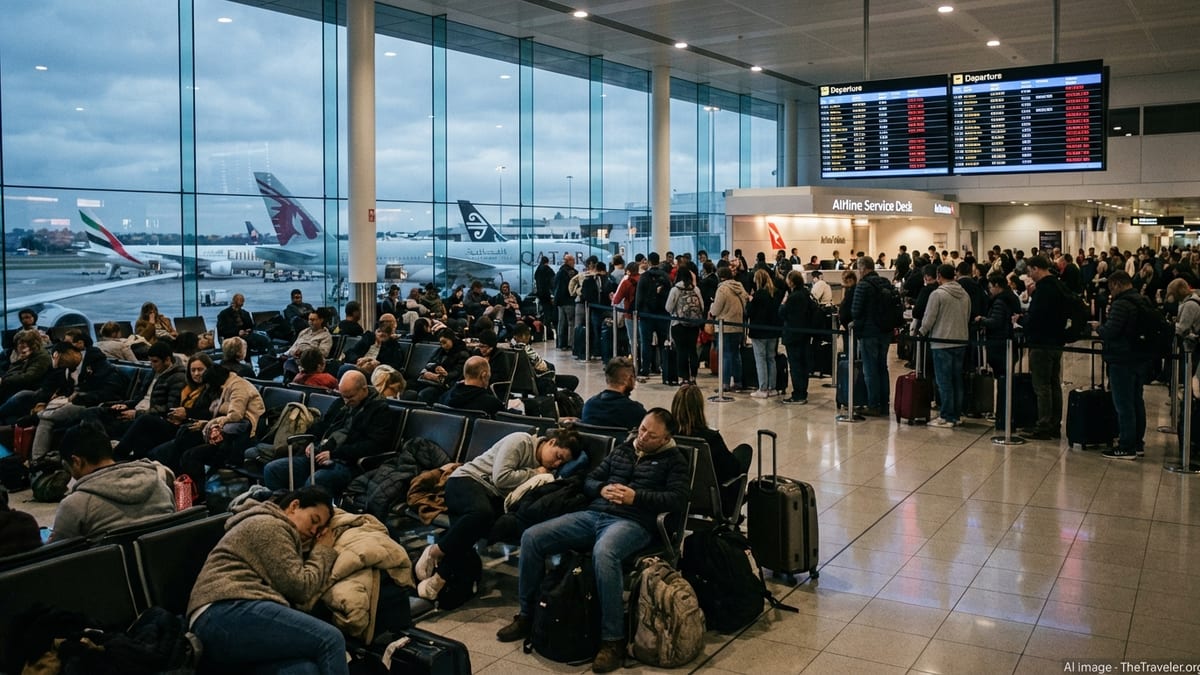
Delays Mount Across Trans-Tasman and Domestic Networks
Reports from live flight tracking boards and airport operational data show disruption building through the day across both domestic and trans-Tasman routes, with knock on effects across evening and overnight schedules. Brisbane, Auckland, Melbourne and Adelaide all recorded clusters of late departures and arrivals as aircraft and crews fell out of position.
While the majority of services operated, a significant share departed outside their scheduled time, contributing to the tally of 507 delays. The pattern indicates rolling operational challenges rather than a single system failure, with delays compounding as affected aircraft moved from one leg to the next.
Publicly available information indicates that no one airport or airline was the sole source of the disruption. Instead, the impact was spread across multiple hubs and carriers, including regional and secondary routes that rely heavily on tight turnarounds and shared infrastructure.
Operational data and historical on time performance reports for both countries show that busy trans-Tasman corridors such as Auckland to Melbourne and Brisbane, as well as trunk domestic routes linking capitals, are especially vulnerable when schedules come under pressure.
Air New Zealand, Qantas, Virgin Australia and Jetstar All Affected
Air New Zealand, Qantas, Virgin Australia and Jetstar accounted for the bulk of today’s disrupted services, reflecting their dominant role in Australian and New Zealand aviation. Flight status pages and airport boards showed late running across a mix of short haul domestic routes and international sectors between Australia and New Zealand.
Past on time performance summaries published by transport agencies in both countries highlight how these four airlines carry the vast majority of passengers on routes linking Brisbane, Melbourne, Adelaide and Auckland, meaning any operational stress quickly translates into visible disruption for travelers.
The spread of delays across several brands suggests shared pressures such as weather, air traffic management constraints, crew and aircraft availability, and ongoing schedule adjustments in response to costs and demand. Previously published information about network cutbacks and fine tuned timetables among major carriers points to limited slack in many schedules, increasing the likelihood that an initial delay will cascade.
While the 15 cancellations recorded today represent a small fraction of total services, the concentration on already busy city pairs left many passengers facing rebookings, missed connections and extended waits at terminals.
Travelers Face Long Queues and Missed Connections
As delays accumulated, travelers across the region reported long check in lines, congested security queues and crowded gate areas at peak times. At some airports, rolling departures meant passengers were held in terminals for several hours while aircraft were readied or repositioned.
Missed domestic and international connections emerged as a particular pain point, especially for passengers using major hubs such as Auckland, Brisbane and Melbourne to transfer onto long haul services. Even modest initial delays on feeder flights can cause travelers to miss onward departures once minimum connection times are breached.
Recent online discussions and prior consumer complaints about irregular operations in both countries indicate that passengers often struggle to obtain clear, timely information about changing departure times, rebooking options and overnight accommodation when delays tip over into cancellations.
With 507 delayed services in a single day, today’s disruption has again highlighted how quickly aviation networks serving Australia and New Zealand can become congested, even when the majority of flights still operate.
Operational Strain Highlights Fragile Recovery
Industry commentary over the past year has pointed to a complex recovery for airlines in Australia and New Zealand as they rebuild capacity while managing high fuel costs and evolving travel demand. Carriers including Virgin Australia have already adjusted schedules on selected routes in response to these pressures, reducing the operational buffer that can help absorb unexpected shocks.
On time performance reports from aviation regulators in both countries show that even before today’s disruption, punctuality for some domestic and trans-Tasman services remained below pre pandemic benchmarks. When combined with busy terminals and constrained runway slots at key airports, this leaves networks more exposed when weather systems, technical issues or crew shortages occur.
According to publicly available operational data, today’s 15 cancellations and hundreds of delays are significant in volume but still within the range of previous large disruption days in the region. However, the breadth of impact, stretching from Brisbane and Melbourne to Adelaide and across the Tasman to Auckland and other New Zealand cities, underscores the challenge of keeping tightly scheduled aircraft and crews aligned.
For airlines operating in a highly competitive market, the task of maintaining reliability while controlling costs remains delicate, and days like today demonstrate how quickly a series of relatively small operational issues can translate into large scale inconvenience for travelers.
What Passengers Can Expect Next
With aircraft and crew rosters disrupted, knock on effects are likely to continue into subsequent days as airlines work to reset their schedules. Travelers holding tickets with Air New Zealand, Qantas, Virgin Australia, Jetstar and partner airlines on affected routes can expect some ongoing retiming, equipment changes and potential consolidations of lightly booked services.
Public information from airlines and consumer agencies in both Australia and New Zealand encourages passengers to monitor flight status closely on the day of travel, arrive early at the airport, and keep contact details updated in booking profiles so they can receive notifications of schedule changes.
Consumer guidance also recommends that travelers familiarize themselves with each airline’s policies on delays and cancellations, including options for rebooking, refunds and care such as meals or accommodation. These policies differ between carriers and may vary depending on whether the disruption is within the airline’s control or linked to external factors.
As operations stabilize, industry observers will be watching how quickly on time performance recovers across Brisbane, Auckland, Melbourne, Adelaide and other affected airports, and whether airlines make further adjustments to their networks to try to build more resilience into one of the world’s busiest regional aviation markets.