


More news on this day
Malaysia Airlines flight MH156, traveling from Kuala Lumpur to Jeddah with 186 people on board, made an emergency diversion to Chennai on September 7, 2026, after a reported engine issue prompted a full emergency response at the Indian airport.
Get the latest news straight to your inbox!
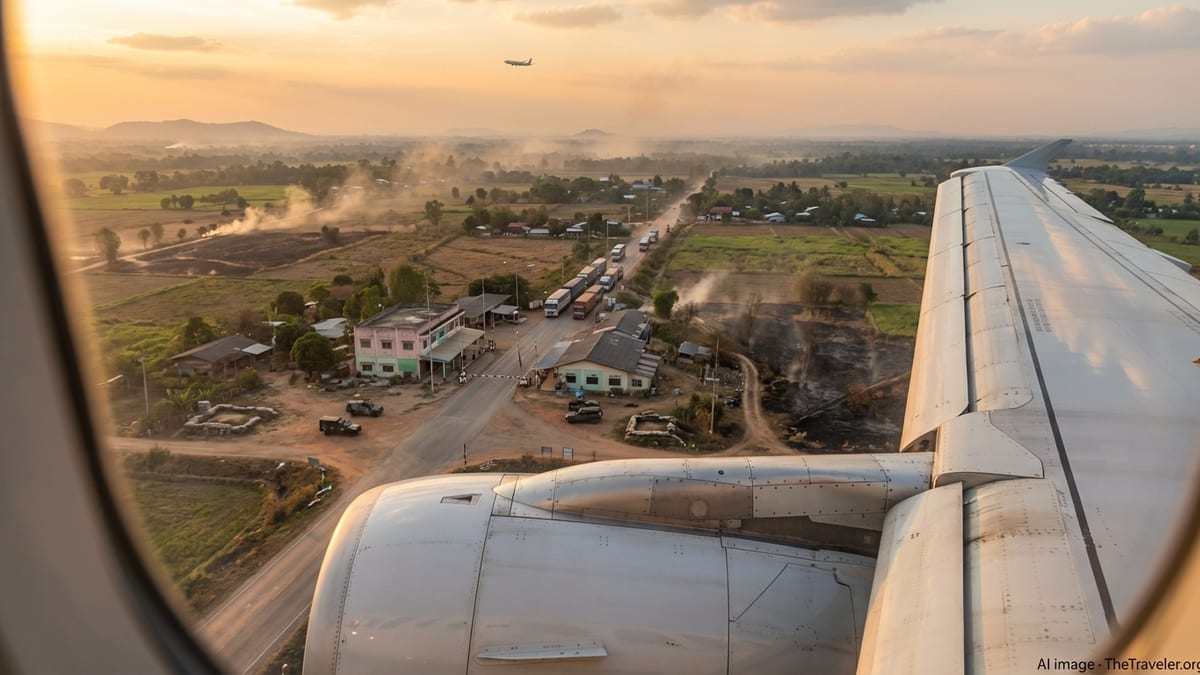
Emergency Diversion on Kuala Lumpur–Jeddah Route
Publicly available flight data and local media coverage indicate that MH156, an Airbus A330-200 operated by Malaysia Airlines, was en route from Kuala Lumpur International Airport to Jeddah’s King Abdulaziz International Airport when the crew reported a problem with one of the aircraft’s engines. The flight was carrying 186 passengers, along with crew members, on the long-haul service to Saudi Arabia.
Reports from Chennai state that air traffic control was alerted to a technical issue involving one of the engines, and the flight was subsequently diverted to Chennai International Airport. Airport emergency protocols were activated, with what is described in coverage as a full emergency declaration ahead of the aircraft’s arrival.
Tracking platforms that monitor commercial aviation movements also show a Malaysia Airlines MH156 service diverting from its planned Kuala Lumpur–Jeddah routing and terminating in Chennai on the afternoon of September 7. These datasets corroborate the timeline reported by Indian news outlets.
Safe Landing and Passenger Disembarkation
According to multiple news reports, MH156 landed safely in Chennai at approximately 4:44 pm local time after the emergency arrangements were put in place. Fire and medical services were positioned in readiness around the runway area as part of the standard response to a declared full emergency at a major airport.
Coverage indicates that the aircraft taxied to a remote parking bay, where passengers were disembarked following the landing. There were no reports of injuries among passengers or crew, and Chennai airport operations were described as continuing without significant disruption beyond the immediate emergency response window.
Information made public by aviation incident-monitoring services further notes that the aircraft involved was an Airbus A330-200 registered 9M-MTY. The aircraft reportedly remained on the ground in Chennai while technical assessments of the engine issue were carried out by engineering teams.
Technical Issue Under Assessment
Indian media reports and aviation event summaries describe the inflight problem as involving one of the aircraft’s engines, with some accounts specifically pointing to Engine No. 2. The exact nature of the malfunction has not yet been detailed in publicly accessible documentation, and no cause has been formally attributed.
Engine-related alerts can trigger highly conservative operating decisions, especially on long overwater and long-haul sectors. Diverting to the nearest suitable airport with robust emergency and maintenance infrastructure is consistent with international aviation safety practices when a potential engine malfunction is detected.
Publicly available incident listings state that a full emergency was declared at Chennai at around 4:07 pm local time ahead of MH156’s arrival. The aircraft’s safe landing less than an hour after diversion underscores how emergency planning at large international airports is structured to handle such scenarios with minimal risk to passengers.
Chennai’s Role as a Regional Diversion Hub
Chennai International Airport, one of India’s busiest aviation gateways, frequently serves as a diversion point for flights operating across the Bay of Bengal and the broader Indian Ocean region. The airport is equipped with fire, medical, and security resources that can be rapidly deployed when a full emergency is declared.
Recent coverage of MH156’s diversion highlights how the airport’s proximity to key flight corridors linking Southeast Asia and the Middle East positions Chennai as a logical choice when long-haul services encounter technical issues midair. Its runways and ground infrastructure are configured to accommodate widebody aircraft such as the Airbus A330.
On the same day as the Malaysia Airlines diversion, Indian media also reported that an Air India Express Boeing 737 from Tiruchirappalli to Singapore was rerouted to Chennai due to a separate technical snag. The back-to-back events drew attention to the airport’s role in managing multiple inflight emergencies in quick succession.
Context for Travelers on the Kuala Lumpur–Jeddah Corridor
Malaysia Airlines operates MH156 as part of a well-traveled corridor linking Southeast Asia with Saudi Arabia, a route used by religious pilgrims, migrant workers, and business travelers. Flight information services list MH156 as a regular Kuala Lumpur–Jeddah service, with operations continuing on subsequent dates after the incident.
Following an event of this kind, airlines typically carry out detailed technical inspections and, where necessary, engine maintenance or component replacements before returning an aircraft to service. While those internal procedures are not publicly documented in full, flight-tracking and scheduling platforms provide an indication of when specific flight numbers resume normal operations.
For passengers booked on future MH156 departures or similar long-haul routes, publicly available industry guidance generally recommends monitoring airline notifications and checking flight status close to departure. Incidents involving precautionary diversions are uncommon relative to the volume of global flights, yet they remain an important part of the aviation safety system designed to prioritize conservative decision-making whenever technical warnings arise.
India Today: Engine issue forces Malaysia Airlines flight to make emergency landing in Chennai
The Times of India: Two international flights make emergency landings at Chennai airport
The Indian Express: Malaysia Airlines flight diverted to Chennai after engine issue
RSOE EDIS: Event details for Malaysia Airlines MH156 diversion to Chennai