


For many divers basing themselves in San Pedro on Ambergris Caye, Hol Chan Marine Reserve is the obvious first stop. Boats head out to this narrow cut in the Belize Barrier Reef all day long, mostly filled with snorkelers. Certified divers sometimes wonder whether the shallow channel is worth giving up a half day that could be spent on deeper outer-reef sites. The answer depends on what kind of diving you enjoy. This guide focuses on what scuba divers actually experience beneath the snorkel crowds, how the Hol Chan Channel compares with other local reefs, and how to work it into a two or three tank day from San Pedro.
Get the latest updates straight to your inbox!
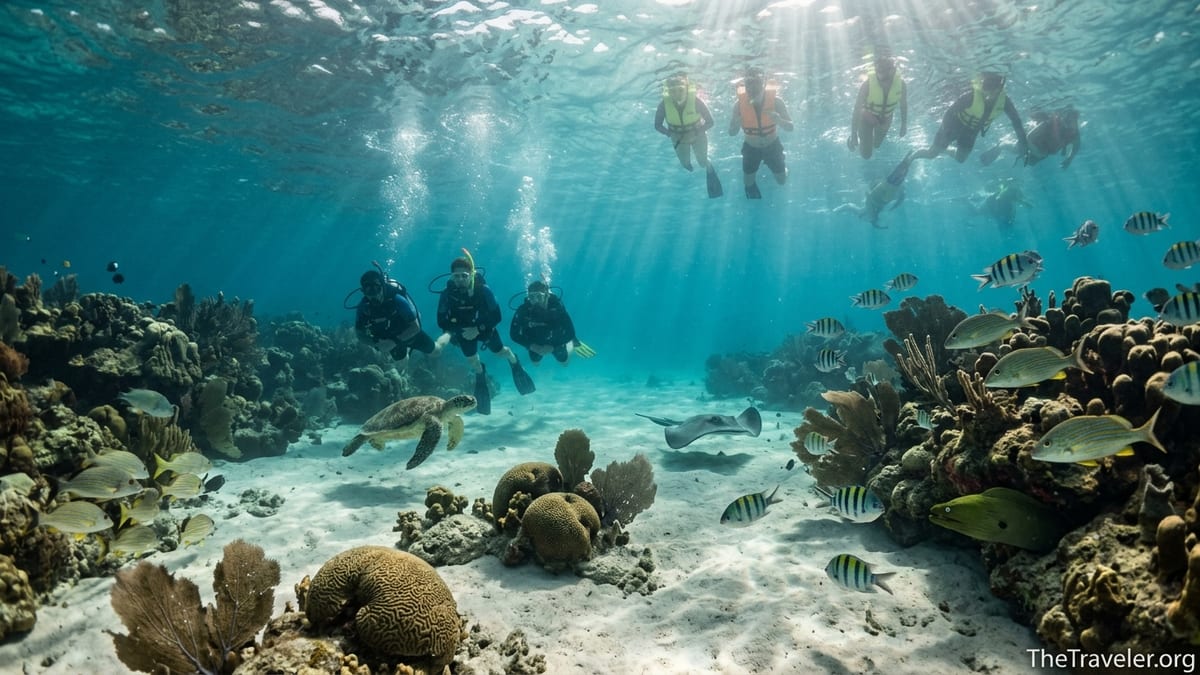
Understanding Hol Chan Marine Reserve and Its Channel
Hol Chan Marine Reserve lies about 4 miles south of San Pedro, centered on a natural break in the barrier reef whose name in Maya, “Hol Chan,” translates to “little channel.” The main diving attraction for certified divers is Zone A, the Hol Chan Channel itself, a narrow cut roughly 23 meters wide where the reef drops to around 9 to 10 meters, or about 30 feet, before rising again toward the open Caribbean. Boat rides from most San Pedro dive shops take 15 to 20 minutes, which makes Hol Chan one of the closest and most consistently accessible sites on the island.
The reserve covers a compact area of reef, seagrass and mangroves, and fishing is prohibited inside the core zones. That protection means the channel is unusually dense with marine life for such modest depths. You are diving essentially inside a busy underwater thoroughfare: reef fish commuting between the lagoon and the fore reef, green and loggerhead turtles cruising through the pass, schools of grunts and snappers packed along the walls, and an assortment of rays and nurse sharks using the channel as a corridor.
Because it is so close to town and protected from heavy ocean swell by the outer reef, Hol Chan is usually calmer than San Pedro’s deeper outside sites. Local operators often use the channel for check-out dives, for divers finishing entry-level courses, and for night dives when wind has made offshore spots too rough. On a breezy day when other boats cancel outside-reef trips, you may still see a line of skiffs shuttling divers to Hol Chan’s inside-reef moorings.
From the surface, snorkelers see portions of the same reef edge and schools of fish, but they are confined to the top few meters of the water column and can drift across only a segment of the cut during a short stop. Scuba allows you to stay longer in the deeper center of the channel, settle near the sand at 30 feet, and watch the steady traffic of larger animals moving through.
Channel Topography, Depth, Currents and Visibility
Hol Chan Channel is a straightforward dive from a navigation standpoint, which is one reason it is favored for mixed-experience groups. You typically descend near one of the park’s mooring buoys, follow your guide along one limestone wall toward the seaward end of the cut, cross the sandy bottom, then work your way back along the opposite wall. The maximum depth is around 30 feet, and many divers spend most of the dive between 20 and 28 feet.
The walls are steep but not overhung, carved into ledges and pockets that shelter spiny lobsters, channel crabs and small cleaning stations. At the seaward end, the terrain flattens toward a low-relief fore reef where hard and soft corals give way to more scattered heads, then disappear into sand. Inside toward the lagoon, the bottom gradually shoals and the coral density thins, but fish numbers remain high, especially around the edges where the reef steps down.
Currents vary with tides, and this is one aspect divers experience differently from snorkelers. Many snorkel tours time their visit for slack or mild current to keep surface groups compact and safe. Divers, by contrast, often enter when current is moderate, which tends to concentrate schooling fish in the center of the cut. You may feel a gentle push either toward the lagoon or the open sea; most operators plan a simple out-and-back route so that you swim against the current in one direction and drift back in the other.
Visibility is typically good by Caribbean standards, often around 40 to 60 feet but sometimes less after storms or spring runoff. Because the channel is shallow, there is plenty of ambient light for photography, and colors stay vibrant even without strobes. Compared with deeper sites like Tackle Box Canyons or Esmeralda, Hol Chan rarely offers the same deep blue vistas, but its combination of relief and close-up encounters is what draws many photographers back.
Reef Life for Divers vs Snorkelers
The biggest difference between diving Hol Chan and snorkeling it is not what species you see, but how you see them. Snorkelers drift near the surface, looking down at reef scenes from above and occasionally duck-diving to glance into a crevice. Divers drop to the bottom, settle alongside the walls and can linger at cleaning stations or turtle rest stops for minutes at a time. That change in perspective turns Hol Chan from a pretty reef into a behavioral showcase.
For instance, snorkelers on a half-day combo trip might glimpse a green turtle surfacing for air and then disappearing into deeper water. As a diver, you may be parked near the base of the wall watching that same turtle graze on sponges and algae, with remoras clustered underneath. You can hover a few feet away while it chews, completely unconcerned. On night dives, guides frequently point out loggerhead turtles resting in sand hollows or wedged beneath ledges, something snorkel groups never see once boats clear the reserve at dusk.
Hol Chan’s walls also shelter more cryptic life that only divers with time at 25 to 30 feet tend to notice. Spotted moray eels and occasionally larger green morays peer from holes in the limestone; channel crabs wave massive claws from overhangs; cleaner shrimp dance in the open while grunts queue up. Barracuda, horse-eye jacks and bar jacks cruise mid-water, sometimes circling divers as they hover off the bottom. From the surface these fish appear as silvery shapes; at eye level, you see the flash of their scales and the fork of a jack’s tail as it darts into a school of silversides.
Because fishing is banned inside the reserve, many reef fish are uncommonly bold. Gray angelfish, French angelfish and queen angelfish graze sponges within arm’s length of divers and barely flinch at bubbles. Parrotfish scrape coral heads noisily, leaving behind characteristic white sand. On a typical 40 to 50 minute dive, you can expect to see most of the Caribbean’s usual reef cast in abundance: sergeant majors, blue tang, schoolmaster snapper, porkfish, grunts and chromis crowding the walls. While snorkelers see the same actors, divers have the advantage of moving slowly among them rather than over them.
Rays, Sharks, Turtles and Moray Eels in the Channel
Hol Chan Marine Reserve is one of the most reliable places near San Pedro to encounter larger marine animals on a shallow scuba dive. The stars are often southern stingrays and nurse sharks. Although they are more concentrated in nearby Shark Ray Alley, they also move through the channel naturally, especially where the sandy bottom widens. Divers frequently spot southern stingrays sifting the sand for invertebrates, and nurse sharks resting under coral ledges or following the group at a discreet distance to see if any lionfish are speared by guides.
Moray eels are common along both walls. Spotted morays ranging from two to four feet are almost guaranteed on most guided dives; larger green morays appear less often but make an impression when they do, weaving from hole to hole with several small fish tagging along in their slipstream. Unlike snorkelers, who may get only a brief look at an eel’s head from the surface, divers can observe them fully extended, hunting among rocks or being cleaned by shrimps.
Turtle encounters are another Hol Chan highlight. Green turtles are regulars, while loggerheads and hawksbills show up less frequently. Guides from San Pedro operations often recall night dives when a single loggerhead accompanied the group for most of the route, gliding past divers at arm’s length below the snorkel zone. Because the channel is feeding territory rather than an open-water transit route, turtles tend to spend real time here, digging in the sand or browsing on sponges while divers watch from a respectful distance.
Larger pelagics are less predictable but not unheard of. Eagle rays occasionally soar in from the fore reef and pass through the cut, and there are stories of blacktip or reef sharks ghosting by at the seaward end. Those are bonus sightings rather than expectations. The consistent appeal for scuba divers is a density of medium-sized life in just 30 feet of water, something few deeper Ambergris Caye sites can match for less experienced or low-air-consumption divers.
Rules, Certifications and Guiding Requirements
Hol Chan Marine Reserve is tightly regulated, and divers need to factor those rules into their planning. All visitors, snorkelers and divers alike, must enter with a licensed tour operator and a registered guide. You pay a marine reserve entrance fee per person, collected by your dive shop before departure and remitted to park staff. Fees are subject to periodic changes, but as of recent seasons divers can expect to pay a modest conservation charge added to the cost of the trip rather than at a separate ticket booth.
To scuba dive in Hol Chan, you must be a certified diver or be enrolled in a recognized training course with a certified instructor. This is not the place to try a casual resort course without paperwork; San Pedro dive shops will typically require proof of certification, such as a digital PADI or SSI card, before booking you on a Hol Chan dive. Operators also enforce conservative depth limits, often planning dives around the 30 foot maximum, which is well within the limits for entry-level Open Water divers.
Guides are mandatory in the reserve. Expect one divemaster leading no more than 6 to 8 divers for standard day trips, with some higher-end operators keeping ratios even lower. The guide sets the route, manages depth and time, and keeps the group off fragile coral. Hol Chan is patrolled by rangers who can and do check boats for permits, life jackets and safety gear, and who remind crews about mooring rules and no-touch policies. You will usually tie off to fixed mooring buoys rather than anchoring, which helps protect the reef structure.
Standard dive briefings at Hol Chan emphasize neutral buoyancy, no touching or chasing wildlife, and strict separation between divers and snorkelers. Because so many boats share a handful of moorings, guides work to keep groups compact and under control to minimize fin kicks on coral and collisions with other parties. If you are uncomfortable with your buoyancy, consider doing a refresher dive on an outer-reef sand patch with your operator before booking Hol Chan so that you can fully enjoy the site without worrying about your trim.
Hol Chan Channel vs Shark Ray Alley
Many visitors book Hol Chan together with Shark Ray Alley as a combined excursion, which can blur the distinction between the two in travel marketing. For divers, however, the difference is critical. Hol Chan Channel (Zone A) is a natural reef cut that you can dive on scuba with a certified guide. Shark Ray Alley (now part of the reserve as a separate zone) is a shallow sandy area historically used by fishermen to clean catch, which drew high numbers of nurse sharks and rays. It is officially designated as a snorkel site in the recreational visitation area, and scuba diving there is prohibited.
In practice, that means you will dive Hol Chan on scuba, then move to Shark Ray Alley and switch to snorkel gear for your second in-water session if you are on a combined trip. Boats will anchor or tie off in 5 to 12 feet of water, guides will chum lightly or simply rely on learned behavior, and nurse sharks plus southern stingrays converge around the skiff. You float on the surface while the animals circle below and between guests. It is shallow enough that even non-swimmers in lifejackets can see the action clearly.
As a diver, it is important not to plan on submerging with tanks at Shark Ray Alley. Aside from the formal rule against scuba in that zone, the area is simply too shallow and crowded to justify it. Many San Pedro operators list Shark Ray Alley as a snorkel-only add-on following a Hol Chan dive, often for mixed groups where some guests are not certified. You will leave your tank and BCD on the boat, slip into fins and a mask, and join the surface group for 30 to 40 minutes.
This distinction matters when allocating dive days. If you have only a few days to dive and want maximum bottom time on scuba, focus on packages that treat Hol Chan as a true dive plus optional snorkel stop, rather than counting Shark Ray Alley as a second dive. When you see references to a “two stop Hol Chan and Shark Ray Alley tour” in San Pedro brochures, understand that from a scuba perspective that usually means one dive and one snorkel session.
Fitting Hol Chan into a Two or Three Tank Day from San Pedro
Dive shops in San Pedro typically structure their schedules around morning and afternoon two-tank trips, plus occasional night dives. Hol Chan fits neatly into several different patterns. One common option is a morning two-tank trip where the first dive is on a deeper outer-reef site like Tackle Box Canyons or Esmeralda, at 60 to 80 feet, followed by a shallow second tank at Hol Chan in the 30 foot range. This allows divers to log a “deep” profile followed by a long, easy multi-level reef dive with very low nitrogen load.
Another popular pattern, especially for newer divers or mixed snorkel-diver groups, is to book a dedicated Hol Chan dive plus Shark Ray Alley snorkel excursion. In that scenario you do a single 40 to 50 minute dive in the channel, then snorkel with sharks and rays as your second water session. The whole tour usually runs about half a day, leaving your afternoon free. Because Hol Chan is so close to town, some operators even return to San Pedro between the dive and snorkel legs to pick up additional passengers or to drop off those who are done for the day.
For those planning a three-tank day, you might combine two morning outer-reef dives with an afternoon Hol Chan dive or night dive. Several San Pedro shops offer night dives specifically at Hol Chan because the channel transforms after dark. Lobsters roam openly, hunting eels leave their crevices, and turtles and rays become more active. With maximum depths still around 30 feet, night diving here feels adventurous but remains manageable for relatively new divers who are comfortable in the water.
Prices vary by operator, boat size and inclusions, but as a ballpark, divers in 2026 report Hol Chan dive plus Shark Ray Alley snorkel trips from San Pedro in the range that is similar to other local two-tank excursions, plus the separate park fee. Gear rental for a full kit is typically an added daily charge. Top-rated operations like Chuck & Robbie’s Dive Shop, Reef Adventures and similar outfits in town bundle transport, guide, tanks and weights; wetsuit rental is often extra but recommended in the cooler winter trade-wind months.
How Hol Chan Compares to Other Ambergris Caye Dive Sites
Hol Chan is far from the only show around San Pedro. Divers often weigh it against other nearby sites before committing one of their limited dive days. On the outside of the barrier reef, Tackle Box Canyons, Esmeralda and Cypress Tunnels offer deeper profiles, more dramatic spur-and-groove topography and the possibility of bigger pelagics. At Tackle Box, for example, you descend to around 60 to 70 feet along steep grooves and narrow canyons with vertical walls and small swim-throughs. Coral cover can be excellent, and there is a greater sense of open-ocean exposure than in the sheltered Hol Chan cut.
Mexico Rocks, by contrast, sits inside the barrier reef about 6 miles north of San Pedro. It is shallow, roughly 10 to 15 feet deep, with boulder-like brain and star corals rising from a sandy bottom. Some divers and snorkelers describe Mexico Rocks as superior to Hol Chan for coral formations, but less dense in larger animal encounters. It is exceptionally gentle, with minimal current and protected conditions, making it ideal for snorkelers or for very relaxed macro-focused dives.
Compared with these sites, Hol Chan’s strengths are fish density, reliable turtle and ray encounters, and ease of access. If your priority is logging deeper dives, honing buoyancy in canyons, or seeking bigger sharks, you may prefer to devote more days to the outer-reef wall sites and perhaps one long day trip to the famous Blue Hole and Lighthouse Reef. On the other hand, if you enjoy long shallow reef dives rich in life and want a signature Ambergris experience with a strong conservation story, Hol Chan deserves at least one dive, and perhaps a night dive, on your itinerary.
Practical considerations can tilt the balance. On windy days when ocean swell makes outside-reef sites choppy or visibility drops, San Pedro operators often switch to Hol Chan or Mexico Rocks because their inside-reef locations remain calmer. Divers checking conditions on short trips sometimes find Hol Chan is the only viable option on days when whitecaps cover the reef crest. Treat it as a flexible, high-yield backup rather than merely a snorkel stop and it becomes easier to justify including it in your plans.
The Takeaway
Hol Chan Marine Reserve is not a deep, adrenaline-heavy dive destination. It is a compact, shallow marine corridor where protection from fishing has allowed reef life to rebound to impressive densities. For certified divers staying in San Pedro, that makes it a valuable complement to the deeper outer-reef walls: a place to log long, relaxed bottom times surrounded by schooling fish, turtles, rays and eels at just 30 feet.
If you approach Hol Chan only as a packaged snorkel stop, it may feel crowded and brief. Treat it instead as a dedicated dive site, ideally early or late in the day or at night, and you will understand why many instructors and underwater photographers rank it among their favorite shallow reefs. Plan on at least one dive there, understand that Shark Ray Alley will be snorkel-only, and use remaining days for Tackle Box, Mexico Rocks and the outside walls. With that mix, Hol Chan can absolutely earn a spot among your limited dive days on Ambergris Caye.
FAQ
Q1. How deep is the Hol Chan Channel for scuba diving?
Typical maximum depth in the main part of the Hol Chan Channel is around 30 feet, with many divers spending most of the dive between 20 and 28 feet.
Q2. Can I scuba dive at Shark Ray Alley?
No. Shark Ray Alley is designated as a snorkel-only site within the recreational zone of the reserve, and scuba diving there is prohibited by local regulations.
Q3. Do I need to be a certified diver to dive Hol Chan?
Yes. You must be a certified diver or participating in formal training with a certified instructor. Dive shops in San Pedro will ask for proof of certification.
Q4. What marine life do divers typically see at Hol Chan?
Divers commonly see dense schools of reef fish, green turtles, southern stingrays, nurse sharks, spotted moray eels, lobsters, barracuda and various angelfish and parrotfish.
Q5. How does Hol Chan compare to Mexico Rocks for diving?
Hol Chan is slightly deeper and better known for fish life and larger animals, while Mexico Rocks is very shallow with impressive coral formations and gentler conditions.
Q6. Is Hol Chan a good site for beginner divers?
Yes. Its shallow depth, relatively mild currents and guided requirement make it popular for beginners, check-out dives and newly certified divers building confidence.
Q7. Can I do Hol Chan as part of a two-tank dive trip?
Yes. Many operators pair a deeper outer-reef dive like Tackle Box Canyons with a second, shallower tank at Hol Chan to create a relaxed two-dive morning.
Q8. Are night dives at Hol Chan worthwhile?
Very much so. At night, lobsters, moray eels and turtles become more active, and the shallow depth allows long, comfortable night dives even for relatively new divers.
Q9. How crowded does Hol Chan get during the day?
Hol Chan can be busy with snorkel boats, especially mid-morning and mid-afternoon, but dive guides manage groups carefully and underwater congestion is usually manageable.
Q10. Should I choose Hol Chan if I only have two dive days in San Pedro?
If you enjoy rich marine life and long shallow dives, Hol Chan deserves at least one tank, ideally combined with a deeper outer-reef site on your other dive day.