


More news on this day
A morning train fire in Manhattan on Tuesday injured 14 people and caused significant delays across the rail network, disrupting thousands of commuters and prompting renewed scrutiny of safety and emergency response along one of the region’s busiest transit corridors.
Get the latest news straight to your inbox!
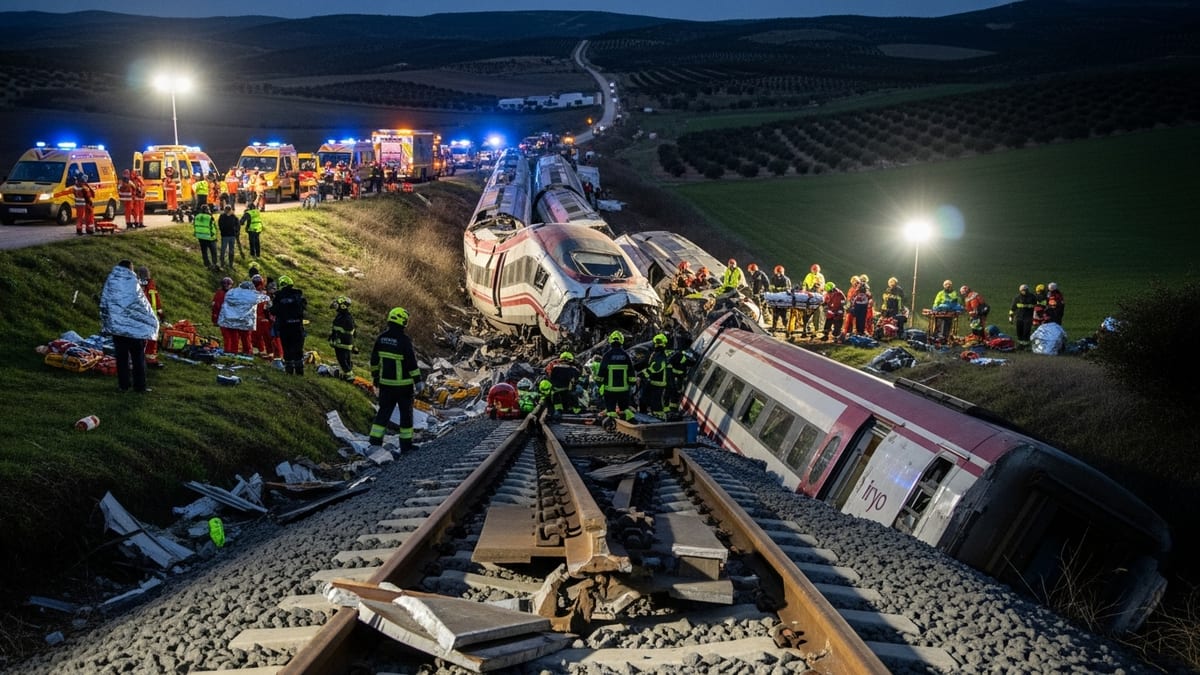
Fire halts morning service and sends riders to hospitals
According to early reports from local outlets and transportation alert services, the incident began during the heart of the morning rush when a train traveling into Manhattan filled with smoke after a fire was reported in one of the rail cars. Emergency responders evacuated passengers onto the platform and track area as service was halted in both directions.
Publicly available information indicates that at least 14 people suffered injuries linked to the fire and smoke, with most of the victims described as experiencing smoke inhalation and minor trauma during the evacuation. Several were transported to nearby hospitals for further evaluation, while others were treated at the scene. No fatalities have been reported so far.
Images and video shared through commuter alerts and social media show dense smoke lingering in the affected car and on the platform as riders moved quickly toward exits. Some passengers described crowded stairways and delays in exiting the station as emergency crews converged on the scene.
Initial accounts have not yet clarified the exact source of the fire, and investigators are expected to examine whether it stemmed from equipment failure, debris on the tracks, or another cause. Rail operators typically review onboard electrical systems, braking components, and any flammable material in or under the car after such incidents.
Widespread delays ripple across Manhattan and beyond
The fire’s immediate impact was a shutdown of train movements through the affected segment of track, which triggered cascading delays on multiple lines serving Manhattan. Riders reported stalled trains between stations, crowded platforms, and service gaps that stretched far into the late morning.
Real-time service dashboards and transit alert feeds showed a series of modified schedules, with some trains rerouted, others terminating early, and several lines skipping stops near the incident as crews worked to clear smoke and assess damage. Commuters heading into Midtown and downtown Manhattan faced packed alternative services, including other rail lines and surface transit.
For many travelers, the disruption extended travel times by 30 minutes or more, with some reporting that they abandoned rail entirely in favor of ride-hailing services or walking between hubs. Ticketing advisories noted that delays would likely continue through the midday period as equipment and crews were repositioned.
Past service data in New York and other major cities show that track and train fires, even when contained, often create a long tail of delays as schedules are rebuilt and inspection protocols completed. Tuesday’s incident followed this familiar pattern, with transportation agencies cautioning riders to allow extra travel time throughout the day.
Safety procedures and emergency response under renewed scrutiny
While fires on trains and in tunnels remain relatively rare compared with daily ridership volumes, they consistently raise pointed questions about system maintenance, safety standards, and the ability to move large numbers of people out of harm’s way quickly. Publicly available safety reports from urban rail networks show that smoke conditions and crowding, rather than flames themselves, often pose the greatest risk during such events.
Eyewitness accounts circulated by local media described riders initially unsure whether the smoke indicated a minor mechanical issue or a more serious emergency. Once the situation became clear, passengers moved between cars, waited for doors to open, and then followed emergency personnel toward station exits. That sequence is likely to factor into upcoming reviews of communication and evacuation procedures.
Transportation analysts frequently note that older infrastructure, tight tunnel clearances, and aging rolling stock can complicate responses to track and equipment fires. In Manhattan, where many lines run in close proximity, an incident on a single train can affect multiple routes, complicating both evacuation and rescue access.
In the weeks ahead, oversight bodies and safety specialists are expected to focus on whether there were any prior warnings related to the train involved, how quickly power was cut to the affected tracks, and how effectively riders were informed about evacuation routes and service alternatives during and after the incident.
Commuters weigh reliability as disruptions become more visible
For daily travelers, Tuesday’s delays served as another reminder of the fragility of complex urban rail networks. Even when incidents remain isolated and are resolved without life-threatening injuries, the resulting disruptions can reshape perceptions of reliability and influence long-term commuting choices.
Regular riders interviewed in prior coverage of similar incidents often cite cumulative interruptions, from track fires to signal problems and medical emergencies, as a driving factor in shifting occasionally to remote work, flexible hours, or alternative modes such as cycling and buses. Tuesday’s fire is likely to reinforce those concerns, particularly among commuters whose trips pass through the affected corridor.
Urban mobility researchers have documented how awareness of delays, amplified by mobile alerts and social media, can heighten frustration even when statistical measures of on-time performance improve. For visitors and occasional riders navigating Manhattan, the sudden suspension of service and dense crowds can be especially confusing, underscoring the importance of clear signage, multilingual announcements, and staff presence on platforms.
In the immediate aftermath of the fire, regional travel advisories urged riders to check service information before leaving home, consider earlier departures for afternoon trips, and remain prepared for platform crowding as the system returned to normal patterns.
What travelers should know in the coming days
Transportation agencies typically conduct detailed inspections of trains and track infrastructure following any significant fire, a process that can lead to temporary speed restrictions, out-of-service railcars, and short-notice schedule changes. Travelers using Manhattan rail services over the next few days may encounter residual delays or altered stopping patterns as these checks proceed.
Public service bulletins recommend that riders allow additional time for trips through the affected area, especially during the morning and evening peaks. Those with flight connections or time-sensitive appointments are advised to build in extra buffer time or identify backup routes on other lines or via surface transit where available.
Travel organizations and visitor bureaus frequently remind tourists that, despite occasional high-profile disruptions, Manhattan’s rail system remains one of the fastest ways to traverse the city. However, they emphasize that flexible planning, attention to live service updates, and familiarity with alternative routes can reduce the impact of unexpected incidents like Tuesday’s fire.
As investigators work to determine the precise cause of the blaze and assess whether any longer-term infrastructure upgrades are required, commuters and visitors alike will be watching for signs of improved communication, faster incident resolution, and measures aimed at reducing the risk of similar episodes on future rush-hour trains.