

More news on this day
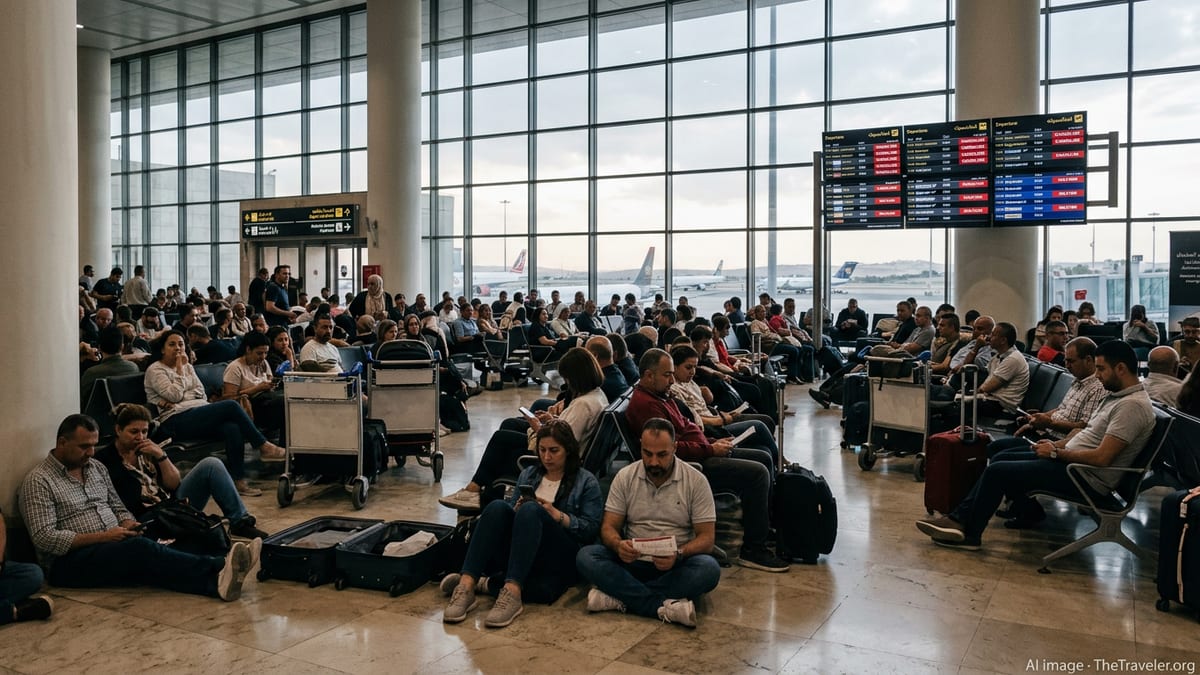
Hundreds of international travellers have been left in limbo at Queen Alia International Airport in Amman after a new wave of flight cancellations and rolling delays involving Royal Jordanian, EgyptAir, Ryanair and other carriers disrupted journeys across the region.
Get the latest news straight to your inbox!
New Disruptions Hit a Key Middle East Hub
Recent disruptions at Queen Alia International Airport have intensified over the past 24 to 48 hours, according to publicly available flight-tracking data and regional media coverage. A series of cancellations and extended delays affecting departures and arrivals have left passengers stranded for long stretches inside the terminal and, in some cases, forced to seek last-minute accommodation in Amman.
Reports indicate that Royal Jordanian, EgyptAir, Ryanair and additional regional and European carriers have all been affected, with some services scrubbed from schedules at short notice and others subject to repeated, hour-by-hour delay extensions. Travellers attempting to connect onward to major hubs in Europe, the Gulf and Southeast Asia have reported missed connections and complex rebooking situations.
The latest wave of disruption comes at a time when air routes around parts of the Middle East have already been under pressure from changing overflight permissions and shifting corridor usage. Jordan’s primary international gateway normally functions as an important connective hub between Europe, the Levant, the Gulf and Asia, meaning schedule instability at Amman can quickly ripple outward to other airports.
While overall operations at Queen Alia International Airport have not fully halted, the scale of cancellations and delays reported on key routes has been sufficient to create crowded departure areas, long lines at airline service counters and a backlog of travellers searching for alternative routing options.
Royal Jordanian, EgyptAir and Low-Cost Carriers Under Strain
Royal Jordanian, Jordan’s flag carrier and the largest operator at Queen Alia International Airport, appears to be at the centre of the current disruption. Publicly visible schedules show multiple regional and long-haul services marked as cancelled or significantly delayed, particularly on routes linking Amman with major Gulf cities, North Africa and Europe.
EgyptAir services between Amman and Cairo have also seen interruptions, with cancellations and schedule changes complicating travel for passengers using Cairo as a transfer point for onward flights to Africa, Europe and the Americas. For many travellers, the combination of delays at Amman and reduced options onward from Cairo has translated into extended, unplanned stopovers and the need to rebook entirely different itineraries.
Low-cost carrier Ryanair, which operates selected routes to and from Amman, has additionally faced operational challenges, according to passenger accounts shared publicly. Budget airlines typically have tighter aircraft utilisation and fewer backup aircraft in the region, which can magnify the impact of a single cancellation or late inbound flight. As a result, even a relatively small number of schedule disruptions can cascade into substantial knock-on delays for subsequent departures.
Other airlines serving Amman, including additional European and regional carriers, have adjusted routing and timings, sometimes lengthening flight times to avoid congested or restricted airspace. These changes have in turn affected aircraft rotations, crew duty limits and the availability of seats for stranded passengers hoping to secure last-minute alternatives.
Travellers Face Long Waits, Missed Connections and Limited Options
Passengers caught up in the disruption at Queen Alia International Airport describe a mix of long waiting periods in departure halls, uncertainty over departure times and challenges in securing clear information about rebooking options. With multiple carriers affected on overlapping routes, some travellers have struggled to find available seats on the same day, particularly on popular Europe and Gulf connections.
Publicly shared accounts highlight instances of travellers arriving well ahead of scheduled departure times only to find their flights delayed repeatedly or removed from information screens with minimal notice. For those on separate-ticket itineraries, missed connections have proved especially problematic, leading to additional costs for new tickets and accommodation, often without immediate clarity on eligibility for reimbursement.
Transit passengers connecting through Amman have been among the hardest hit. Queen Alia International Airport normally functions as a convenient transfer point, but rolling delays have meant that short layovers are no longer sufficient buffers. Some travellers have reported overnight stays in Amman after missing onward flights, while others have opted to reroute through alternative hubs in the Gulf or Europe when seats became available.
Families, older travellers and those with time-sensitive plans such as tours and cruises face added complications, including rearranging ground transport, hotel bookings and guided activities. Travel insurers may cover some of these additional costs depending on policy terms, but many passengers are still working to document delays and obtain formal confirmation from airlines to support any future claims.
Operational and Regional Factors Behind the Disruptions
While individual airlines have provided varying levels of detail in public channels, several operational and regional factors appear to be contributing to the current situation at Queen Alia International Airport. Adjustments to flight paths and cruising altitudes across parts of the Middle East have led to longer routing on some corridors, reducing scheduling flexibility and narrowing the margin for on-time operations.
Extended flight times can push aircraft and crew closer to regulatory limits, increasing the likelihood of last-minute rescheduling, crew changes or outright cancellations when delays accumulate. In addition, any technical issues or ground-handling slowdowns at busy times of day can have outsized impacts when spare capacity is already limited.
Queen Alia International Airport functions as both a destination and a transit hub, so disruptions on inbound flights immediately affect outbound waves. A delayed arrival from a European or Gulf city can disrupt a carefully timed sequence of turnarounds, and when multiple airlines face similar routing challenges, there are fewer opportunities to re-accommodate passengers across carriers.
Publicly available information on regional aviation trends also indicates that certain airlines have been operating with tight schedules and high load factors, leaving little room to absorb irregular operations. In such conditions, even localized weather fluctuations, temporary airspace bottlenecks or minor technical issues can translate into widespread cancellations and delays.
Advice for Travellers With Upcoming Flights Through Amman
Travellers with imminent flights to, from or through Queen Alia International Airport are being advised by travel agents, airline notifications and online travel communities to monitor their bookings closely. Checking flight status on airline websites or mobile applications and enrolling in real-time alerts can provide earlier notice of schedule changes than airport departure boards alone.
Where possible, passengers are being encouraged to allow extra time for connections, especially if itineraries involve separate tickets or tight layovers. Those with flexible plans may wish to discuss earlier departures or alternative routings with their airline or booking provider, particularly on routes that have seen repeated disruption in recent days.
Travel experts cited in publicly available coverage recommend keeping all receipts for accommodation, meals, ground transport and other expenses incurred as a direct result of delays or cancellations. This documentation may prove important when seeking compensation under airline policies, regional regulations or private travel insurance.
For travellers already on the ground in Amman, airport staff and airline service desks remain the primary point of contact for immediate rebooking assistance. However, many passengers also report success using airline call centres and digital channels to secure updated itineraries without waiting in long queues, especially during peak disruption periods. With conditions still evolving, those planning to transit through Amman in the coming days are likely to benefit from a flexible mindset and contingency time built into their schedules.