


More news on this day
Operations at Dublin Airport were heavily disrupted as 276 flights were reported delayed and three canceled, leaving passengers stranded across domestic, European, and transatlantic routes operated by carriers including Ryanair, Aer Lingus, Emirates, British Airways, Lufthansa, and Air France.
Get the latest news straight to your inbox!
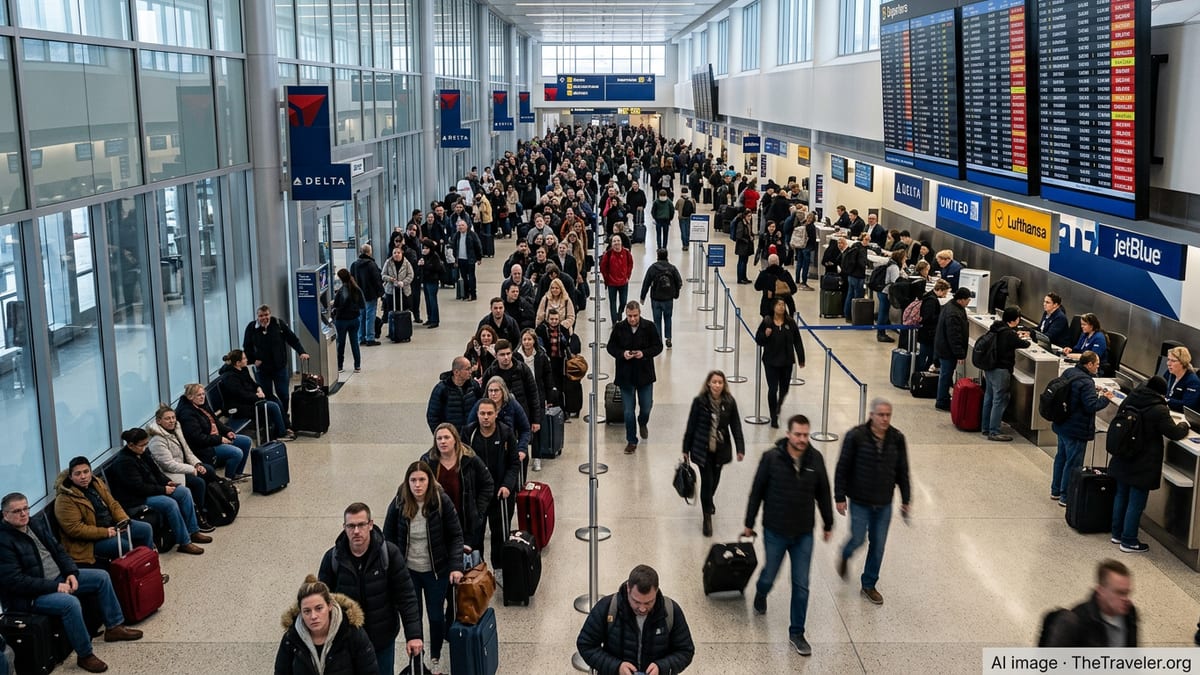
Severe Operational Disruption Hits Peak Summer Traffic
The latest disruption at Dublin Airport unfolded during an already busy early-summer travel period, compounding pressure on airlines and ground operations. Publicly available flight-tracking dashboards and airport data showed that delays stretched across much of the daily schedule, affecting both departures and arrivals to major hubs such as London, Paris, Amsterdam, Frankfurt, and New York.
The imbalance between tight schedules and high passenger volumes meant that relatively modest initial disruption quickly rippled through the network. Aircraft and crew arriving late to Dublin could not be turned around in time for onward services, resulting in a wave of knock-on delays. Even where flights eventually operated, many departed significantly behind schedule, forcing travelers to miss connections or replan onward rail and ferry travel around Ireland and the United Kingdom.
Reports indicate that both short-haul and long-haul routes were impacted. Services to London and other British destinations, which form some of Dublin’s busiest corridors, saw clusters of delayed departures, while a handful of long-haul services, including links to North America and the Middle East, also experienced extended waiting times at the gate or on stand.
Although only three flights were recorded as fully canceled, the combination of widespread delays and limited spare capacity made it challenging for carriers to rebook passengers swiftly. Travelers reported long queues at rebooking desks, crowded gate areas, and difficulty securing alternative seats on same-day departures.
Major Carriers Affected Across Europe and Beyond
The disruption cut across a broad range of airlines. Low-cost giant Ryanair and Irish flag carrier Aer Lingus, the largest operators at Dublin, saw extensive schedule impacts. According to published network data, their delays spilled over onto domestic routes within Ireland, frequent services to London airports, and trunk European links to cities such as Paris, Amsterdam, and Frankfurt.
International network airlines that depend on Dublin for connecting traffic were also caught in the disruption. Public reports highlight that British Airways, Lufthansa, Emirates, and Air France all experienced delayed operations, with some departures pushing back significantly later than planned. On certain routes to London and continental hubs, multiple carriers competing on the same city pair all struggled to maintain punctuality, reducing the options available to disrupted passengers seeking to switch flights.
Because Dublin is a significant transatlantic and Middle Eastern gateway, delays on outbound European legs sometimes cascaded into long-haul operations. Late arriving aircraft from London, Manchester, and other European cities missed their scheduled departure windows for onward crossings, forcing airlines to juggle aircraft rotations and crew duty-time limits while trying to keep the long-haul backbone of their networks intact.
Even when flights did eventually depart, tight turnarounds at overseas airports meant many services arrived late into their next stations as well, propagating the disruption beyond Ireland and into the broader European and intercontinental system.
Knock-On Effects for Routes to London and Key Hubs
Among the most affected services were the intensive shuttle-style operations between Dublin and London. Routes to Heathrow, Gatwick, and other London airports typically run at high frequency, with minimal buffers built into daily schedules. When one or two rotations run late, following flights often inherit those delays, and spare aircraft to reset the timetable can be limited at peak times.
On the day of disruption, flight status pages and tracking platforms showed clusters of late departures on core London routes, with some services delayed by more than an hour. Passengers relying on these flights to connect to long-haul departures from London faced particular difficulty, especially where minimum connection times were already tight.
The knock-on impact was not limited to London. High-demand European hubs such as Paris Charles de Gaulle, Amsterdam Schiphol, and Frankfurt also recorded late operations related to aircraft and crews originating or cycling through Dublin. In some cases, this caused further delays at those airports as aircraft arrived late into already congested peak periods, complicating stand allocations and departure sequencing.
Transatlantic corridors were similarly affected. With Dublin serving as a departure point for services to North American cities, late inbound aircraft and ground delays reduced the margin for on-time long-haul departures. This, in turn, created challenges for passengers with onward connections in the United States and Canada, as missed or tight transfers required additional rebooking and accommodation support.
Passenger Experience: Long Queues, Missed Connections, Uncertain Timelines
For travelers inside the terminals, the disruption translated into long waits and uncertainty. As delays accumulated, security and departure gate areas grew increasingly crowded, with passengers regularly checking information screens and airline apps for updates. Seating became scarce in some zones, and families with children or elderly passengers found it difficult to secure quiet, comfortable spaces to wait.
Published coverage and social media posts from the day described scenes of queues forming at customer-service counters as travelers sought rebooking options, meal vouchers, or hotel arrangements. Some passengers on tight itineraries, including those en route to events, cruises, or time-sensitive business meetings, faced the prospect of missing the first day of their plans or rearranging entire trips at short notice.
The uncertainty around projected departure times proved particularly challenging. In several instances, flights were initially listed with modest delays that were later extended as operational issues persisted. This made it difficult for travelers to decide whether to stay near the gate, attempt to rebook, or adjust ground transport and accommodation at their destination.
While only a minority of flights were fully canceled, those affected often involved significant stress for their passengers, who had to compete for limited spare seats on other services. With schedules already packed during the summer peak, alternative options on the same day or even the following day were not always guaranteed.
What the Disruption Means for Passenger Rights and Future Travel
The latest disruption has renewed attention on passenger rights for delays and cancellations within the European Union and the United Kingdom. Under EU Regulation 261/2004 and parallel UK rules, travelers may be entitled to care, rerouting, or refunds in some circumstances, though eligibility for financial compensation depends on factors such as the length of delay, distance flown, and underlying cause.
Travel-rights organizations advise passengers to retain boarding passes, confirmation emails, and any written communication from airlines to support potential claims. They also recommend documenting actual arrival times and keeping receipts for essential out-of-pocket expenses such as meals, local transport, or emergency overnight stays that may later be reimbursable.
For upcoming trips through Dublin, publicly available operations data suggests that airlines and airport stakeholders are working to restore schedules to more typical patterns following this concentrated day of disruption. Nonetheless, the incident serves as a reminder that peak-summer travel can be vulnerable to sudden strain from a combination of high demand, weather, airspace constraints, and operational bottlenecks.
Travel planners increasingly suggest allowing longer connection times, avoiding the last flight of the day where possible, and using airline and airport apps for real-time updates. While such steps cannot prevent disruption, they can provide travelers with better options when irregular operations unfold and help mitigate the impact of major delay events like those recently experienced at Dublin Airport.