


More news on this day
Travelers moving through Chicago O’Hare International Airport on June 27 faced mounting frustration as 211 flights were reported delayed, disrupting operations for major carriers across busy domestic and international routes while large-scale cancellations were avoided.
Get the latest news straight to your inbox!
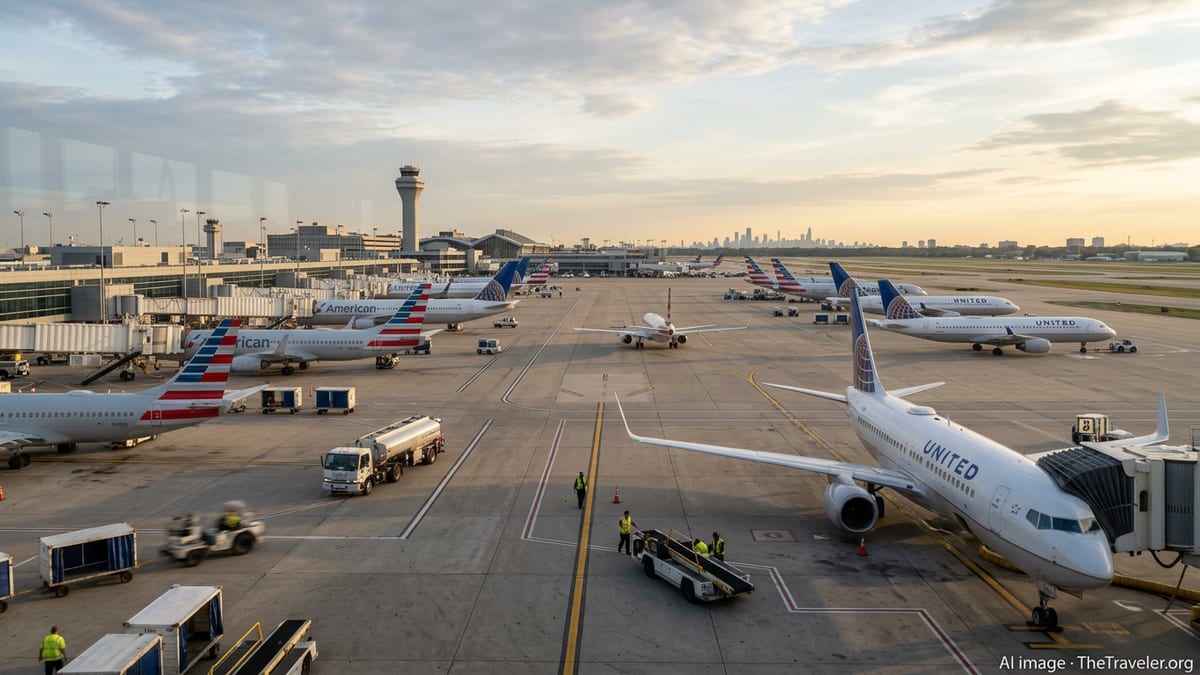
Delays Mount at One of the Nation’s Busiest Hubs
Chicago O’Hare International Airport, one of the largest connecting hubs in the United States, experienced a fresh wave of disruption as delays built across the departure boards on Saturday. Publicly available airport status tools and flight trackers indicated that at least 211 flights were running behind schedule, affecting a significant share of the day’s operations without triggering a parallel wave of cancellations.
O’Hare handles more than 3,000 flights on peak summer days, and even a few hundred delayed departures and arrivals can quickly ripple through the system. Today’s pattern of late departures has added stress for passengers making connections, particularly those traveling through Chicago on multi-leg itineraries to the East and West Coasts and onward to Europe and other international destinations.
Data from departure boards and third-party trackers showed a broad pattern of schedule slippage rather than a handful of isolated late flights. While some aircraft pushed back only 15 to 30 minutes behind schedule, others were held for significantly longer, complicating crew scheduling and aircraft rotations for several major carriers.
Airport statistics published by the Chicago Department of Aviation show that O’Hare’s traffic has been trending upward into summer 2026, increasing the impact of any operational slowdown. With both domestic and international volumes higher than a year ago, relatively modest disruptions can now translate into larger numbers of affected passengers.
Major U.S. Carriers Feel the Impact
The latest delays have affected operations for multiple airlines that use O’Hare as a central node in their networks. Public flight-status boards showed United Airlines, American Airlines, Delta Air Lines, Southwest Airlines and several smaller carriers all contending with late departures and arrivals.
United, which operates a major hub at O’Hare, appeared among the most exposed, with flight-status services listing numerous mainline and United Express departures pushed back from their original times by anywhere from a few minutes to nearly an hour. American, which also maintains a substantial schedule at the airport, showed similar patterns across both short-haul and midcontinent routes.
Delta and Southwest, each with a smaller footprint at O’Hare compared with their operations at other airports, were not exempt from the disruption. Delays affected flights serving popular business and leisure markets, tightening connection windows for travelers trying to reach New York, Los Angeles and other high-demand cities on time.
Despite the elevated number of late departures and arrivals, airport cancellation dashboards did not show corresponding spikes in flights being scrubbed. For many travelers, that meant a longer-than-expected wait rather than an outright loss of their itinerary, but the cumulative effect still produced missed connections and tight transfers across several terminals.
Routes to New York, Los Angeles and Beyond Affected
The impact of O’Hare’s delays was felt most acutely on heavily traveled domestic trunk routes and select international services. New York and Los Angeles, consistently among the most in-demand markets from Chicago, saw knock-on schedule issues as aircraft left their O’Hare gates behind plan.
Flights to New York-area airports, including John F. Kennedy International, LaGuardia and Newark Liberty, are typically scheduled at high frequencies throughout the day. When multiple departures depart late, the effect can cascade into arrival banks in the Northeast, tightening turnaround times and complicating gate assignments at both ends.
Connections onward from Chicago to the West Coast, including Los Angeles and other California cities, also experienced timing pressures. Travelers with through tickets from smaller Midwestern cities into Chicago and then onward to coastal destinations were among the most vulnerable to disruption as relatively short initial delays in the Midwest grew into missed or last-minute connections.
International routes from O’Hare, particularly transatlantic services to major European hubs, felt some of the secondary impact as late-arriving domestic feeder flights reduced the buffer time for passengers to clear terminals and reach long-haul departures. While most long-haul flights appeared to depart, the uneven flow of connecting passengers added further strain on an already stretched operational day.
Weather, Congestion and System Strain Under Scrutiny
While precise causes for individual delays varied, the pattern at O’Hare fits into a broader national picture in which weather, congestion and crew logistics interact to slow operations, especially during the summer travel season. Earlier in June, storms and air-traffic management programs in the Chicago region led to ground stops and widespread schedule disruptions, highlighting how quickly the network can seize up when one major hub is constrained.
O’Hare’s complex runway layout and high volume make it particularly sensitive to even minor reductions in capacity. When traffic is squeezed by weather cells in the region or by flow-control measures elsewhere in the national airspace system, delays can build rapidly as departures wait for available slots and arrivals are metered into holding patterns or slowed en route.
Industry analyses of delay propagation in the United States have frequently used Chicago as a case study, noting that disruptions at O’Hare can spread along major corridors to and from the East Coast, the West Coast and the South. Today’s pattern of 211 delayed flights, with few outright cancellations, mirrors the kind of operational strain that can persist even when airports and airlines attempt to preserve most of the day’s schedule.
Travel data providers tracking average on-time performance at O’Hare in recent weeks have reported fluctuating conditions, with periods of relatively smooth operations interspersed with spikes in late departures tied to weather and air-traffic constraints. Saturday’s numbers place the airport once again under scrutiny as the peak of the summer travel season approaches.
What Passengers Can Expect for the Remainder of the Day
For travelers still scheduled to move through Chicago O’Hare later in the day, the picture remains mixed. When delays cluster in the morning and early afternoon, airlines often attempt to recover by tightening turnarounds and adjusting aircraft routings, but lingering congestion can push impacts deep into the evening.
Passengers on domestic routes to major cities such as New York and Los Angeles may find that even modest additional slowdowns can trigger missed connections, especially when flying on split or separate tickets. Those with long-haul international departures relying on inbound feeder flights should expect crowded gate areas and potentially compressed boarding timelines if earlier segments run late.
Travel-advice platforms and airline communications consistently recommend that passengers monitor real-time flight status, allow extra time for connections, and be prepared for potential gate changes when operational days become as compressed as they are today at O’Hare. With flight reductions and schedule adjustments already planned for the airport later this summer in response to chronic congestion, today’s disruptions underscore how delicate the balance remains at one of the country’s busiest hubs.
As operations continue into Saturday night, the scale of the delays at Chicago O’Hare will help determine how quickly airlines can reset their schedules for Sunday’s departures. For now, travelers can expect longer waits on the ground and tighter timetables in the air, even as most flights continue to operate rather than be canceled outright.