


The Qantas Premier Platinum credit card has become a staple in the wallet of many Australian travellers who are serious about earning Qantas Points and squeezing extra comfort out of every trip. Used well, it can be a powerful engine for Qantas Frequent Flyer balances and a handy bundle of travel perks. Used poorly, it is just an expensive piece of plastic. This guide walks through how the card works today, what it actually offers in the real world, and how to master it so that the annual fee pays for itself in flights and benefits instead of quietly eating into your budget.
Get the latest updates straight to your inbox!
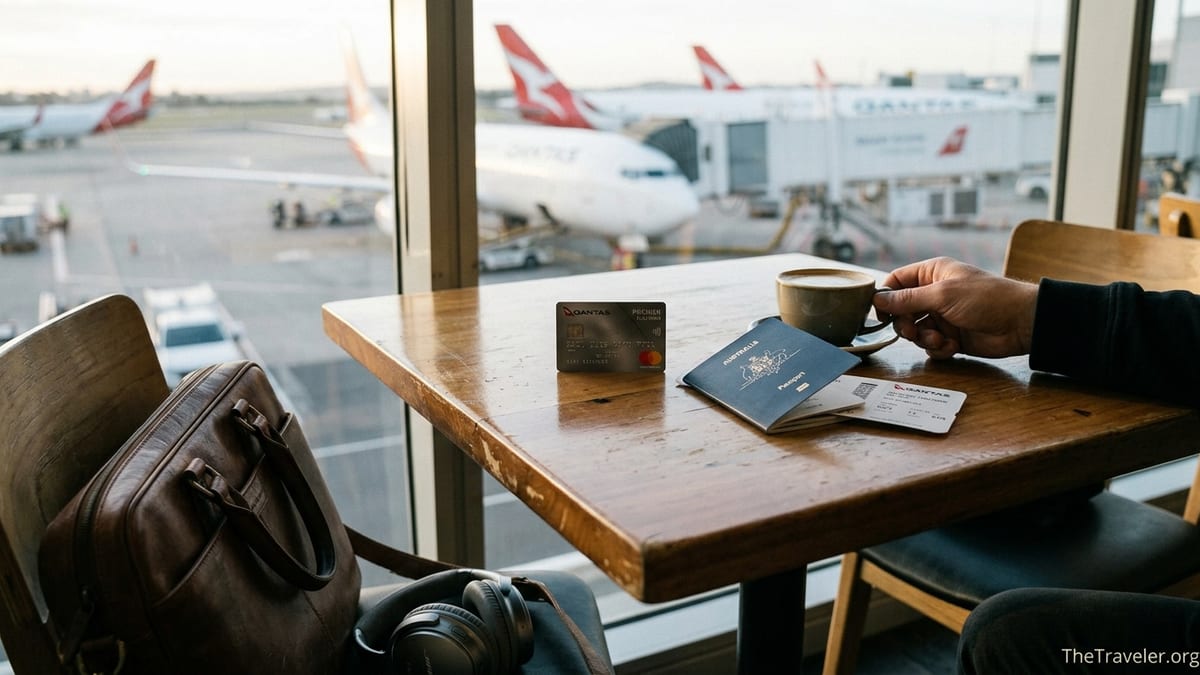
What the Qantas Premier Platinum Card Actually Is
The Qantas Premier Platinum is a Visa credit card issued under the Qantas Money brand, designed specifically for Qantas Frequent Flyer members. It sits in the mid-to-premium tier of Australian points cards: more serious and expensive than entry-level options, but without the ultra-high annual fees of top-end metal cards. According to the current Target Market Determination dated July 2025, the card carries a standard annual fee of around $399, a minimum credit limit of $6,000 and interest rates for purchases of about 21 percent per year, which is typical of rewards cards but high enough that you should never revolve a balance on it.
At its core, the card gives you a revolving line of credit, the ability to earn Qantas Points on virtually every eligible purchase, and a set of travel-related extras such as two Qantas lounge invitations per year and complimentary travel insurance for return trips when you meet the activation conditions. It is built for people who fly Qantas semi-regularly, pay their balance in full each month and are comfortable managing multiple cards and offers to chase value from sign-up bonuses and category earn rates.
In practice, that means the card is rarely the perfect match for someone who simply wants a low-interest credit card to spread payments. It is instead a specialist tool for maximising Qantas Points and travel perks. If you are the kind of traveller who books at least one or two Qantas or Jetstar trips a year, spends several thousand dollars a month on cards and is willing to track offers and statement dates, the Qantas Premier Platinum can work very hard for you.
How Earning Qantas Points Works on the Card
The most important feature of the Qantas Premier Platinum for points hunters is its earn structure. The latest Qantas Money documentation shows a tiered system: you earn up to 1.5 Qantas Points per dollar on eligible international purchases, 1 Qantas Point per dollar on eligible domestic spend and Qantas transactions up to a monthly cap, and then 0.5 Qantas Points per dollar on domestic spend over that threshold. Government payments, such as the Australian Taxation Office or many local councils, usually earn at a reduced rate, often around 0.5 Qantas Points per dollar. Exact categories can move, so it is worth checking the current product disclosure before planning a big bill payment strategy.
To put this in real-world terms, imagine you spend $3,000 a month on everyday domestic purchases such as groceries at Woolworths or Coles, petrol at BP or Shell, and online shopping at retailers like Myer or JB Hi-Fi. If those purchases all qualify at 1 Qantas Point per dollar, that single month of spend adds roughly 3,000 Qantas Points to your balance. Over a year, without changing your behaviour, that routine spending generates around 36,000 points, enough for a one-way economy Classic Flight Reward from Sydney to Singapore on Qantas during off-peak dates plus some leftover points, depending on availability and taxes.
The foreign-currency earn rate matters if you regularly book hotels or tours directly with overseas providers. For example, if you pay a $2,500 bill in euros to a hotel in Paris or a safari operator in South Africa, and the charge is processed in foreign currency, at 1.5 Qantas Points per dollar that single transaction could earn around 3,750 Qantas Points. Even after allowing for Qantas Money’s foreign exchange margin, travellers who frequently pay overseas merchants directly can build balances quickly this way, especially when those payments coincide with bonus-points promotions.
Welcome Bonuses and Realistic First-Year Value
From a value perspective, the first year you hold the Qantas Premier Platinum is often the most lucrative. Recent public offers have dangled welcome bonuses in the range of 80,000 to 100,000 Qantas Points for new cardholders who apply by a cut-off date and spend a set amount, for example around $3,000 to $4,000, within the first three months. Promotional details change frequently, but it is common to see a large lump sum of points land after you meet the minimum spend and pay the first annual fee.
In practical terms, those 80,000 to 100,000 points can be worth a return economy Classic Flight Reward from Sydney or Melbourne to Tokyo on Qantas, or two to three return trips between Australia’s east coast capitals and destinations such as Queenstown or Fiji when booked on reward seats. Many points-focused travellers instead use such a stash as a top-up towards a business-class redemption. For instance, a one-way Classic Flight Reward from Sydney to Singapore in Qantas business class typically requires a little over 60,000 points, so a welcome bonus can put that within comfortable reach once you add earnings from regular spend.
To really master the card, plan your application around a major upcoming expense. For example, time your approval just before paying an annual private school fee bill of $5,000, a car insurance premium of $1,200 and a family holiday deposit of $2,000. Putting those charges on the card in the first 90 days might easily cross the bonus threshold with margin to spare. That way, you are not spending extra just for the sake of a bonus; you are channelling planned expenses to unlock a lump of Qantas Points you would otherwise leave on the table.
Airport Lounge Access and How to Use the Passes
The Qantas Premier Platinum card does not provide unlimited lounge access, which is a common point of confusion. Instead, it typically includes two single-use Qantas lounge invitations each year after you pay the annual fee. These passes can usually be used at domestic Qantas Clubs and Qantas domestic Business lounges, and in some cases at Qantas international lounges, subject to current program rules and availability. Reddit discussions and Qantas help materials consistently confirm that you should view these as two discrete visits, not an ongoing membership.
In real-world use, that might mean you and a partner flying economy from Sydney to Perth can relax in the Qantas Business Lounge in Sydney for a long pre-flight dinner and shower using two passes, then fly home in standard economy with no lounge access at all. Savvy travellers often hoard their lounge passes for specific trips where the value is highest, such as a long layover on a domestic connection or a peak-hour Friday evening flight when the terminal is crowded. If you are based in Brisbane and fly to Melbourne several times a year, using the passes for late-afternoon flights when the airport is hectic can transform the experience into something closer to a business-class departure.
A typical strategy is to save the passes for non-status guests. For example, if you already hold Qantas Gold or Platinum status that grants you lounge access whenever you fly, you can use your card-supplied invitations to bring friends or family into the lounge on a special trip where they would otherwise wait in the public terminal. Families often time this for school holiday departures so that children can have a proper meal, device charging and space to burn off energy before boarding a long-haul flight.
Complimentary Travel Insurance and When It Actually Helps
The card’s complimentary travel insurance is a major selling point, but it is essential to understand how it works. The current insurance terms for the Qantas Premier Platinum make clear that coverage generally applies to return trips, with eligibility typically triggered when you charge at least a specified portion of your pre-paid travel costs, such as flights or cruise fares, to the card. The policy can include benefits like overseas medical cover, cancellation cover up to set limits, rental car excess, luggage delay and travel delay benefits, but the exact caps, exclusions and definitions are detailed in the product disclosure and should always be checked before travel.
In a real scenario, imagine you book return economy flights from Melbourne to Singapore for a family of four, costing around $3,200, and pay the entire amount with your Qantas Premier Platinum. You then reserve a hotel directly and prepay a non-refundable rate of $1,800 in Singapore dollars, also on the card. With those big-ticket items charged to the card, your trip is likely to satisfy the activation criteria for the complimentary cover. Should one of your children fall ill before departure and a doctor advises against travel, you may be able to claim the cost of the unused flights and hotel under the cancellation section, up to the policy’s limit, instead of wearing the full loss.
Rental car excess cover can also be unexpectedly handy. Suppose you hire a car in Queenstown for a ski trip and, despite buying the standard insurance from the rental company, face a $5,000 excess if the car is damaged. If you paid for the rental using your Qantas Premier Platinum and your trip qualifies under the complimentary insurance, the policy might reimburse that excess if you slide into a guardrail on an icy road. Many travellers deliberately decline the rental company’s expensive “zero excess” upsell because they know their card’s bundled insurance provides a safety net, though it is still crucial to read both policies carefully to avoid misunderstandings.
Stacking Card Benefits With Qantas Frequent Flyer Status
The Qantas Premier Platinum card is separate from Qantas Frequent Flyer status levels such as Silver, Gold and Platinum, which are earned through flying and measured in Status Credits. However, when combined, card benefits and status can create a powerful travel toolkit. Qantas Platinum status, for instance, provides 100 percent bonus Qantas Points on eligible Qantas, Jetstar and American Airlines flights, priority check-in and boarding, additional baggage, and access to Qantas First and Business lounges and oneworld Emerald lounges when flying eligible carriers.
In practice, that means a traveller with Qantas Platinum status and a Qantas Premier Platinum card can earn points twice on a single trip: once from the flight itself, boosted by their status, and once from paying for the booking on the card. For example, a return Sydney to Los Angeles economy fare might earn a Platinum member around 18,000 Qantas Points from flying alone, depending on fare class, plus another 1 to 1.5 points per dollar for the $1,800 ticket price when paid with the card. Add in points from hotel bookings and incidental spend on that trip, and it is not unusual to come home with over 25,000 points from a single holiday.
The interaction between card-supplied lounge passes and status lounge access is another area to master. If you already have Qantas Gold or Platinum, you do not need the card’s lounge invitations for yourself in most cases because your status grants access whenever you fly on an eligible airline. Instead, consider gifting the passes to non-status family members on separate trips. A common pattern is a Platinum member flying for business every month while their partner and children fly only once a year for a holiday. The member’s status covers their own lounge access on work trips, while the card passes are saved to upgrade the family’s single annual getaway.
Offsetting the Annual Fee With Real Trips
One of the most useful ways to think about the Qantas Premier Platinum is to treat the annual fee as an upfront investment that you aim to recoup in travel value each year. At around $399, the fee can appear steep, but it can be justified if you proactively convert the card’s points and perks into tangible benefits. The welcome bonus alone often more than covers several years of fees if you value Qantas Points even modestly. After the first year, the ongoing value calculation becomes more subtle.
Take a realistic example. Suppose your annual credit card spend across groceries, fuel, dining and online shopping is approximately $40,000. If we assume an average earn rate of close to 1 Qantas Point per dollar after factoring in some government and low-earning categories, you might generate about 40,000 points per year from regular spend. Add two domestic lounge visits; if you would have otherwise paid around $50 cash per person to access a paid lounge option at a major airport, those visits could be conservatively valued at $100 total.
On a points side, 40,000 Qantas Points can often be redeemed for a one-way business-class flight between the east coast of Australia and destinations such as Perth or Auckland in a Classic Flight Reward seat during off-peak periods, or for multiple one-way economy flights on shorter domestic routes like Sydney to Melbourne. Even pricing just one such domestic business reward flight at a notional $600 value and the lounge visits at $100, you are already at $700 in practical benefits in exchange for a $399 fee, not counting the travel insurance or any targeted Qantas Money promotions that award bonus points for specific merchants.
This framing encourages you to plan at least one or two high-value redemptions each membership year. Instead of letting points sit idle, pick a trip where cash fares are unusually expensive, such as school holiday flights to Bali or Queenstown, and aim to cover at least one leg using points earned from the card. Doing so helps ensure the card remains an asset rather than an annual-fee drain.
Smart Day-to-Day Strategies for Maximising Value
Maximising Qantas Premier Platinum is less about grand gestures and more about consistent, disciplined use. The first rule is to put as much of your everyday spending as possible through the card, provided the merchant surcharges are reasonable and you can pay the balance in full. That means using the card for supermarket runs, petrol, public transport top-ups, rideshare trips with Uber or DiDi, food delivery via Uber Eats or DoorDash, and streaming subscriptions like Netflix or Spotify. Each charge may earn only a handful of points, but over 12 months the totals become substantial.
Next, take advantage of foreign-currency and travel purchases. When booking flights on qantas.com, always ensure your Qantas Frequent Flyer number is in the booking and that you pay with the Premier Platinum card so you earn both flight points and card points. For hotels and tours overseas, weigh up whether paying in local currency on the card at 1.5 points per dollar is better overall than using a debit card with lower foreign exchange fees but no points. Travellers who take one or two international holidays a year can easily generate an extra 10,000 to 20,000 points just by consciously routing those bookings through the card.
Finally, monitor Qantas Money promotions in your email or app. These often include temporary offers such as extra points for grocery or department store spend, or competitions for using the card a certain number of times in a month. While you should never overspend just to chase a promotion, shifting flexible purchases such as petrol or department store gift cards into a promotional window can accelerate your earnings without changing your underlying budget.
The Takeaway
The Qantas Premier Platinum credit card is not a magic key to free travel, but in the hands of a thoughtful traveller it can be a remarkably effective tool. Its true power lies in the combination of a strong ongoing earn rate on everyday and foreign-currency spend, periodic sign-up bonuses, a couple of lounge visits each year, and a solid bundle of complimentary travel insurance benefits that can save you hundreds of dollars on separate policy premiums.
To master the card, you need to approach it as a deliberate part of your travel strategy rather than a simple payment method. That means timing your application around major expenses to capture welcome bonuses, routing a clean majority of your everyday purchases through the card, using lounge invitations where they deliver the most comfort, and planning at least one meaningful Qantas Points redemption each year. When you layer those benefits on top of any status you hold in the Qantas Frequent Flyer program, the result can be a smoother, more rewarding travel experience that justifies the annual fee many times over.
FAQ
Q1. Does the Qantas Premier Platinum credit card give me unlimited lounge access?
Not in most cases. The card usually comes with two single-use Qantas lounge invitations per year, which you can use for yourself or eligible guests on specific flights. It does not provide full Qantas Club membership or ongoing lounge access each time you travel.
Q2. How many Qantas Points can I realistically earn in a year with this card?
That depends on your spending. A cardholder who spends around $3,500 a month on eligible purchases might earn roughly 40,000 to 50,000 Qantas Points a year from regular transactions, plus any welcome bonuses and targeted promotions.
Q3. Can I use the complimentary travel insurance for domestic trips within Australia?
Yes, some domestic return trips can be covered if they meet the policy’s activation criteria, such as paying a required portion of prepaid transport costs with the card. The benefits and limits for domestic cover are usually different from international trips and should be checked in the current insurance booklet.
Q4. Do I need to activate the insurance separately before I travel?
In most cases you do not need to fill out a separate form, but you do need to meet the eligibility rules, like paying minimum amounts of your trip on the card and travelling on a return itinerary. It is always wise to read the insurer’s latest Product Disclosure Statement and keep evidence of payments and bookings.
Q5. Is the Qantas Premier Platinum card a good choice if I rarely fly Qantas?
If you seldom fly Qantas or partner airlines, you may find it harder to extract full value from the lounge passes and Qantas-specific bonuses. However, if you still value earning Qantas Points for future long-haul trips and have high credit card spend, the card can still make sense. Otherwise, a more general rewards or cashback card may be better.
Q6. Will holding this card help me reach Qantas Platinum or Gold status faster?
The card itself does not give you extra Status Credits, which are what determine your tier. It helps by making Qantas bookings easier to afford with points, but your actual status is still earned by flying on eligible Qantas, Jetstar, oneworld or partner flights.
Q7. Are there caps on how many points I can earn each month?
Yes, the card typically earns 1 Qantas Point per dollar on domestic spend only up to a monthly threshold, after which the earn rate drops to 0.5 points per dollar. Foreign-currency purchases may earn at 1.5 points per dollar without the same cap, but you should check the current terms to confirm limits.
Q8. Can I add an additional cardholder, and do they earn points too?
Most accounts allow you to add one or more additional cardholders. Their spending is pooled into the main account, and all eligible spend earns Qantas Points to the primary cardholder’s Frequent Flyer account. Additional cards can be useful for partners or family members who share household expenses.
Q9. What happens to my lounge invitations if I cancel the card?
Unused lounge invitations linked to the card are usually forfeited when the account is closed. If you are planning to cancel, try to use any remaining passes before the closure date or before they expire, whichever comes first.
Q10. Is the Qantas Premier Platinum worth it compared with other Qantas credit cards?
For many travellers, it sits in a sweet spot between cost and benefits, offering strong points earn, solid welcome bonuses and useful perks without the very high fees of top-tier cards. However, if you rarely travel or prefer flexible points that transfer to multiple airlines, you should compare it carefully with competing products before applying.