


More news on this day
A passenger flight bound from Manchester-Boston Regional Airport returned to the New Hampshire facility shortly after takeoff after the crew reported an apparent engine issue, according to early local and aviation-tracking reports.
Get the latest news straight to your inbox!
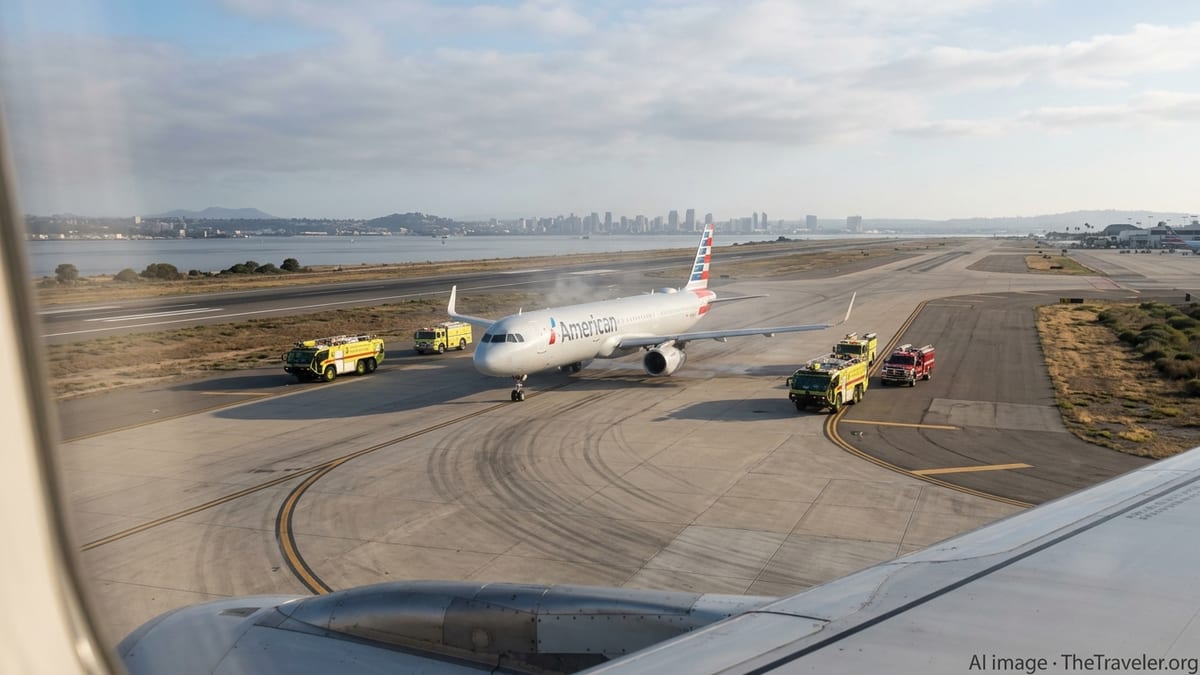
Aircraft returns to New Hampshire airport shortly after departure
Publicly available flight-tracking data and local coverage indicate that the aircraft departed Manchester-Boston Regional Airport and climbed out normally before the crew halted the climb and turned back toward the field. The jet landed without incident and taxied off the active runway, where it was met by airport emergency vehicles as a precaution.
Initial information suggests the concern centered on one of the aircraft’s engines. Specific technical details had not been released at the time of writing, but the pattern of the flight, including the immediate return and the presence of fire and rescue units alongside the runway, is consistent with a standard response to a potential engine malfunction in flight.
There were no early indications of injuries among passengers or crew. Travelers were seen remaining on board while the aircraft was inspected, and later reports indicated that arrangements were being made to rebook affected passengers or position a replacement aircraft.
Operations at Manchester-Boston Regional Airport appeared to continue with only limited disruption, with other flights using available runways while emergency equipment cleared the scene.
Standard safety protocols guide midair engine incidents
Aviation safety guidance indicates that modern commercial jets are designed to continue flying safely on a single engine, and crews train regularly for engine malfunctions shortly after takeoff. When cockpit indications or unusual vibrations suggest a possible engine problem, standard procedure typically calls for levelling off, securing the affected engine if necessary, and returning to the nearest suitable airport.
Manchester-Boston Regional Airport maintains an emergency contingency framework that describes how the airport coordinates with airlines and ground responders in the event of in-flight emergencies and unscheduled returns. The plan outlines priorities that include maintaining safe operations on the airfield, providing access for emergency vehicles, and managing arriving and departing traffic around any incident response.
In most such events, passengers experience an abrupt end to their journey but face relatively low immediate physical risk. After landing, crews work with airport personnel to determine whether passengers should remain on board, deplane onto buses, or disembark at a gate, depending on where the aircraft stops and the nature of the technical issue.
Industry data show that precautionary returns after reported engine issues occur far more frequently than serious engine failures. Many events ultimately trace back to sensor anomalies or non-critical system alerts, though a detailed technical review is typically required to understand the specific cause.
Passengers face delays while airline assesses aircraft
For travelers on board, an unexpected return to the departure airport usually results in missed connections and overnight delays. Public information from recent diversion cases across the United States indicates that airlines often must juggle aircraft availability, crew duty limits, and maintenance capacity when deciding whether to repair an aircraft at the incident airport or substitute a different jet.
In New Hampshire and the wider New England region, carriers serving mid-sized airports like Manchester-Boston typically operate with thinner spare-aircraft margins than at major hubs. When an unplanned engine inspection or repair is required, that can translate into longer waits for passengers, particularly during busy travel periods.
Travelers affected by diversions and returns are generally rebooked on later flights from the same airport or rerouted through larger nearby hubs such as Boston. Airline policy and federal regulations guide whether passengers receive hotel accommodations, meal vouchers, or other support, which can vary depending on whether the disruption is classified as a controllable mechanical issue or a safety-driven precaution beyond the carrier’s control.
Despite the disruption, aviation safety specialists consistently note that a decision to return to the departure airport reflects the system working as intended. When a crew suspects a possible engine issue, an early and conservative turnback is widely regarded as the safest option for passengers and crew.
Manchester-Boston’s role in the regional air network
Manchester-Boston Regional Airport serves as a key alternative to Boston’s Logan International Airport for travelers in New Hampshire and northern New England. The facility supports a mix of domestic passenger services, cargo operations, and general aviation traffic and is configured to handle diversions and emergency returns within its available runway and support infrastructure.
The airport’s published planning documents highlight both its capacity and its limitations when multiple irregular operations unfold, including the need for close coordination between airlines when gates and terminal space are constrained. Emergency events that require fire and rescue vehicles on the airfield can temporarily reduce runway capacity, but procedures are in place to reopen affected areas as soon as inspections are completed.
While midair engine alerts and precautionary landings can draw significant attention, publicly available safety summaries show that serious incidents involving Manchester-Boston Regional Airport remain rare compared with the airport’s overall flight volume. Regulators and investigators typically review operational data after such events to determine whether any broader safety lessons or maintenance advisories should be shared with operators.
As of the latest updates, the aircraft involved in the diversion remained subject to inspection, and passengers whose travel was interrupted were being accommodated on later services, according to information shared through airline and airport communication channels.