


More news on this day
Jet fuel costs are retreating from the highs triggered by this year’s oil shock, but air travelers hoping for cheaper tickets are likely to be disappointed as major airlines hold fares steady, creating what analysts describe as a stand off over price cuts even as one of the industry’s biggest expenses begins to ease.
Get the latest news straight to your inbox!
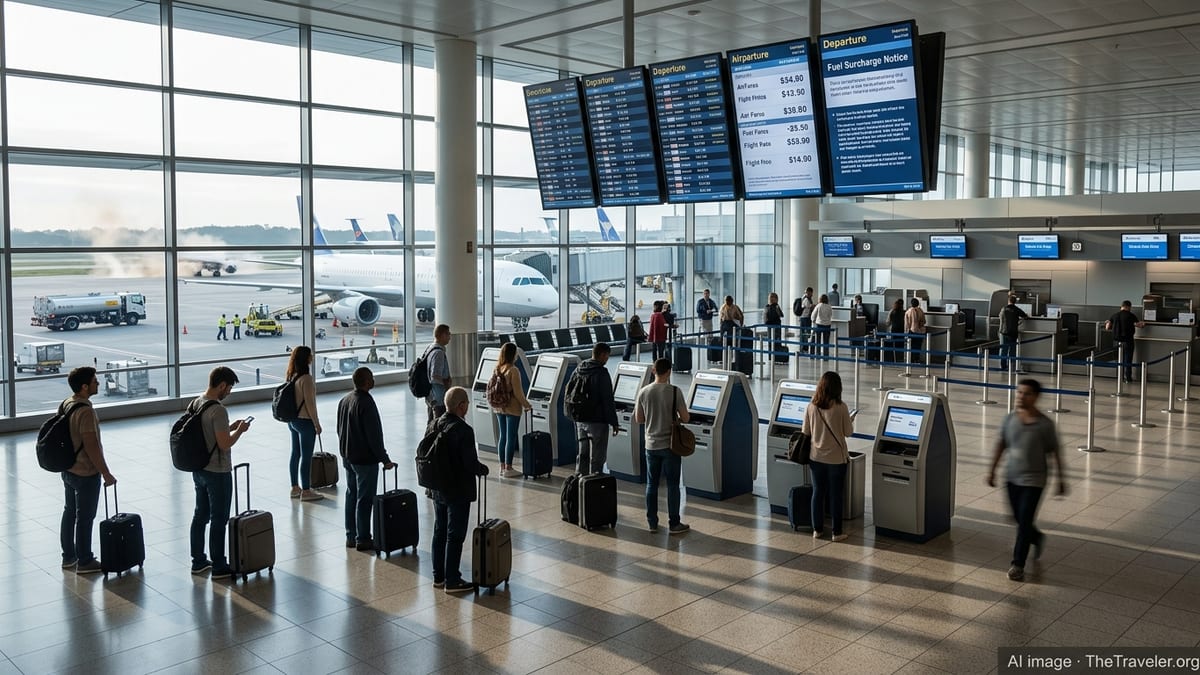
Fuel Costs Fall After War-Driven Spike
Jet fuel prices surged earlier in 2026 following the outbreak of war involving Iran, which disrupted oil supplies and pushed airline operating costs sharply higher. Publicly available data tracked by industry groups shows that jet fuel nearly doubled in price at the peak of the crisis, prompting carriers worldwide to hike fares and trim capacity on less profitable routes.
Recent weeks have brought some relief. Reports from industry economists and market trackers indicate that benchmark jet fuel prices have pulled back from their highs, narrowing refinery margins and easing one of the most volatile elements in airline cost structures. In major Asian hubs such as Singapore, fuel costs have dropped enough to trigger lower fuel surcharges on international tickets, particularly for summer departures.
Yet airlines maintain that the fuel shock is not fully behind them. Forecasts compiled by global trade bodies still point to jet fuel accounting for roughly one third of airline operating expenses this year, a larger share than in 2025, underscoring how dependent profitability remains on energy markets even after the recent price retreat.
Carriers are also wary of renewed volatility. With oil markets still sensitive to geopolitical headlines and shipping disruptions, airline planners remain cautious about assuming that today’s lower jet fuel prices will persist through the winter season and into 2027.
Fares Stay Elevated as Demand Proves Resilient
Despite the easing in fuel costs, economy fares on many domestic and international routes remain well above year-ago levels. Industry analyses and travel search data suggest that domestic prices in markets such as North America are still around 10 percent higher than last summer, while long haul fares that spiked after the Iran conflict have largely plateaued rather than declined.
Several large network airlines have told investors in recent weeks that they see little pressure to cut prices, as demand for leisure and so-called “revenge travel” remains robust heading into the late-summer holiday period. Booking figures for June through September travel show mid-single-digit growth in global ticket sales compared with 2025, even after multiple rounds of fare increases.
Executives at major U.S. and European carriers have described a structural shift in cost bases, pointing to higher wages, airport charges, technology investments and aircraft financing costs layered on top of earlier fuel spikes. According to published coverage of recent earnings calls, some airline leaders argue that these factors will keep fares elevated even if oil prices fall back toward pre-conflict levels.
That stance has frustrated price-sensitive travelers who expected lower fuel prices to translate quickly into cheaper tickets. However, industry consultants note that airlines typically respond more rapidly to cost increases than to cost declines, especially when planes are already flying at high load factors.
Capacity Constraints Limit Competitive Pressure
One key reason for the stand off over price cuts is capacity. While global passenger volumes are now near or above pre-pandemic levels on many routes, the number of available seats has been constrained by aircraft delivery delays, maintenance bottlenecks and the collapse or downsizing of some low cost competitors.
Analysts point out that the grounding of weaker carriers over the past two years has reduced competition on a series of domestic U.S. routes and some transatlantic city pairs. In several markets formerly served by ultra low cost airlines, the largest network carriers and a handful of remaining budget operators face less incentive to initiate aggressive fare wars.
Aircraft manufacturers are also struggling to clear order backlogs, limiting airlines’ ability to add capacity quickly in response to strong demand. With new jets arriving more slowly than planned and spare parts in short supply in some regions, many carriers are choosing to prioritize yield over volume, trimming thinner services while keeping prices firm on core routes.
The result is a market where fewer empty seats mean less pressure to discount, even as one of the primary cost drivers eases. In this environment, analysts say, the first airline to meaningfully cut fares risks sacrificing revenue without any guarantee that rivals will follow its lead.
Regional Carriers Weigh Recovery Against Competition
In Asia, Europe and parts of Latin America, regional and low cost carriers are facing a more complicated equation. In South Korea, for example, published reports indicate that falling jet fuel prices have allowed international surcharges to drop this summer, but a weak local currency and high fixed costs are limiting how much relief can be passed on to passengers.
Some Asian low cost airlines have been cautious about restoring full pre-crisis schedules, wary of being drawn into a renewed fare war before their balance sheets are repaired. They are expanding selectively on high demand leisure routes while holding capacity flat on marginal services, a strategy aimed at supporting yields even at the risk of ceding some market share.
European budget carriers are also navigating mixed signals. Those that secured fuel at lower prices through hedging strategies now enjoy a cost advantage over rivals more exposed to spot markets, potentially giving them room to offer promotions. But with airport congestion, air traffic control disruptions and labor shortages still common in peak season, many are opting to bank the savings rather than slash ticket prices across the board.
In North America, Canada’s major airlines have cited resilient summer demand as justification for maintaining higher fares, even as domestic fuel costs soften. Travelers in smaller regional markets, where competition is limited, have been particularly hard hit, paying substantially more than passengers at larger hubs for comparable distances.
Travelers Face Prolonged Period of High Prices
For consumers, the combination of easing jet fuel costs, firm fares and tight capacity points to a prolonged period of relatively expensive air travel. Data compiled by airline associations suggests that, when adjusted for inflation, global average return fares remain below levels seen a decade ago, but the sharp increases of the past year are acutely felt by price conscious travelers.
Analysts interviewed in recent coverage say that meaningful fare relief is unlikely unless one of three conditions emerges: a significant and sustained drop in fuel prices, a weakening of demand that forces airlines to stimulate bookings, or a rapid expansion in capacity as new aircraft deliveries accelerate and additional competitors enter key markets.
For now, none of those drivers appears imminent. Oil markets remain volatile, economies in many major travel regions are still avoiding recession and aircraft production is constrained. With investors rewarding profitability over market share and airlines benefiting from strong ancillary revenue streams, industry observers expect the current pricing stand off to persist through at least the upcoming winter season.
That leaves travelers with limited options beyond flexible trip planning, off peak travel and diligent fare monitoring. Even as jet fuel costs move lower, the balance of power in many markets remains tilted toward airlines that are determined to hold the line on prices as long as passengers keep filling seats.