


More news on this day
Travelers arriving at Orlando International Airport over the weekend faced hours-long waits at baggage claim after a mechanical failure disrupted luggage handling at the busy Florida gateway, adding fresh frustration at the height of the summer travel season.
Get the latest news straight to your inbox!
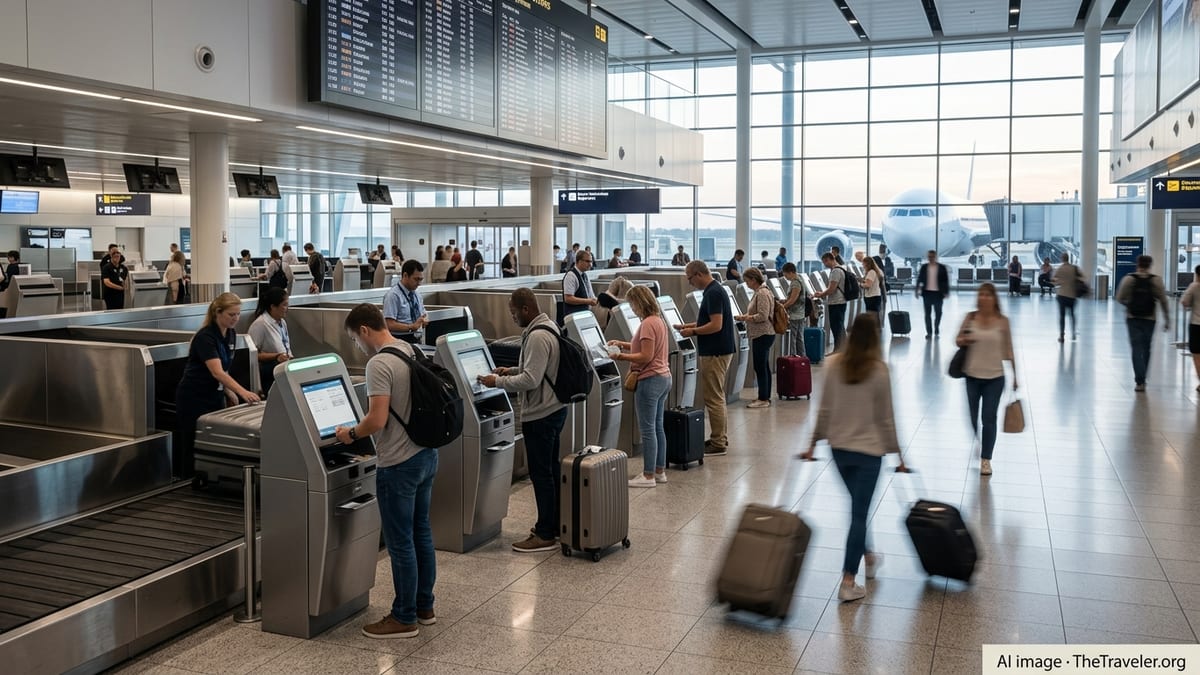
Hours-long waits compound a busy travel weekend
Reports from passengers and travel outlets describe scenes of crowded baggage halls at Orlando International Airport as arriving travelers waited several hours for checked luggage to reach carousels. The disruption unfolded on June 27, 2026, as multiple international flights arrived into the airport and baggage handling systems experienced a mechanical problem that halted normal unloading.
Publicly available coverage indicates that some passengers remained in the baggage area for much of the evening while ground crews worked through backlogs. Families, older travelers and visitors connecting to cruises or resort shuttles were among those affected, with many facing missed transfers and late-night hotel check-ins as they waited for their bags to appear.
The situation developed during an already crowded summer weekend for Orlando, one of the busiest leisure gateways in the United States. Travel data and airport statistics show that late June typically brings high passenger volumes driven by theme park visitors, cruise passengers and domestic tourists, leaving limited slack in the system when any individual component fails.
While flight operations largely continued, the knock-on impact of the baggage delay meant that the end of the journey became the most challenging leg for many travelers, who had already endured long flights and routine airport queues before confronting static carousels and limited seating in the claim area.
Mechanical fault and weather disruptions strain baggage handling
According to published coverage, the immediate cause of the disruption was a mechanical failure affecting baggage handling equipment, which coincided with earlier weather and ground-handling constraints. At major airports such as Orlando International, conveyor systems, loading belts and sorting machinery move thousands of bags per hour; a failure in one part of the chain can quickly ripple across multiple arriving flights.
Travel industry analysis notes that when such a fault occurs late in the day, recovery can be especially slow. Crews must first resolve the mechanical issue or reroute bags through alternative belts, then work through an accumulated backlog. If international arrivals are involved, the pressure is greater, because passengers typically must claim checked luggage before proceeding through customs and exiting the secure area.
In this case, reports indicate that several widebody flights arrived within a relatively short window, focusing demand on the same segment of the baggage system. Once the mechanical issue and earlier weather-related ramp restrictions slowed unloading, passengers experienced lengthy waits as staff attempted to clear each flight in turn.
Industry observers point out that while summer thunderstorms and lightning protocols are common operational challenges in central Florida, a concurrent technical fault in baggage systems can transform a routine delay into a multi-hour disruption for hundreds of travelers confined to a relatively small space.
Passenger experience highlights infrastructure and comfort gaps
Accounts from those in the terminal describe congested baggage halls, with travelers occupying nearly every available seat and many resorting to sitting on the floor or standing in place for extended periods. Limited access to food and drink in the immediate claim area, as well as restricted movement due to customs and security rules, intensified the sense of discomfort.
Published reports mention at least one medical incident in which a traveler collapsed while waiting, drawing attention to the strain that prolonged, stationary waits can place on passengers who may already be tired, dehydrated or managing health conditions. The episode has fed into broader criticism that large U.S. airports sometimes underinvest in customer comfort and contingency planning, particularly in post-arrivals spaces such as baggage claim and customs halls.
Travel commentators note that modern airport terminal designs increasingly emphasize shopping, dining and entertainment in departure areas, while arrival zones, including baggage claim, can lag behind in terms of seating, climate control and real-time information. The Orlando disruption has reignited questions about whether facilities in these areas appropriately reflect the airport’s role as a first impression for millions of visitors to central Florida each year.
For families arriving with young children after long-haul flights, the lack of quiet waiting spaces or easily accessible services during an unexpected delay can significantly increase stress. Travel planning advice emerging in the wake of the incident now urges visitors to pack essential medications, snacks and entertainment in carry-on bags to better cope with possible baggage disruptions at busy hubs.
Response, recovery and what travelers can expect next
According to airport communications cited in news coverage, the Greater Orlando Aviation Authority expressed regret for the inconvenience and discomfort experienced by travelers during the incident and indicated that teams worked to restore normal operations once the mechanical problem was identified. Airlines whose flights were affected acknowledged the disruption and pointed to a combination of equipment issues and earlier operational constraints as drivers of the delay.
Travel analysts suggest that the episode may prompt renewed focus on redundancy and maintenance planning for baggage systems at Orlando International. Large hubs typically operate extensive networks of belts, sorters and scanners; ensuring that critical components have backup options or rapid repair pathways can reduce the risk of multi-hour disruptions when something fails at a peak moment.
For passengers, experts recommend building additional time into onward travel plans when flying into very busy leisure hubs during the summer period. Guidance from travel publications now commonly advises allowing a wider buffer for airport transfers, rental car pick-ups or cruise departures, particularly when checked baggage is involved and international arrivals procedures may add complexity.
In the near term, there is no indication that the mechanical failure represents an ongoing, daily issue for Orlando International. However, the high-profile nature of the incident has underscored how a single point of failure in airport infrastructure can upend the travel experience for hundreds of people at once, making baggage systems and passenger comfort in arrivals areas a renewed focus for both operators and travelers planning trips through central Florida.
Broader implications for major tourist gateways
The disruption in Orlando has resonated beyond central Florida because it highlights the vulnerabilities of large tourist-focused airports that handle heavy seasonal peaks. As passenger numbers continue to recover and grow, aviation planners warn that legacy baggage systems and constrained arrival halls may struggle to keep pace without targeted upgrades.
Travel industry commentary places the Orlando event alongside other recent baggage disruptions worldwide as evidence that ground infrastructure can be as critical as air traffic control or runway capacity in shaping the overall passenger experience. When high-frequency storms, tight labor markets and aging equipment intersect, baggage operations often become the pressure point visible to travelers.
Some analysts argue that incidents like Orlando’s mechanical breakdown should accelerate investment in modern baggage-handling technology, improved real-time communication to passengers and more resilient staffing models around peak arrival banks. Others emphasize relatively simple measures, such as adding flexible seating, hydration points and clearer signage in baggage and customs areas to lessen the impact when problems occur.
For Orlando, where many trips mark the start of family vacations and milestone celebrations, the recent delays are serving as a reminder that a smooth arrival is central to the region’s broader tourism reputation. How effectively the airport and partner airlines apply lessons from this event may shape traveler perceptions of central Florida’s main gateway in the busy seasons to come.